What Are Peptides: Meaning, Types, Uses & Safety Facts

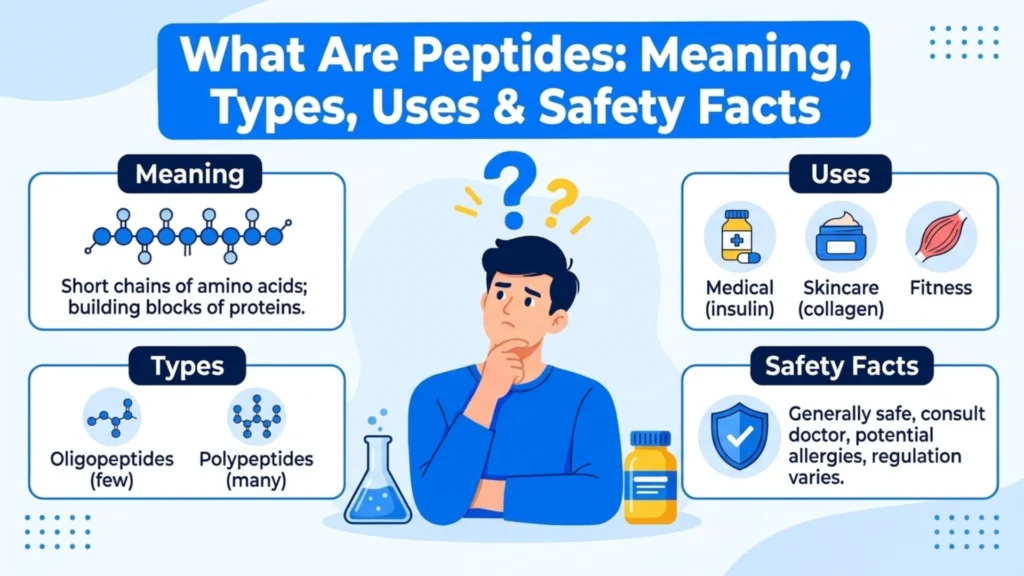
Peptides now appear on skincare labels, supplement tubs, and clinic menus across the world. Many readers still search what are peptides because the labels rarely explain the science behind them.
This guide explains the meaning of peptides, how the body builds them, and how they differ from proteins. It also covers common peptide types, popular therapy blends, legal status, and simple safety checks before purchase.
Quick Answer: What Are Peptides?
Peptides are short chains of amino acids that chemical links called peptide bonds hold together. Most scientists describe a peptide as a chain holding roughly 2 to 50 amino acids. Longer chains usually count as proteins, although the exact cutoff varies between textbooks and research fields. The body makes many peptides naturally, while labs create others for medicine and research.
What Does the Word Peptide Mean?
The word peptide comes from the Greek word peptos, which means digested or cooked. German chemist Emil Fischer helped popularize the term in the early 1900s during his protein research.
In simple words, a peptide is a short amino acid chain that often carries a chemical message.
Many peptides act like signals, telling cells when to release hormones, repair tissue, or fight germs. Researchers now study hundreds of peptides, and some of these molecules have reached pharmacy shelves as approved drugs.
Many shoppers now search online for where to buy CJC-1295 ipamorelin blend after reading about growth hormone peptides. Neither CJC-1295 nor ipamorelin holds FDA approval, so buyers should read research labels and legal notes carefully.
How Do Peptides Form in the Body?
Cells build peptides by linking amino acids in a fixed order that the genetic code dictates. Each link forms when one amino acid’s carboxyl group joins the next amino acid’s amino group. That reaction releases a water molecule, so chemists call it a condensation reaction.
The body also creates peptides when digestive enzymes break dietary proteins into smaller pieces. The intestine absorbs some of these pieces and breaks others into single amino acids.
What Are the Main Types of Peptides?
Scientists usually group peptides by their length, their source, and their main job inside the body. Repair peptides attract heavy attention, and many clinics now advertise BPC-157 therapy for tendon and gut recovery. Most BPC-157 evidence still comes from animal studies, so human results remain unproven.
Peptides by Length
| Type | Amino Acid Count | Example |
|---|---|---|
| Dipeptide | 2 | Carnosine |
| Tripeptide | 3 | Glutathione |
| Oligopeptide | About 3 to 20 | Oxytocin |
| Polypeptide | About 20 to 50 | Glucagon |
Chain length changes how a peptide behaves, how fast it breaks down, and where it acts.
Peptides by Source
Natural peptides come from the body itself, from food proteins, or from plants and microbes. Synthetic peptides come from labs, where chemists assemble chains one amino acid at a time. Collagen peptides, for example, come from animal skin and bone that manufacturers break down with enzymes.
Peptides by Function
Hormone peptides such as insulin, glucagon, and oxytocin carry signals between organs through the bloodstream. Antimicrobial peptides such as defensins help the immune system attack bacteria, fungi, and certain viruses. Neuropeptides such as endorphins influence pain, mood, and appetite through the nervous system.
Peptides vs Proteins: What Is the Difference?
Peptides and proteins share the same building blocks, so people often mix up the two terms. The main difference lies in size, structure, and the stability of the folded molecule.
| Feature | Peptides | Proteins |
|---|---|---|
| Length | About 2 to 50 amino acids | Usually more than 50 |
| Structure | Simple, often unfolded | Complex 3D folding |
| Stability | Break down faster | More stable structure |
| Examples | Oxytocin, glutathione | Hemoglobin, collagen |
Size gives the quickest clue, but folding and function also separate the two groups.
Key Characteristics of Peptides
Peptides share several traits that explain their wide use in medicine, food, and skincare:
- Peptides contain short amino acid chains, which allows cells to make and break them quickly.
- Each peptide follows a precise amino acid order, and one change can alter its entire function.
- Many peptides bind to specific receptors, so they act on targeted cells with fewer stray effects.
- Digestive enzymes break most peptides apart, which explains why many peptide drugs require injection.
Where Do People Use Peptides?
Peptides in Medicine
Doctors already prescribe dozens of approved peptide drugs for diabetes, obesity, cancer, and hormone disorders. Insulin remains the best known example, and it has treated diabetes since the early 1920s. Semaglutide and liraglutide, both GLP-1 drugs, also count as peptide medicines with full FDA approval.
Peptides in Skincare
Skincare brands add peptides such as palmitoyl pentapeptide to creams that target fine lines. Lab results look promising, but skin barrier limits often reduce how deeply these molecules travel.
Peptides in Supplements
Collagen peptide powders appear in coffee, smoothies, and protein bars sold in most grocery stores. A few small trials link them to better skin elasticity, though larger independent studies must still confirm it.
Peptides in Research and Wellness Clinics
Wellness clinics promote growth hormone peptides like CJC-1295 and ipamorelin for sleep, recovery, and body composition. CJC-1295 mimics growth hormone releasing hormone, while ipamorelin triggers growth hormone release through ghrelin receptors. These claims rest on limited human data, so experts urge caution before any personal use.
Potential Benefits of Peptides
Researchers link approved and natural peptides to several possible benefits, depending on the type:
- Insulin and GLP-1 peptides help millions of patients control blood sugar under medical supervision.
- Antimicrobial peptides offer researchers new options against bacteria that resist older antibiotic drugs.
- Collagen peptides may support skin hydration and joint comfort, according to several small clinical trials.
- Peptide drugs often target receptors precisely, which can lower the risk of widespread side effects.
Are Peptides Safe and Legal?
Safety depends on the exact peptide, its source, its dose, and the supervision behind its use. Approved peptide drugs passed clinical trials, whereas research peptides skipped that testing process entirely. The FDA restricted compounding of BPC-157, CJC-1295, ipamorelin, and other peptides in 2023 over safety concerns. Federal regulators began reviewing several of those restrictions in 2026, but status varies by peptide.
Do not trust any clinic or seller claim before checking the current FDA compounding list. Sports authority WADA also bans BPC-157 and growth hormone releasing peptides for tested athletes.
| Category | Testing Level | Example |
|---|---|---|
| FDA approved drug | Full clinical trials | Insulin, semaglutide |
| Compounded peptide | Depends on FDA list | Varies by year |
| Research chemical | No human approval | CJC-1295, BPC-157 |
| Supplement | Minimal premarket review | Collagen peptides |
The label category tells buyers far more about safety than any marketing claim on the page.
How to Check a Peptide Product Before Buying
Step 1: Confirm the Exact Peptide Name
Match the product name and listed dose against the peptide a licensed doctor recommended. Similar names, such as CJC-1295 with or without DAC, describe different molecules with different effects.
Step 2: Ask for Third Party Lab Testing
Reliable sellers share a certificate of analysis showing purity, identity, and the testing lab’s name. Buyers should confirm that the batch number on the certificate matches the vial label.
Step 3: Check the Legal Status
Look up the peptide on the FDA compounding lists and local health authority websites before purchase. Research only labels mean the seller does not approve the product for human consumption.
Step 4: Speak With a Licensed Clinician
A doctor can review health history, current medicines, and lab results before any peptide use. That review catches drug interactions and conditions such as cancer that certain peptides might worsen.
Common Mistakes People Make With Peptides
1. Treating Every Peptide as Safe
Many buyers assume natural sounding molecules carry no risk, but synthetic peptides can trigger immune reactions. Each compound needs its own safety review, regardless of how gentle the marketing sounds.
2. Confusing Peptides With Steroids
Peptides and anabolic steroids work through different pathways, and their risks and legal rules also differ. Mixing up the two leads to poor decisions about dosing, testing, and sports eligibility.
3. Buying From Unverified Sellers
Unregulated vials may contain wrong doses, bacterial contamination, or a different molecule altogether. A missing lab certificate gives buyers a clear reason to walk away from that seller.
Peptide Safety Checklist
Use this short checklist before buying or using any peptide product at home:
- Confirm the peptide holds FDA approval, or check its current compounding status on official lists.
- Request a recent certificate of analysis that matches the batch number printed on the vial.
- Discuss the peptide with a licensed doctor who knows the full medical history and medications.
- Avoid any product that promises guaranteed muscle gain, fat loss, or anti aging results.
- Stop use and seek medical care if swelling, rashes, or heart palpitations appear after a dose.
Frequently Asked Questions
What are peptides in simple terms?
Peptides are short amino acid chains that peptide bonds hold together, usually 2 to 50 units long. They act as building blocks and chemical messengers that help the body control many processes.
Are peptides the same as proteins?
No, peptides are shorter amino acid chains, while proteins usually contain more than 50 amino acids. Proteins also fold into complex three dimensional structures that most short peptides never form.
What are peptides used for?
Peptides serve as medicines, skincare ingredients, nutrition supplements, and research tools in modern laboratories. Insulin, semaglutide, and collagen peptides show how widely these amino acid chains appear today.
Do peptides occur naturally in food?
Yes, foods such as milk, eggs, fish, soy, and meat release peptides during normal digestion. Fermented foods like yogurt and cheese also contain small bioactive peptides that bacteria create.
Has the FDA approved BPC-157?
No, the FDA has never approved BPC-157 as a drug for any human condition. Most supporting evidence comes from animal studies, and its compounding status remained under federal review in 2026.
What does a CJC-1295 and ipamorelin blend do?
Sellers claim the blend raises natural growth hormone release by acting on two separate pituitary signals. Neither peptide holds FDA approval, and human safety data remains limited for long term use.
Can peptides cause side effects?
Yes, peptides can cause injection site reactions, water retention, headaches, and blood sugar changes in certain users. Contaminated or mislabeled products add further risks, including infections and unexpected immune responses.
Are collagen peptides worth taking?
Collagen peptides appear safe for most healthy adults and may support skin hydration in small studies. Stronger independent research will help confirm how much benefit people actually gain from them.
Key Takeaways
- Peptides are short amino acid chains that peptide bonds join, usually holding between 2 and 50 units.
- Proteins differ from peptides through their longer chains, folded structures, and greater chemical stability overall.
- The body makes peptides through gene instructions and also releases them when digesting dietary proteins.
- Hormones like insulin, oxytocin, and glucagon show how peptides carry signals between organs every day.
- Approved peptide medicines passed full clinical trials, while research peptides lack that level of human testing.
- BPC-157, CJC-1295, and ipamorelin hold no FDA approval, and their compounding status keeps changing.
- Buyers should demand third party lab certificates that match the batch number printed on each vial.
- A licensed clinician should review medical history before anyone starts a peptide product of any kind.
- Collagen and skincare peptides carry lower risk but still need stronger independent research for firm claims.
Final Thoughts
Peptides sit between single amino acids and full proteins, and that middle size gives them unique roles. They regulate blood sugar, fight germs, signal pain, and help researchers build new targeted medicines. The answer to what are peptides stays simple, but choosing a peptide product demands careful verification. Check approval status, ask for lab proof, and involve a doctor before trying any peptide therapy.
Explore more clear and simple guides on confusing words and everyday topics at Word Confusion.
Written by
 Abdul Moeed
 is a professional content writer and SEO link-building specialist with 5+ years of experience. He creates search-optimized content and develops effective SEO strategies that improve website visibility, authority, and organic growth.
View LinkedIn profileLatest posts
 AI Detection vs Plagiarism Checking: Why Students Need Both?
 Furlough Meaning: Definition, Examples, Pay & Layoff Rules
 Discernment Meaning: Definition, Origin, Examples & Uses
 E.g. Meaning in Text: Full Form, Usage, Examples & i.e. Difference
 TMI Meaning in Text: Definition, Examples, Uses & Replies
 Humanize AI Text for Blogs: How to Keep E-E-A-T Signals Intact