TMI Meaning in Text: Definition, Examples, Uses & Replies

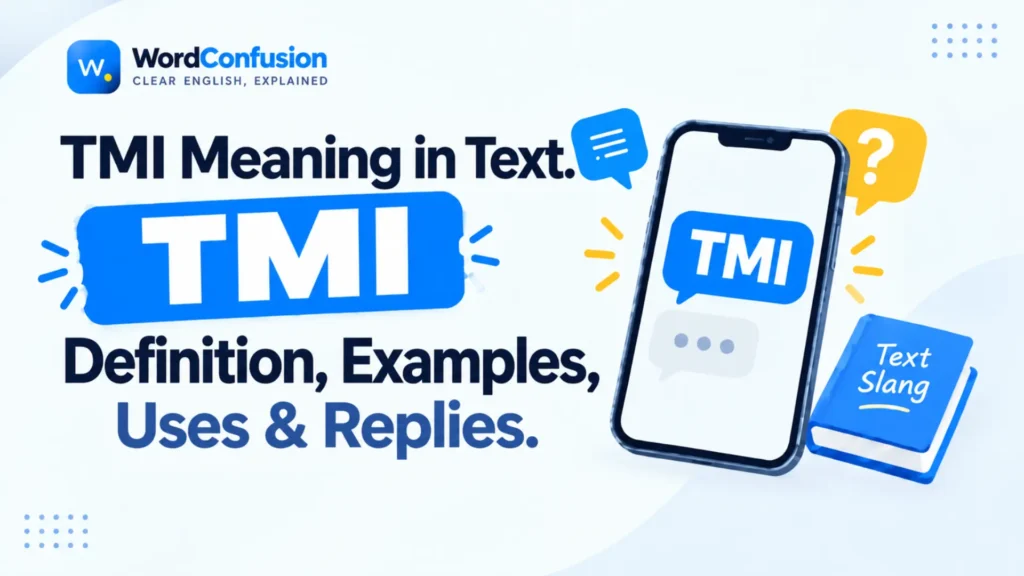
A friend shares a long dentist story, and the reply arrives as three letters: TMI. The sender laughs, apologizes, or wonders whether the message crossed a line with the group.
The TMI meaning in text looks simple, yet the tone behind it changes with every chat and friendship. Some people send it as a playful groan, while others send it as a firm signal to stop. Readers who know ngl meaning in text will notice how often TMI follows an honest confession.
This guide covers the full form, origin, platform habits, real examples, and polite replies for TMI. It separates TMI from close terms such as TLDR, NSFW, and oversharing, so readers pick the right one.
Quick Answer: What Does TMI Mean in Text?
TMI means “too much information” in text, and people send it when a message overshares. It usually reacts to personal, gross, or awkward details about bodies, relationships, or private habits. The tone depends on context, so TMI can sound playful between friends or blunt in a work chat. Close friends usually send it with a laugh emoji, not with real annoyance or anger.
TMI Meaning in Text at a Glance
The table below gathers the main facts about TMI in one place for quick reference.
| Detail | TMI |
|---|---|
| Full form | Too much information |
| Word type | Interjection or short reply |
| Main use | Reaction to oversharing |
| Usual tone | Playful to blunt |
| Formality | Informal only |
| Common places | Texts, Snapchat, TikTok, Discord |
| Typical reply | A laugh or a quick apology |
The table shows that TMI works as a casual reaction, so it rarely belongs in formal writing.
What Does TMI Stand For?
TMI stands for “too much information,” a phrase that flags a message as more personal than needed. The three words describe the content, not the sender, which keeps the reaction lighter than a direct insult. People usually type it in capital letters, though lowercase tmi carries the same meaning in casual chats.
The phrase does not claim the information is false or useless in any way. It only says the reader received more detail than the moment or the friendship required. That difference matters, because TMI judges the amount of sharing, not the truth of the story.
In simple words, TMI means a message shared more personal detail than the reader wanted.
Senders use TMI for stories about bathroom trips, medical symptoms, dating details, and strange personal habits. It also appears after long rants about exes, family fights, or private money problems shared too early. The common thread is privacy, since TMI marks details that most people keep to themselves.
How TMI Works in a Conversation
TMI follows a simple pattern in most chats, and the sequence below shows each stage clearly.
Person A shares a personal detail
        ↓
Person B reads it and reacts with "TMI"
        ↓
Person A laughs, apologizes, or changes the topic
        ↓
The chat moves on with a lighter mood
The first message usually contains a detail about the body, a relationship, or a private habit. The reader replies with TMI to mark a boundary while keeping the exchange friendly and short. Most senders answer with a laugh or a quick apology, and the conversation continues without tension.
Sometimes the pattern breaks, and the sender takes TMI as criticism instead of a joke. In those cases, a follow up message such as “lol all good” repairs the mood quickly. Emojis carry much of the tone, so TMI with a laughing face reads softer than plain capitals.
Key Characteristics of TMI
TMI shares a few clear traits across every platform, and these points help readers spot it quickly:
- TMI always reacts to content that someone else shared, never to the sender’s own message.
- The abbreviation flags personal or private details, not boring, false, or confusing information in a chat.
- Its tone ranges from a joking groan to a firm boundary, depending on the friendship and topic.
- People type it in capitals, lowercase, or stretched forms such as TMIIII for extra comic effect.
- TMI often travels with emojis such as 😂, 😭, or 🙈 that soften the reaction considerably.
- Senders also use TMI before a story as a warning that personal details will follow.
- The term belongs to informal speech, so it rarely appears in emails, reports, or school essays.
Where Did TMI Come From?
The full phrase “too much information” existed in plain English long before texting shortened it to three letters. Spoken English used the phrase as a joking complaint whenever someone shared an awkward personal detail. Most dictionaries place the spread of the slang sense in American speech during the 1990s.
Early chat rooms, forums, and instant messengers pushed the short form into daily online use. Typing three capital letters saved time and still delivered the same comic reaction as the full phrase. Merriam Webster and other major dictionaries now list TMI as an informal expression with this meaning.
Mobile texting gave TMI a second boost, because short replies fit small screens and quick thumbs. Social apps such as Snapchat, Instagram, and TikTok kept the term alive for younger users. Today, TMI appears in comment sections, group chats, captions, and even spoken conversation among friends.
How People Use TMI on Different Platforms
TMI keeps its core meaning everywhere, but each app shapes the tone and placement in small ways.
| Platform | Typical use | Usual tone |
|---|---|---|
| Text messages | Reply to a personal story | Playful |
| Snapchat | Caption or chat reply to an awkward snap | Joking |
| Comment under a candid post | Teasing | |
| TikTok | Comment on storytime videos | Playful or critical |
| Discord | Reply in a server channel | Blunt |
| Slack or Teams | Rare, mild boundary | Careful |
The table shows that private chats lean playful, while public channels and work tools lean more careful.
TMI on Snapchat and Instagram
Snapchat users often send TMI in reply to a candid snap, such as a bathroom selfie. The disappearing format keeps the exchange light, so most TMI replies there carry a joking tone. On Instagram, TMI usually shows up in comments when a creator shares a surprisingly personal caption.
TMI on TikTok
TikTok storytime videos invite TMI comments because creators often share embarrassing details for laughs. Some creators even open videos with “this might be TMI” to hook viewers into watching longer. Viewers answer in the comments with TMI plus laughing emojis, which signals amusement more than disgust.
TMI on Discord and in Work Chats
Discord servers hold many members, so a TMI reply there sometimes works as gentle moderation. Members use it to steer a channel away from personal topics without starting a long argument. In work tools such as Slack, people rarely type TMI, and they usually soften it with an emoji.
Different Ways TMI Shows Up in Messages
TMI takes several forms beyond a plain reaction, and each form carries a slightly different purpose.
TMI as a Reaction
The reaction form is the most common use, and it answers a message that already overshared. A friend describes a stomach bug in detail, and the reply comes back as a single TMI. This form works best between people who joke often and share a relaxed friendship.
Maya: That taco truck wrecked my stomach, I have been in the bathroom all morning
Leo: TMI 😂 but drink some water
TMI as a Warning Before Sharing
Many senders place TMI before a story to warn the reader about personal content ahead. Phrases such as “sorry if this is TMI” or “TMI but” act as a polite heads up. This warning form gives the reader a chance to brace for details or ask the sender to stop.
Priya: TMI but I finally got my period after three weeks of waiting
Ana: Not TMI at all, glad it showed up
TMI as a Question
Some people ask “was that TMI?” after sharing something personal, which checks the reader’s comfort level. The question shows awareness and care, so readers usually respond with reassurance or a gentle joke. This form keeps friendships comfortable because it invites honest feedback without pressure.
Sam: I cried at the dentist because the numbing shot hurt so much. Was that TMI?
Jordan: Nah, dentists are scary, fair enough
TMI as a Playful Tease
Friends sometimes send TMI as a tease when the detail is harmless but funny to exaggerate. Someone shares that they ate cereal for dinner, and a friend fires back with TMIIII and laughing faces. The stretched spelling signals that the reader is joking, not uncomfortable or annoyed.
TMI in Lowercase and With Emojis
Lowercase tmi reads softer and more casual than capital letters in most group chats today. Emojis such as 🙈 or 😭 add humor and remove any sense of judgment from the reply. Plain capitals with a period, such as “TMI.”, read colder and may signal real discomfort.
Is TMI Rude?
TMI is not inherently rude, but tone, timing, and topic decide how the reader receives it. Between close friends, TMI usually reads as affectionate teasing that keeps the conversation fun. Between coworkers or new acquaintances, the same three letters can sound dismissive or cold.
The topic matters most when someone shares something serious, such as grief, illness, or a painful breakup. Replying with TMI to a vulnerable message may signal that the reader does not care. Do not send TMI when a person opens up about pain, loss, or a hard health situation.
Emojis and extra words soften the reaction a great deal in almost every context. “Haha TMI but I hope it gets better” sounds kind, while a bare “TMI” sounds sharp. Readers who doubt the tone can add a short follow up line to show warmth.
TMI Examples in Real Conversations
Real examples show how TMI changes across friendships, topics, and platforms, so the samples below cover several cases.
Example 1: Between Close Friends
Chris: My new gym routine has me sweating through three shirts a day
Ella: TMI 😭 but proud of you
Ella teases Chris about the sweat detail while still praising the effort, which keeps the tone warm. The emoji and the follow up compliment remove any sting from the three letters.
Example 2: In a Group Chat
Dev: Update: the rash on my leg is spreading and turning purple
Mia: TMIIII
Noah: Bro go see a doctor
Mia reacts to the graphic detail with a stretched TMI, while Noah offers practical advice instead. The group reacts in different ways, which shows that TMI often sits beside other replies.
Example 3: As a Warning
Zara: Sorry if this is TMI, but my date last night chewed with his mouth open the whole time
Lily: Not TMI, that is a red flag
Zara flags her own story before sharing it, and Lily confirms that the detail felt acceptable. This exchange shows how the warning form opens space for honest feedback from the reader.
Example 4: On a Work Channel
Tom: Running late, my toddler threw up on me right before I left
Manager: Oof, TMI 😅 take your time
The manager uses TMI lightly and pairs it with kindness, which keeps the exchange professional and friendly. Without the emoji and the kind follow up, the reply could sound harsh in a workplace.
Example 5: In a TikTok Comment
Comment: The part about your roommate's toenail collection is wild, TMI but I need part twoThe commenter uses TMI as playful praise, since the detail shocked them but kept them watching. Creators often welcome comments such as this one because they show strong viewer interest.
TMI vs Oversharing: What Is the Difference?
TMI and oversharing describe the same situation from two different sides of the conversation.
| Point | TMI | Oversharing |
|---|---|---|
| Type of word | Reaction abbreviation | Behavior or habit |
| Who uses it | The reader or listener | Anyone describing the sender |
| Length | Three letters | Full word |
| Usual tone | Playful to blunt | Neutral to critical |
The table shows that oversharing names the action, while TMI is the quick reply to that action.
A person overshares when they reveal private details too early or in the wrong setting. The reader reacts with TMI to name that moment in a short and lighthearted way. In casual talk, people also say “sorry for oversharing” as a fuller version of “sorry, TMI.”
TMI vs TLDR vs NSFW
These three abbreviations all warn about content, but each one flags a different problem with the message.
| Term | Full form | Problem it flags | Typical place |
|---|---|---|---|
| TMI | Too much information | Too personal | Replies to stories |
| TLDR | Too long, didn’t read | Too long | Long posts and summaries |
| NSFW | Not safe for work | Explicit or graphic | Warnings before links or images |
The table shows that TMI concerns privacy, TLDR concerns length, and NSFW concerns explicit content.
A long message about tax rules might earn TLDR, yet it would rarely earn TMI. A short message about a bathroom emergency might earn TMI, though nobody would call it too long. NSFW usually appears before content as a warning, whereas TMI usually follows content as a reaction.
TMI vs SMH: Which Reaction Fits?
TMI and SMH both react to a message, yet they express distinct moods toward the sender. Readers who studied smh meaning in text know that SMH shows disappointment or disbelief. TMI shows mild discomfort with personal detail, while SMH judges a choice, an action, or an opinion.
| Term | Full form | Reacts to | Mood |
|---|---|---|---|
| TMI | Too much information | Personal or gross details | Amused or uneasy |
| SMH | Shaking my head | Bad choices or silly behavior | Disappointed |
The table shows that TMI targets the level of detail, while SMH targets the decision behind a story.
Some messages earn both reactions at once, which explains why friends sometimes stack them together. A friend who admits eating expired yogurt might receive “TMI and SMH” in a single reply. The pair says the detail was too much and the choice was questionable.
How to Use TMI Correctly
Using TMI well depends on reading the chat, the person, and the topic before typing the three letters.
Step 1: Check the Relationship
Think about how close the friendship is before sending TMI as a reply to anyone. Close friends usually read it as a joke, while new contacts may read it as a rebuke. Save the bare form for people who already share a relaxed and joking style.
Step 2: Read the Topic Carefully
Look at whether the message describes something funny, gross, or painful for the person sharing it. Funny and gross topics suit TMI well, but painful topics call for care and support. A health scare or a loss deserves kindness, so skip TMI in those moments entirely.
Step 3: Add a Softener
Pair TMI with an emoji, a laugh, or a short kind line to keep the tone warm. “TMI 😂 hope the stomach settles soon” lands far softer than a bare TMI with a period. Softeners matter most in group chats, where several people read the reply at once.
Step 4: Pick the Right Form
Choose between the reaction form, the warning form, and the question form based on the situation. Use the warning form before sharing a personal story, and use the reaction form after reading one. The question form works best after oversharing, since it checks whether the reader stayed comfortable.
Step 5: Watch the Response
Read the sender’s next message to see how the TMI reply landed with them. A laugh means the joke worked, while silence or an apology may signal hurt feelings. Follow up with a friendly line if the reply seemed to sting more than intended.
Tips for Replying When Someone Says TMI
Receiving a TMI reply can sting a little, but these tips keep the conversation easy and friendly:
- Laugh it off with a short reply such as “haha fair” to keep the mood light.
- Apologize briefly with “my bad” if the detail truly crossed a line for the other person.
- Change the topic with a new question so the chat moves forward without awkward silence.
- Ask “too much?” when the reaction seems unclear, since honest feedback prevents future misunderstandings in chats.
- Avoid long explanations, because defending the story usually stretches the awkward moment even further.
- Read the group mood before sharing similar details again in the same chat or channel.
- Keep calm, since most TMI replies come from amusement, not from real anger or disgust toward the sender.
Other Meanings of TMI
TMI almost always means “too much information” in casual chats, but a few other contexts use it differently.
| Context | Meaning of TMI |
|---|---|
| Texting and social media | Too much information |
| History and energy news | Three Mile Island |
| Captions and storytime posts | Warning of personal details ahead |
| Formal writing | Rarely used, so spell it out |
The table shows that context decides the meaning, and chat apps almost always point to oversharing.
TMI also stands for Three Mile Island, the Pennsylvania nuclear plant linked to a 1979 accident. News articles, history lessons, and energy reports use this meaning, so the topic makes the difference clear. A text from a friend about lunch will never refer to the nuclear plant, which removes any confusion.
Best Practices for Using TMI
Good use of TMI starts with matching the reply to the friendship and the setting of the chat. Close friends enjoy playful TMI replies, but coworkers and new contacts often need a gentler version. A short emoji or a kind follow up turns a blunt reaction into a friendly one.
Writers should avoid TMI in emails, school assignments, and formal messages, because it reads as slang. In those settings, a full sentence such as “that detail is a bit personal” sounds clearer. Spelling out the idea also avoids confusion for readers who do not know chat abbreviations.
Senders who often receive TMI replies can adjust by using the warning form before personal stories. A quick “TMI warning” lets friends decide whether they want the details before reading them. This small habit builds trust and keeps group chats comfortable for every member.
Common Mistakes With TMI
Even simple slang causes trouble when people misuse it, and these mistakes appear often in real chats.
1. Using TMI in Formal Emails
Some people carry TMI into work emails, where it reads as careless and too casual for the setting. Managers and clients may not know the abbreviation, so the message can confuse or annoy them. Write a full sentence instead when a work conversation drifts toward personal details.
2. Replying TMI to Serious News
A friend who shares grief, illness, or trauma needs support, not a quick joke about oversharing. Replying with TMI in those moments can sound cold and may damage the friendship for weeks. Respond with care first, and save TMI for funny or harmless stories.
3. Sending TMI Without Any Tone Marker
A bare TMI with a period often reads as annoyance, even when the sender meant it playfully. Text strips away voice and facial expression, so readers fill the gap with the worst guess. Add an emoji or a laugh to show the intended mood clearly.
4. Confusing TMI With TLDR
Some new texters send TMI when a message is long, though TLDR fits that problem better. TMI concerns how personal the content is, not how many words the message holds. Mixing the two confuses friends and makes the reply seem random or rude.
5. Overusing TMI in One Chat
Replying TMI to every personal message makes friends hesitant to share anything real with the group. Constant use turns a playful reaction into a silent rule against honesty and openness. Use it for truly awkward moments, and let ordinary personal updates pass without comment.
6. Assuming TMI Always Means Anger
Senders sometimes panic after a TMI reply and assume the friendship suffered real damage. Most TMI replies come from amusement, so a laugh or a quick “fair” settles the moment. Ask directly if the reaction seems unclear, instead of guessing and worrying in silence.
TMI Practice: Read These Messages
The table below tests how well readers can judge TMI in different situations before sending a reply.
| Message | Does TMI fit? |
|---|---|
| “My cat threw up in my shoe this morning” | Yes, playful TMI works |
| “My grandmother passed away last night” | No, offer support |
| “I ate cold pizza for breakfast again” | Yes, as a light tease |
| “Here is my full report on the budget” | No, TLDR fits better |
| “Sorry if this is TMI, but my toe is infected” | Yes, the sender already flagged it |
The table shows that TMI fits awkward or gross details, but never fits grief or plain long messages.
TMI Checklist
Run through this checklist before sending TMI, so the reply lands the way the sender intends:
- Confirm that the message shares personal, awkward, or gross details, not serious or painful news.
- Check that the friendship seems close enough for a playful reaction without causing any hurt feelings.
- Add an emoji or a short kind line to soften the three letters in most chats.
- Avoid TMI in emails, school work, and formal channels where slang reads as careless or unclear.
- Choose TLDR instead when the problem is message length and not personal detail or privacy.
- Use the warning form before sharing a personal story that might surprise or bother the reader.
- Watch the sender’s next reply and follow up kindly if the reaction seemed to sting.
Frequently Asked Questions
What does TMI mean in text?
The TMI meaning in text is “too much information,” a reply to messages that share personal details. People use it when a story seems too private, gross, or awkward for the chat.
What does TMI stand for?
TMI stands for “too much information,” and people type it as a quick reaction to oversharing. The abbreviation works in texts, comments, captions, and group chats across almost every social app.
Is TMI rude to say?
TMI is not inherently rude, but the tone depends on the friendship, the topic, and the timing. Adding an emoji or a kind line usually keeps the TMI reply friendly and light.
How should someone reply to TMI?
A short laugh, a quick “my bad,” or a topic change usually works well after a TMI reply. Long explanations tend to stretch the awkward moment, so brief responses keep the chat moving.
What does TMI mean on Snapchat?
On Snapchat, TMI means “too much information,” usually sent in reply to a candid or awkward snap. Friends there tend to use TMI as a joke, since the disappearing format keeps chats casual.
What does TMI mean on TikTok?
On TikTok, TMI means “too much information” and often appears in comments under storytime videos. Creators also open clips with “this might be TMI” to warn viewers about personal details ahead.
Can TMI be used at work?
TMI can appear in casual work chats, but it rarely belongs in emails or formal messages. Coworkers usually soften TMI with an emoji, since the bare form can sound cold or dismissive.
What does “sorry if this is TMI” mean?
The phrase “sorry if this is TMI” warns the reader that personal details will follow in the message. It gives the reader a chance to stop the story or prepare for the TMI content.
What is the difference between TMI and TLDR?
TMI flags a message as too personal, while TLDR flags a message as too long to read. A short but private story earns TMI, whereas a long but ordinary post earns TLDR.
Does TMI have other meanings?
Outside texting, TMI can stand for Three Mile Island, the Pennsylvania nuclear plant tied to a 1979 accident. In chats and social apps, though, TMI almost always means “too much information.”
Key Takeaways
- TMI stands for “too much information” and reacts to messages that share overly personal details.
- People send TMI after stories about bodies, relationships, bathroom trips, or strange private habits.
- The tone ranges from playful teasing to a firm boundary, depending on friendship and topic.
- Emojis such as 😂 and 🙈 soften TMI and remove most of its sharp or cold edge.
- Senders often place TMI before a story as a warning, such as “sorry if this is TMI.”
- The question form “was that TMI?” checks the reader’s comfort level after someone overshares something personal.
- TMI concerns privacy, TLDR concerns length, and NSFW concerns explicit or graphic content in messages.
- SMH shows disappointment in a choice, while TMI shows mild discomfort with the level of detail.
- Never reply with TMI when someone shares grief, illness, trauma, or other painful personal news.
- Formal emails and school work call for full sentences, since TMI reads as casual slang there.
- Outside chat apps, TMI can refer to Three Mile Island, the site of a 1979 nuclear accident.
- A short laugh or a quick apology works best when someone receives a TMI reply unexpectedly.
Final Thoughts
The TMI meaning in text comes down to three words: too much information about something personal. Friends use it to tease, warn, or set a gentle boundary when a story gets too private. The same letters can sound warm or cold, so emojis, timing, and topic shape every reply.
Readers who match TMI to the right friendship and the right moment will rarely cause hurt feelings. Save it for funny or awkward details, skip it for painful news, and soften it with a laugh. With those habits, TMI stays a playful tool that keeps group chats honest and comfortable.
Explore more plain English text meaning guides and slang explainers on Word Confusion.
Written by
 Abdul Moeed
 is a professional content writer and SEO link-building specialist with 5+ years of experience. He creates search-optimized content and develops effective SEO strategies that improve website visibility, authority, and organic growth.
View LinkedIn profileLatest posts
 AI Detection vs Plagiarism Checking: Why Students Need Both?
 What Are Peptides: Meaning, Types, Uses & Safety Facts
 Furlough Meaning: Definition, Examples, Pay & Layoff Rules
 Discernment Meaning: Definition, Origin, Examples & Uses
 E.g. Meaning in Text: Full Form, Usage, Examples & i.e. Difference
 Humanize AI Text for Blogs: How to Keep E-E-A-T Signals Intact