Requester vs Requestor: Which One Should You Use?

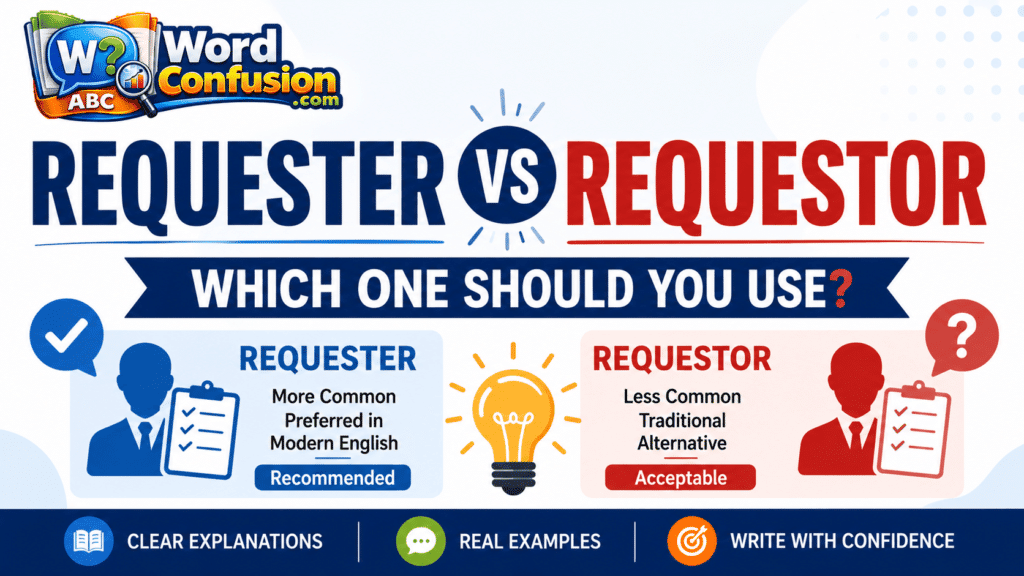
Have you ever seen both requester and requestor in documents, emails, or software systems and wondered which spelling is correct? The good news is that both words are valid English terms. However, they are not equally common.
In most modern English writing, requester is the preferred spelling. Requestor appears less often and is usually found in legal documents, procurement systems, government forms, and IT service management platforms.
This guide explains the meaning of each term, their differences, examples, usage rules, and when to choose one over the other.
Quick Answer
Requester and requestor both mean a person who makes a request.
- Requester is the more common and widely accepted spelling.
- Requestor is less common but still correct.
- Most dictionaries and style guides favor requester.
- Specialized industries such as IT, procurement, and legal services may use requestor.
If you’re unsure which spelling to use, requester is usually the safest choice.
Featured Snippet Answer
Requester and requestor both refer to a person who makes a request. The difference is not in meaning but in usage. Requester is the standard spelling used in general and professional English, while requestor is less common and often appears in legal, procurement, and IT-related contexts.
Requester vs Requestor at a Glance
| Feature | Requester | Requestor |
| Meaning | Person making a request | Person making a request |
| Correct English Word | Yes | Yes |
| Frequency of Use | Very common | Less common |
| Preferred in Modern English | Yes | Usually no |
| Business Writing | Preferred | Sometimes used |
| Legal Documents | Accepted | Common |
| IT Service Management | Used | Common |
| Dictionary Recognition | Yes | Yes |
What Does Requester Mean?
A requester is a person who asks for something, seeks information, submits a request, or formally requests an action.
Requester Definition
Requester (noun): A person who makes a request.
The word follows a common English pattern in which the suffix -er is added to a verb to indicate the person performing the action.
Examples include:
- Teach → Teacher
- Drive → Driver
- Request → Requester
Requester Examples
- The requester submitted a support ticket yesterday.
- Each requester must complete the application form.
- The requester received a confirmation email.
- Our team contacted the requester for additional details.
- The requester approved the final proposal.
What Does Requestor Mean?
A requestor also refers to a person who makes a request.
Its meaning is essentially identical to requester.
Requestor Definition
Requestor (noun): A person who formally requests something.
Although less common in everyday English, requestor is still recognized as a legitimate word and appears in many professional environments.
Requestor Examples
- The requestor must provide identification documents.
- The requestor approved the procurement request.
- The IT department notified the requestor about the ticket status.
- The requestor signed the legal agreement.
- The requestor received authorization from management.
Requester vs Requestor: Key Differences
The primary difference between these words is usage preference, not meaning.
| Aspect | Requester | Requestor |
| Meaning | Same | Same |
| Modern English Preference | Higher | Lower |
| General Writing | Preferred | Rare |
| Technical Systems | Sometimes | Common |
| Formal Legal Usage | Accepted | Often preferred |
Meaning
There is no meaningful difference in definition.
Both terms describe someone who makes a request.
Spelling
The distinction comes from the ending:
- Requester
- Requestor
Usage Frequency
Requester appears much more frequently in:
- Websites
- Articles
- News publications
- Business communication
- Academic writing
Requestor appears more frequently in:
- Government forms
- Procurement software
- Legal documents
- IT service management systems
Which Spelling Is More Common?
The overwhelming majority of modern English writers use requester.
This preference follows a broader pattern in English where agent nouns ending in -er are generally more common than those ending in -or.
Examples:
| Common Form | Less Common Alternative |
| Adviser | Advisor (still common) |
| Requester | Requestor |
| Inquirer | Inquiror |
| Publisher | Publishor (not used) |
Because English speakers naturally recognize the -er ending, requester tends to feel more familiar and readable.
Dictionary Preference Comparison
| Dictionary Style | Preferred Form |
| General English Dictionaries | Requester |
| Business Writing References | Requester |
| Legal References | Both |
| Technical Documentation | Either |
| IT Service Platforms | Often Requestor |
Most modern references recognize both spellings, but requester receives wider everyday use.
Is Requestor a Real Word?
Yes.
One of the most common misconceptions is that requestor is incorrect.
That is not true.
Requestor is:
- A valid English word
- Recognized by dictionaries
- Used in legal writing
- Common in procurement terminology
- Frequently used in IT service management
The issue is not correctness. The issue is frequency and preference.
Requester simply appears more often in standard English.
Why Is Requester More Common Than Requestor?
The answer lies in English word formation.
The -er Pattern
English frequently uses -er to identify the person performing an action.
Examples include:
- Writer
- Reader
- Teacher
- Speaker
- Builder
- Requester
This pattern feels natural to most readers.
The -or Pattern
The suffix -or usually appears in words that originated from Latin traditions or established historical usage.
Examples include:
- Actor
- Creator
- Director
- Auditor
Because request developed differently in English, the -er version became more widely accepted.
When Should You Use Requester?
Use requester whenever you are writing for a general audience.
General Writing
Examples:
- Blog posts
- Articles
- Reports
- Manuals
Business Communication
Examples:
- Emails
- Internal memos
- Client correspondence
- Workplace documents
Academic Writing
Examples:
- Research papers
- Essays
- Educational materials
Example
✔ The requester submitted the required documentation.
This version will sound natural to most readers.
When Should You Use Requestor?
Use requestor when following industry-specific conventions.
Legal Documents
Many contracts and legal forms use requestor because it has become established terminology within certain organizations.
Procurement Systems
Procurement software often labels the person submitting a purchasing request as the requestor.
IT Service Management (ITSM)
Many ticketing systems and help-desk platforms use requestor as a field label.
Example
✔ The requestor must approve the purchase requisition before processing.
In these contexts, using requestor may align better with existing terminology.
Requester vs Requestor Examples in Sentences
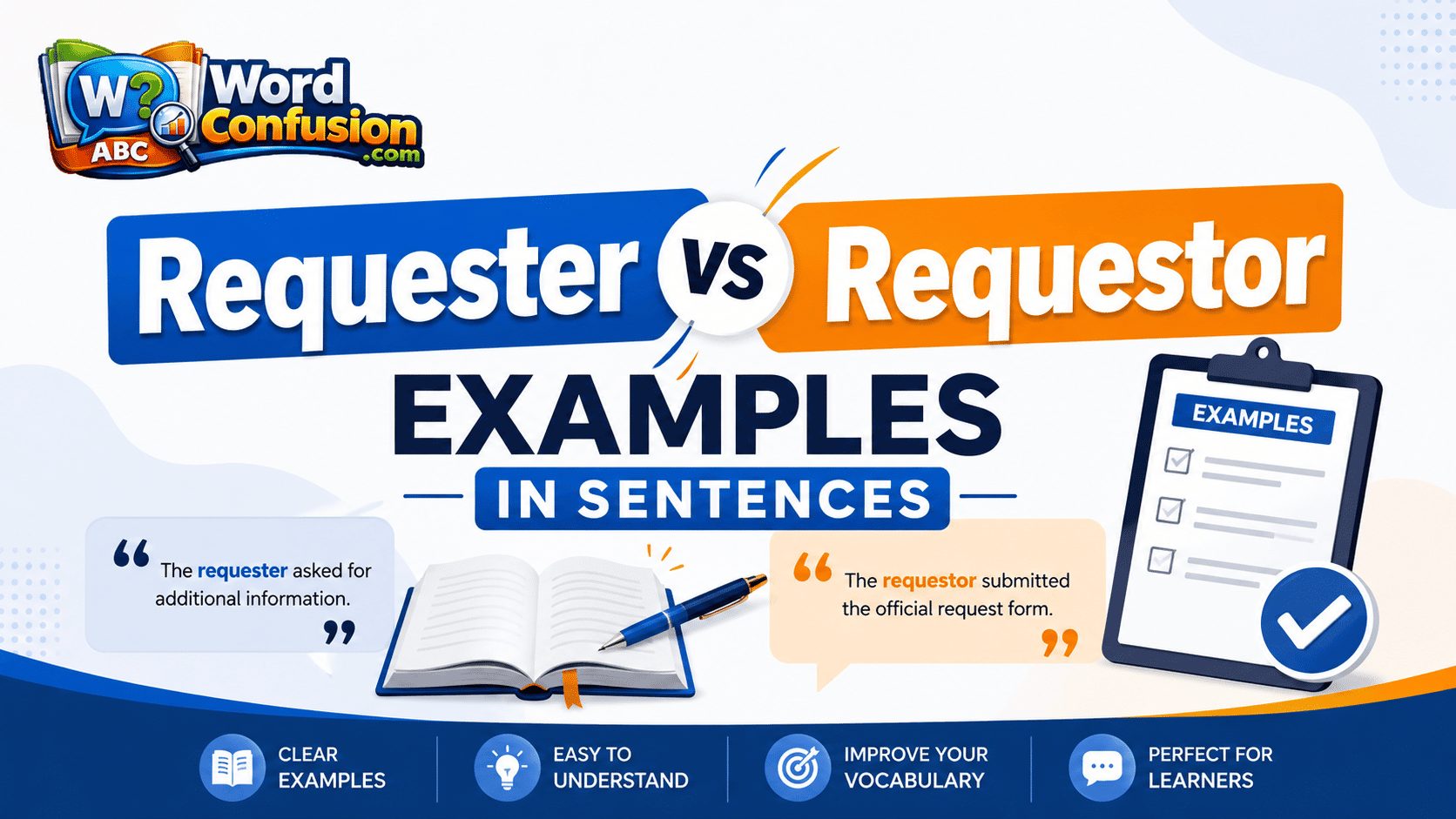
Requester Examples
- The requester asked for a copy of the report.
- Every requester must complete the registration form.
- The requester received an automated response.
- The requester updated the support ticket.
- Our team contacted the requester directly.
Requestor Examples
- The requestor submitted a procurement request.
- The requestor approved the contract revision.
- The requestor received system-generated notifications.
- The requestor provided supporting documentation.
- The requestor was informed of the approval status.
Industry-Specific Usage Guide
Different industries often develop their own preferred terminology.
| Industry | Preferred Term |
| General English | Requester |
| Business Writing | Requester |
| Academic Writing | Requester |
| Journalism | Requester |
| Customer Service | Requester |
| Procurement | Requestor |
| IT Service Management | Requestor |
| Government Forms | Requestor |
| Legal Documentation | Either |
Understanding your audience is often more important than the spelling itself.
Requester vs Applicant
Some writers confuse requester with applicant, but the words are not interchangeable.
| Term | Meaning |
| Requester | Person making a request |
| Applicant | Person applying for something |
Examples
- A requester may ask for information.
- An applicant may apply for a job.
A person can sometimes be both, but the words serve different purposes.
Can Requester and Requestor Be Used Interchangeably?
In most situations, yes.
Because both words share the same meaning, they can usually replace one another without changing the message.
However, consistency matters.
Best Practice
Choose one spelling and use it throughout the document.
Avoid writing:
❌ The requester submitted the form, and the requestor later approved it.
Unless you intentionally mean different system roles, consistency improves readability.
Common Mistakes Writers Make
1. Thinking Requestor Is Incorrect
Many people assume requestor is not a real word.
It is a valid English term.
2. Assuming Different Meanings
Both words mean essentially the same thing.
3. Mixing Both Spellings
Using requester and requestor interchangeably in the same document can confuse readers.
4. Ignoring Industry Standards
If your software platform uses requestor, changing it to requester may create inconsistency.
Pro Tips for Choosing the Correct Spelling
Tip #1
For blogs, websites, and articles, choose requester.
Tip #2
For professional communication, requester is usually the safest option.
Tip #3
If your organization already uses requestor in forms or software, follow the established terminology.
Tip #4
Maintain consistent spelling throughout a document.
Tip #5
When writing for a broad audience, requester generally sounds more natural.
Frequently Asked Questions
Is requester or requestor correct?
Both are correct English words. However, requester is the more common spelling in modern English.
What is the difference between requester and requestor?
There is no significant difference in meaning. The main difference is usage preference and industry convention.
Is requestor a valid English word?
Yes. Requestor is a recognized English noun used in legal, procurement, and IT-related contexts.
Why is requester more common than requestor?
Requester follows the highly productive English -er noun pattern, making it more familiar to readers.
Can requester and requestor be used interchangeably?
In most situations, yes. Both refer to a person who makes a request.
Which spelling do dictionaries prefer?
Most general English references favor requester because it appears more frequently in modern usage.
How do you use requester in a sentence?
Example: The requester submitted the information before the deadline.
How do you use requestor in a sentence?
Example: The requestor approved the purchase request through the company portal.
Is requestor commonly used in business writing?
It appears in some business environments, especially procurement and enterprise software systems, but requester remains more common overall.
Should I use requester or requestor in American English?
Both are acceptable, but requester is generally preferred unless an organization specifically uses requestor.
Final Verdict
When comparing requester vs requestor, the most important point is that both spellings are correct and share the same meaning. They both refer to a person who makes a request.
However, requester is the preferred spelling in modern English, professional communication, academic writing, and most business contexts. Requestor remains valid but is largely associated with legal documents, procurement systems, government forms, and IT service management platforms.
If you’re writing for a general audience and are unsure which version to choose, requester is usually the best option because it is more familiar, more widely used, and easier for readers to recognize.
If you’re learning English vocabulary and commonly confused words, you may also enjoy our guides on Reevaluation or Re-evaluation, Goodmorning or Good Morning, and Cancellation vs Cancelation. Understanding these distinctions will make your writing clearer, more accurate, and more professional.
Written by
 Abdul Moeed
Abdul Moeed is a professional content writer and SEO link-building specialist with 5+ years of experience. He creates search-optimized content and develops effective SEO strategies that improve website visibility, authority, and organic growth.
View LinkedIn profileLatest posts
 What Does PG Mean in Text? Meaning, Examples & Usage
 What Does OFCC Mean in Text? Meaning, Uses & Examples
 What Does MSG Mean in Text? Meaning, Examples & Usage
 What Does STY Mean in Text? Meaning, Examples & Usage
 What Does “Twin” Mean in Slang? Meaning, Text & Examples
 What Does LMC Mean in Text? Meaning, Examples & Usage