Fair vs Good Difference: Meaning,& Clear Comparison

Introduction
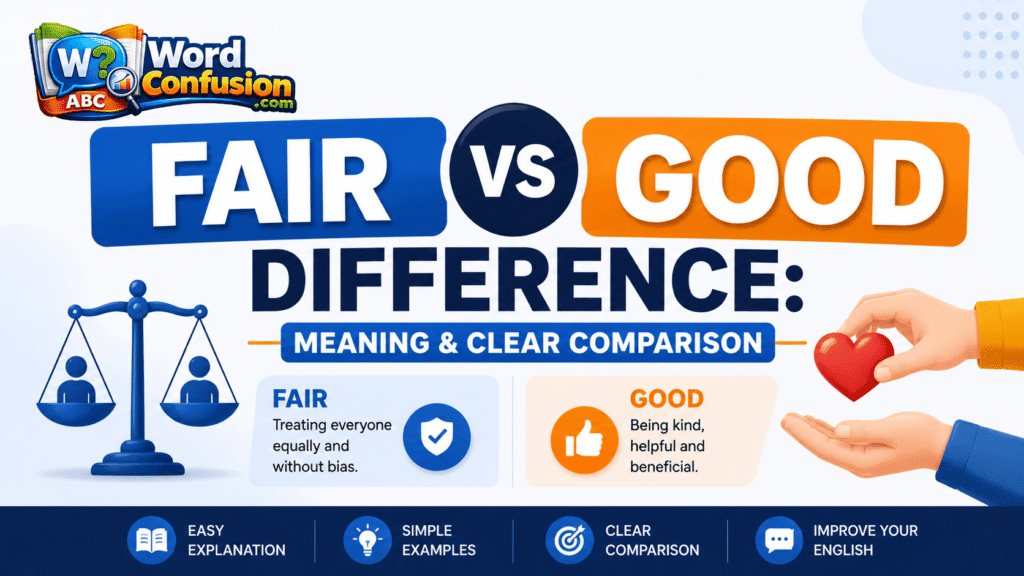
The difference between fair vs good is mainly about performance level and evaluation intensity. In most grading and rating systems, fair represents an average or acceptable level, while good indicates above-average performance or quality. However, the exact meaning can change depending on context such as school grading, workplace performance reviews, product ratings, or credit evaluations.
In simple terms, “good” is usually better than “fair,” but both depend on the system being used.
Quick Answer – Fair vs Good Difference
“Fair” generally means average, acceptable, or moderate performance, while “good” refers to above-average, positive, or strong performance. In most grading or evaluation systems, good ranks higher than fair, though interpretation can vary depending on academic, workplace, or rating contexts.
What Does Fair Mean?
The word “fair” in evaluation systems usually means:
- Average performance
- Meets minimum expectations
- Not poor, but not strong either
- Needs improvement in some areas
In simple words:
Fair = “Okay, but improvement needed.”
Example:
- A student with fair grades is passing but not excelling.
- An employee with fair performance meets basic job requirements but lacks consistency or high output.
- A product rated as fair works, but may have noticeable flaws.
What Does Good Mean?
The word “good” represents a higher level of performance:
- Above average quality
- Consistent and reliable performance
- Meets expectations well
- Few or minor issues
In simple words:
Good = “Solid performance with few problems.”
Example:
- A student with good grades performs well in most subjects.
- An employee with good performance contributes effectively and consistently.
- A product rated as good is dependable and satisfies most users.
Fair vs Good Comparison Table
| Context | Fair Meaning | Good Meaning | Which is Higher? |
| School grading | Average / passing level | Above average performance | Good |
| Workplace review | Basic expected performance | Strong consistent performance | Good |
| Product rating | Works but has flaws | Reliable and satisfactory | Good |
| Credit evaluation | Moderate credit standing | Strong credit profile | Good |
| General usage | Acceptable but not strong | Positive and reliable | Good |
Key Differences Between Fair and Good
1. Performance Level
- Fair = Mid-level or average performance
- Good = Above-average performance
2. Quality Perception
- Fair = Neutral to slightly positive
- Good = Clearly positive
3. Expectation Match
- Fair = Meets minimum expectations
- Good = Exceeds basic expectations
4. Decision Impact
- Fair = May require improvement or review
- Good = Considered satisfactory and reliable
Fair vs Good in School Grading Systems
In academic grading, schools often use descriptive terms instead of numbers.
Fair in academics:
- Passing but low achievement
- Struggles in understanding concepts
- Needs academic support
Good in academics:
- Strong understanding of subjects
- Consistent performance in exams
- Above-average results
Simple interpretation:
- Fair = “You are passing, but just enough”
- Good = “You are doing well”
Fair vs Good in Workplace Performance Reviews
In professional environments, performance language is very important.
Fair performance:
- Meets job requirements but inconsistently
- Limited initiative
- Requires supervision or improvement
Good performance:
- Consistently meets or exceeds expectations
- Reliable and productive
- Shows initiative and responsibility
Workplace impact:
A “good” rating often leads to better opportunities, while “fair” may indicate development needs.
Fair vs Good in Product and Service Ratings
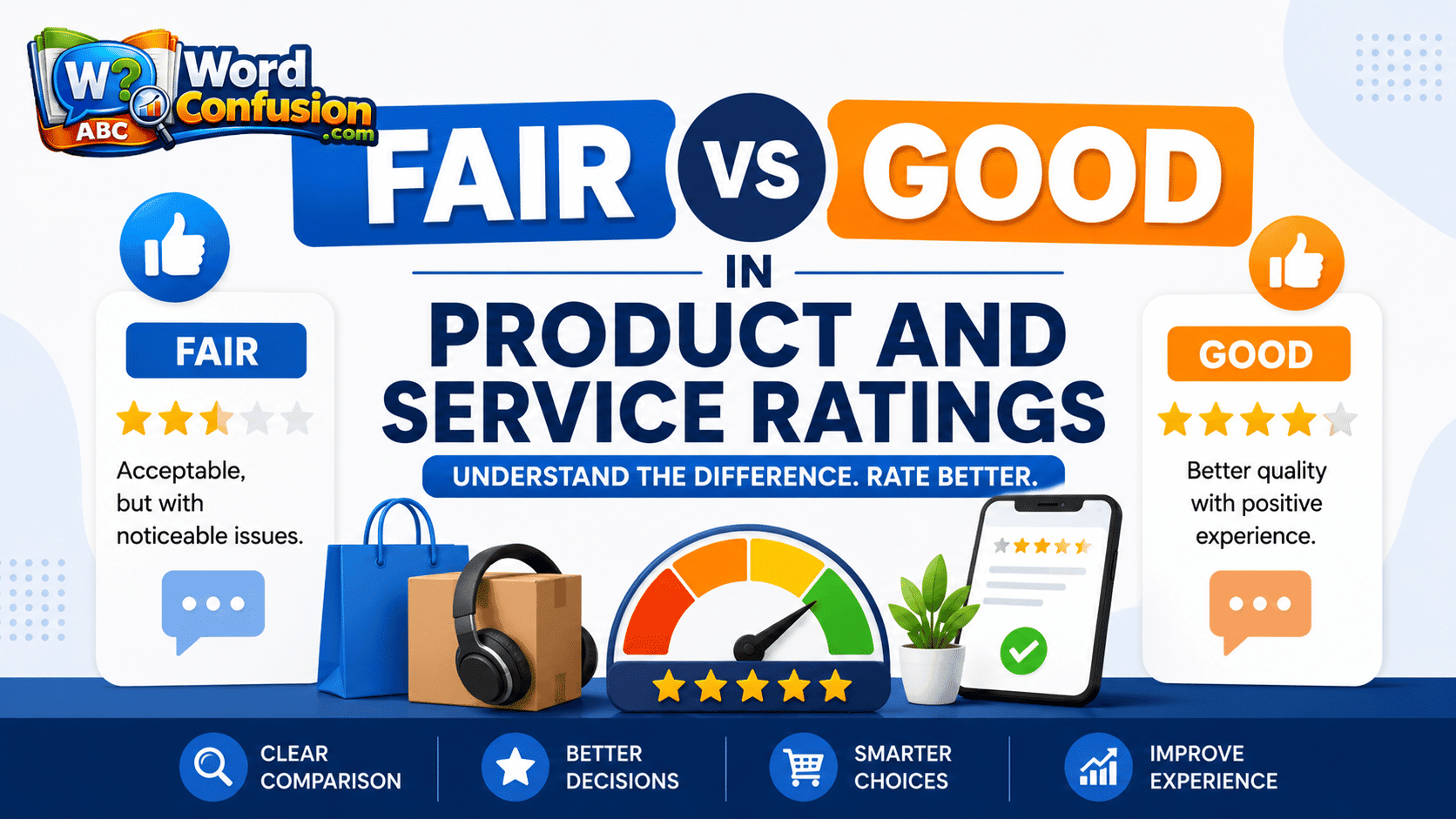
Consumers often see these terms in reviews or condition descriptions.
Fair condition:
- Functional but visibly worn or imperfect
- May have defects or reduced performance
Good condition:
- Works well with minimal issues
- Maintains quality and usability
Example:
- A used phone in fair condition may have scratches or battery issues.
- A used phone in good condition works smoothly with minor wear.
Fair vs Good in Credit and Financial Contexts
Credit systems also use similar language.
Fair credit:
- Moderate credit score range
- Limited loan benefits
- Higher interest rates
Good credit:
- Strong credit score
- Better loan approval chances
- Lower interest rates
Key takeaway:
Good credit is significantly more favorable than fair credit in financial systems.
Why People Confuse Fair and Good
Many learners get confused because:
- Both sound positive in everyday language
- Some systems define “fair” as acceptable rather than weak
- Different industries use different rating scales
- Cultural interpretation of words varies
Example confusion:
In casual speech, “fair” can mean “reasonable,” but in grading systems it often means “just average.”
Real-Life Examples
1. Education Example
- Fair student: Passing but struggling with exams
- Good student: Performs well across subjects
2. Workplace Example
- Fair employee: Meets basic expectations
- Good employee: Reliable and productive
3. Consumer Example
- Fair product: Works but not impressive
- Good product: Satisfying and dependable
Common Mistakes in Interpretation
Mistake 1: Thinking fair means good
Not always true in structured systems like grading or reviews.
Mistake 2: Ignoring context
The meaning changes in school, work, and consumer ratings.
Mistake 3: Assuming universal scale
Not all organizations use the same rating hierarchy.
Pro Tips to Use Fair vs Good Correctly
- Always check the context (academic, workplace, product)
- Treat “fair” as neutral or average unless defined otherwise
- Treat “good” as clearly above average
- Look at the full rating scale (poor → excellent)
- Avoid interpreting words in isolation
Fair vs Good in Different Rating Scales
Many systems use a full progression like:
Poor → Fair → Good → Very Good → Excellent
In this structure:
- Fair = lower-middle level
- Good = upper-middle level
FAQs
Does fair mean good?
No. In most structured rating systems, fair means average, while good means above average.
Is good better than fair?
Yes. Good typically ranks higher than fair in performance and grading systems.
Is fair condition better than good?
No. Good condition is more desirable than fair condition.
What does fair mean in grading?
It usually means average performance that meets minimum expectations.
Conclusion
The fair vs good difference comes down to performance level and evaluation strength. Fair represents an average or acceptable level, while good indicates above-average and reliable performance. Although both terms can sound positive, “good” is generally considered better in most academic, workplace, and rating systems. Understanding the context is essential to interpreting these terms correctly and avoiding confusion in evaluations.
If you’re learning English vocabulary and commonly confused words, you may also enjoy our guides on Requester vs Requestor, Reevaluation or Re-evaluation, and Goodmorning or Good Morning. Understanding these distinctions will make your writing clearer, more accurate, and more professional.
Written by
 Abdul Moeed
Abdul Moeed is a professional content writer and SEO link-building specialist with 5+ years of experience. He creates search-optimized content and develops effective SEO strategies that improve website visibility, authority, and organic growth.
View LinkedIn profileLatest posts
 What Does PG Mean in Text? Meaning, Examples & Usage
 What Does OFCC Mean in Text? Meaning, Uses & Examples
 What Does MSG Mean in Text? Meaning, Examples & Usage
 What Does STY Mean in Text? Meaning, Examples & Usage
 What Does “Twin” Mean in Slang? Meaning, Text & Examples
 What Does LMC Mean in Text? Meaning, Examples & Usage