Using or Useing: Which Spelling Is Correct?
 Abdul Moeed
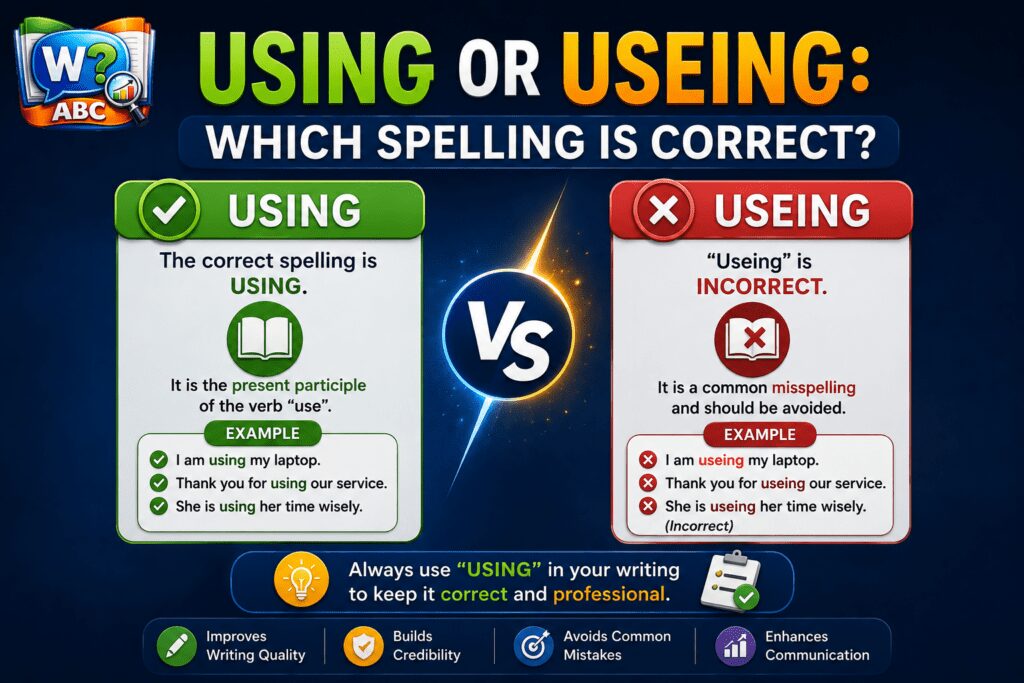
Have you ever typed useing and wondered whether it was correct? You’re not alone. Many English learners and even native speakers occasionally get confused about the spelling of words that end in -ing.
The good news is simple: using is the correct spelling, while useing is incorrect.
In this guide, you’ll learn why using is spelled without the letter e, the grammar rule behind it, common mistakes to avoid, and practical examples that make the rule easy to remember.
Using or Useing: Quick Answer
Which Spelling Is Correct?
✅ Using — Correct
❌ Useing — Incorrect
The verb use follows a common English spelling rule. When a verb ends with a silent e, you usually remove the e before adding -ing.
Use → Using
Not:
Use → Useing ❌
Quick Comparison Table
| Word | Correct? | Explanation |
| Using | ✅ Yes | Correct present participle of use |
| Useing | ❌ No | Misspelling of using |
Featured Snippet Answer
Using is the correct spelling, while useing is incorrect. English spelling rules generally require dropping a silent “e” before adding “-ing” to a verb. Therefore, the verb “use” becomes “using,” just as “make” becomes “making” and “come” becomes “coming.”
What Does “Using” Mean?
The word using is the present participle and gerund form of the verb use.
It means:
- Employing something
- Utilizing something
- Operating something
- Applying something for a purpose
Examples
- I am using a new laptop.
- She is using her notes to study.
- They are using solar energy to reduce costs.
Why Is “Using” Correct and “Useing” Incorrect?
The answer comes from one of the most important English spelling rules.
Understanding the Silent E Rule
Many English verbs end with a silent e.
Examples:
- use
- make
- come
- move
- hope
When these verbs take the -ing ending, the silent e is usually dropped.
| Base Verb | Correct -ing Form |
| Use | Using |
| Make | Making |
| Come | Coming |
| Move | Moving |
| Hope | Hoping |
Since use ends in a silent e, the correct form becomes:
Use → Using
Why the E Is Removed
The final e in use does not affect the pronunciation once -ing is added.
Because it becomes unnecessary, English spelling conventions remove it.
Think of it this way:
- use → using
- make → making
- move → moving
The pattern stays consistent.
How the Verb “Use” Changes to “Using”
Present Participle Formation
A present participle is formed by adding -ing to a verb.
For verbs ending in a silent e, the process looks like this:
- Start with the base verb.
- Remove the silent e.
- Add -ing.
Example:
use → using
Continuous Tense Usage
The word using commonly appears in continuous tenses.
Examples:
- I am using the computer.
- She was using her phone.
- They are using a new system.
- We have been using this method for years.
Examples of Using in Sentences
Everyday Examples
- I am using a pen to write this note.
- He is using the kitchen right now.
- We are using public transportation today.
Academic Examples
- Researchers are using advanced software to analyze data.
- Students are using online resources for revision.
- The teacher is using visual aids during the lesson.
Professional Writing Examples
- Our team is using a cloud-based platform.
- The company is using customer feedback to improve services.
- Employees are using updated security procedures.
Is Useing a Real Word?
No.
Useing is not recognized as a standard English word.
Major dictionaries list using as the correct form and do not recognize useing as a proper spelling.
Why Does Useing Appear Online?
You may still see useing on:
- Social media posts
- Forum discussions
- Student assignments
- Informal messages
However, these occurrences are spelling mistakes rather than accepted usage.
Why People Commonly Write “Useing”
Even though the rule is simple, many people still type useing.
The Base Word Influences Your Brain
When writers see the word use, they often feel tempted to keep the final e.
As a result, they incorrectly write:
use + ing = useing ❌
Instead, the spelling rule requires:
use + ing = using ✅
Pronunciation Doesn’t Help
When spoken, using sounds similar to what many learners expect from the spelling useing.
Because English spelling is not always perfectly phonetic, pronunciation can sometimes be misleading.
Fast Typing Causes Errors
Many spelling mistakes happen because people type quickly without reviewing their work.
That’s why proofreading remains important.
English Spelling Rule: Drop the E Before Adding -Ing
This rule applies to many common verbs.
Rule Explained
If a verb ends with a silent e, remove the e before adding -ing.
Examples:
| Verb | Correct Form |
| Use | Using |
| Make | Making |
| Move | Moving |
| Hope | Hoping |
| Bake | Baking |
| Drive | Driving |
Common Exceptions
Some words keep the e when removing it would affect pronunciation or clarity.
Examples include:
- seeing
- agreeing
- dyeing
These are special cases that follow different spelling conventions.
Similar Examples of the Same Rule
Understanding related words helps reinforce the pattern.
Making or Makeing
✅ Making
❌ Makeing
Correct:
- She is making dinner.
Incorrect:
- She is makeing dinner.
Coming or Comeing
✅ Coming
❌ Comeing
Correct:
- He is coming tomorrow.
Incorrect:
- He is comeing tomorrow.
Hoping or Hopeing
✅ Hoping
❌ Hopeing
Correct:
- We are hoping for good weather.
Incorrect:
- We are hopeing for good weather.
Moving or Moveing
✅ Moving
❌ Moveing
Correct:
- They are moving to a new house.
Incorrect:
- They are moveing to a new house.
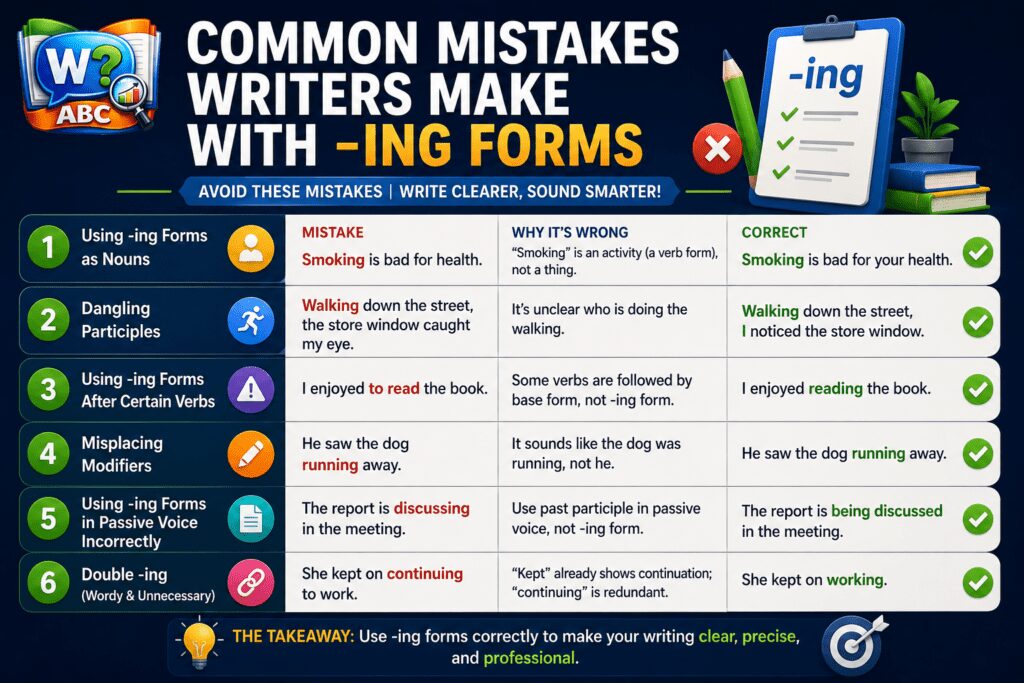
Common Mistakes Writers Make With -Ing Forms
Keeping the Silent E
Many writers mistakenly preserve the final e.
Examples:
useing
makeing
moveing
Correct forms:
using
making
moving
Doubling Consonants Incorrectly
Some learners double letters when they shouldn’t.
Examples:
❌ writting
❌ visitting
Correct:
✅ writing
✅ visiting
Confusing Gerunds and Participles
Although both end in -ing, they serve different grammatical functions.
Gerund:
- Using technology improves productivity.
Participle:
- She is using technology today.
Using vs Useing Comparison Table
| Feature | Using | Useing |
| Correct English spelling | ✅ Yes | ❌ No |
| Found in dictionaries | ✅ Yes | ❌ No |
| Used in formal writing | ✅ Yes | ❌ No |
| Used in academic writing | ✅ Yes | ❌ No |
| Accepted by grammar checkers | ✅ Yes | ❌ No |
Tips to Remember the Correct Spelling
Memory Trick
Remember this simple phrase:
Drop the silent E before adding ING.
Examples:
- use → using
- make → making
- move → moving
Once you learn this rule, you’ll automatically spell dozens of words correctly.
Proofreading Tip
When editing your writing, quickly scan for words ending in:
- eing
Most of the time, they may need correction.
Examples:
- useing → using
- makeing → making
- moveing → moving
Why Correct Spelling Matters in Writing
Some people think a small spelling mistake doesn’t matter.
In reality, spelling affects credibility and professionalism.
Academic Writing
Teachers and examiners often view spelling accuracy as a sign of language proficiency.
Professional Communication
Misspelled words can make emails, reports, and presentations appear less polished.
Content Publishing and SEO
Website owners, bloggers, and content creators should use correct spelling because:
- It improves readability.
- It increases trust.
- It helps maintain professional standards.
- It prevents user confusion.
Common Spelling Errors Similar to “Useing”
Many English learners make similar mistakes.
| Incorrect | Correct |
| Useing | Using |
| Makeing | Making |
| Comeing | Coming |
| Moveing | Moving |
| Hopeing | Hoping |
| Writeing | Writing |
Learning one spelling rule helps you avoid many of these errors.
Frequently Asked Questions
Is using or useing correct?
Using is correct. Useing is a misspelling.
Why is using spelled without e?
English spelling rules usually require dropping a silent e before adding -ing.
Is useing a real word?
No. It is considered a spelling mistake rather than a valid English word.
What is the present participle of use?
The present participle of use is using.
Is “by using” grammatically correct?
Yes.
Examples:
- You can improve your writing by using grammar tools.
- We solved the problem by using a different approach.
What are other words that drop e before ing?
Examples include:
- make → making
- move → moving
- hope → hoping
- drive → driving
- bake → baking
Is using a verb or a noun?
It can function as both.
Verb form:
- She is using the computer.
Gerund (noun form):
- Using technology saves time.
Final Verdict
When choosing between using and useing, the correct spelling is always using.
The reason is straightforward: English spelling rules generally require dropping a silent e before adding -ing. Therefore, use becomes using, not useing.
If you’re ever unsure, remember this simple rule:
Drop the silent E before adding ING.
That one rule will help you correctly spell not only using, but also making, coming, moving, hoping, and many other common English words.
Related Reading
- Platform vs Flatform: Which Spelling Is Correct?
- Encode vs Incode: Which Spelling Is Correct?
- Dought vs Doubt: Which Spelling Is Correct?
- Tweek vs Tweak Explained
- Investor vs Investee: Meaning