Simple Ways to Make Learning Spanish Easier

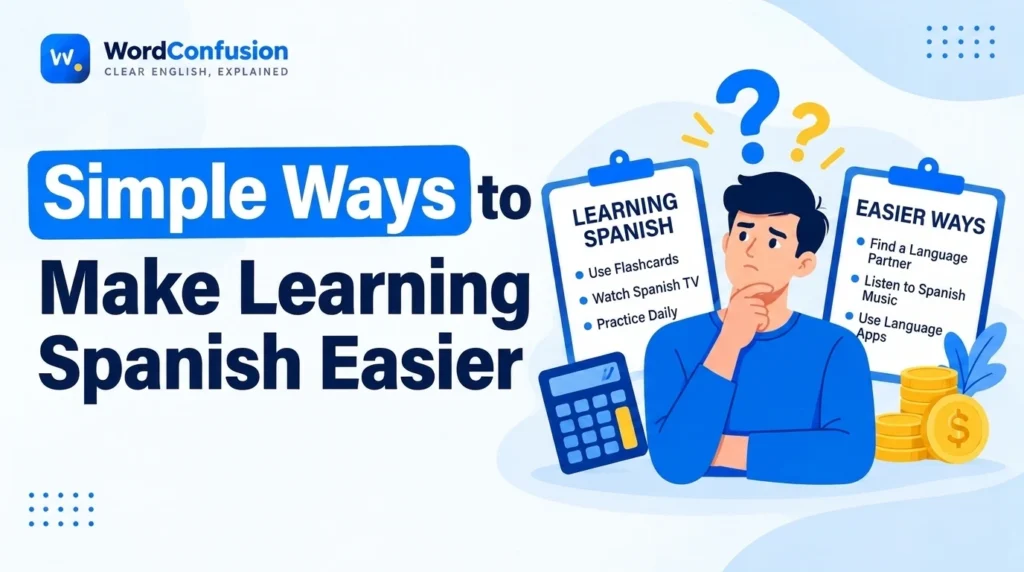
Spanish is one of the most learnable languages for English speakers, sharing thousands of Latin roots with English. Its spelling is regular, and its grammar follows clear patterns. Still, many learners struggle when learning Spanish. The problem is rarely a lack of talent; it usually comes down to the wrong methods. The following techniques address common learning mistakes and help you make steady progress.
Master the Sound System First
Spanish has five pure vowel sounds. Each one stays the same in every word. English vowels shift constantly, so this is a habit you must retrain. Drill a, e, i, o, and u until they feel automatic. Structured Spanish lessons online can give you guided pronunciation practice from day one.
A few sounds trip up English speakers. These are the rolled r, the soft d between vowels, and the j sound. Record yourself saying them. Compare your audio to a native speaker clip. Fix one sound per week.
Build Vocabulary With Frequency in Mind
The most common 1,000 words cover most daily conversation. Start there. Rare words can wait until your base is solid.
Use these filters when you pick words to study:
- Choose cognates first, such as animal, hospital, and importante.
- Learn verbs before adjectives. Verbs carry the sentence.
- Study words inside short phrases, not alone.
- Watch for false friends. Embarazada means pregnant, not embarrassed.
Learn Verbs as Patterns
Spanish verbs change endings by person and tense. This looks heavy. It is actually predictable. Regular verbs fall into three groups: -ar, -er, and -ir.
Start with the present tense of hablar, comer, and vivir. Then add the preterite and imperfect. Apply the same endings to new verbs. Irregular verbs like ser, ir, and tener need direct memorization. Learn them early because they appear in almost every conversation.
Use Spaced Repetition
Memory fades along a curve. Reviewing at growing intervals flattens it. Apps like Anki schedule these reviews for you. A common spacing is one day, three days, one week, then one month.
Keep cards simple. Put one fact on each card. Add a sentence for context. Delete cards you never miss, since they waste review time.
Turn Words Into Images
Visual memory is strong. Link each new word to a picture, not to an English translation. This shortens recall time and reduces mental translation.
You can build themed vocabulary albums with captions in Spanish. Printed photo books make a durable review tool you can flip through anytime. Pair each image with the word, an article, and one short sentence.
Labels also work well. Tag objects you see daily. Door becomes puerta. Fridge becomes refrigerador. Remove each label once you recall the word without hesitation.
Train Your Ear With Comprehensible Input
Listening improves fastest with material you mostly understand. Aim for audio where you catch about 70 to 80 percent. Slow podcasts and graded readers fit this range. Native speed news can wait.
Use a two pass method. Listen once for the general idea. Listen again with a transcript. Write down unknown phrases. Then shadow the speaker by repeating each line half a second behind. This trains rhythm and stress.
Speak Before You Feel Ready
Speaking exposes gaps that reading hides. Start in week one. A simple daily routine works well:
- Describe your day aloud for two minutes.
- Record the clip and replay it.
- Note three errors.
- Repeat the same topic the next day with fixes.
Verify spelling, accents, and usage against a trusted reference. The Real Academia Española dictionary is the standard authority for the language. Use it when learning materials disagree. Also note that vocabulary differs between Spain and Latin America. Pick one variety as your base and stay consistent.
Practice With Real-Life Situations
Connect learning Spanish to everyday activities. Order food using a Spanish menu, follow a simple recipe, or write your shopping list in Spanish. These tasks help you recall vocabulary in practical contexts rather than memorizing isolated terms.
You can also change your phone language to Spanish or follow Spanish-speaking creators who discuss topics you enjoy. When you encounter unfamiliar expressions, save a few and review them later. Avoid looking up every unknown word immediately. First, use context to guess its meaning, then verify your understanding. Over time, these small habits make learning Spanish feel less like a school subject and more like a natural part of daily life.
Track Progress and Stay Consistent
Short daily sessions beat long weekly ones. Thirty minutes of learning Spanish each day builds more than three hours on Sunday. Set a fixed time and connect your practice to a habit you already have.
Measure your progress every month. Test yourself on 50 words, one verb tense, and a two-minute talk in Spanish. Where your scores drop, adjust your focus. Small, steady changes help you improve your vocabulary, strengthen your grammar, and develop confidence in speaking Spanish.
Written by
 Abdul Moeed
 is a professional content writer and SEO link-building specialist with 5+ years of experience. He creates search-optimized content and develops effective SEO strategies that improve website visibility, authority, and organic growth.
View LinkedIn profileLatest posts
 AI Detection vs Plagiarism Checking: Why Students Need Both?
 What Are Peptides: Meaning, Types, Uses & Safety Facts
 Furlough Meaning: Definition, Examples, Pay & Layoff Rules
 Discernment Meaning: Definition, Origin, Examples & Uses
 E.g. Meaning in Text: Full Form, Usage, Examples & i.e. Difference
 TMI Meaning in Text: Definition, Examples, Uses & Replies