WTF Meaning in Text: What It Means, Uses & Examples
 Abdul Moeed
Author
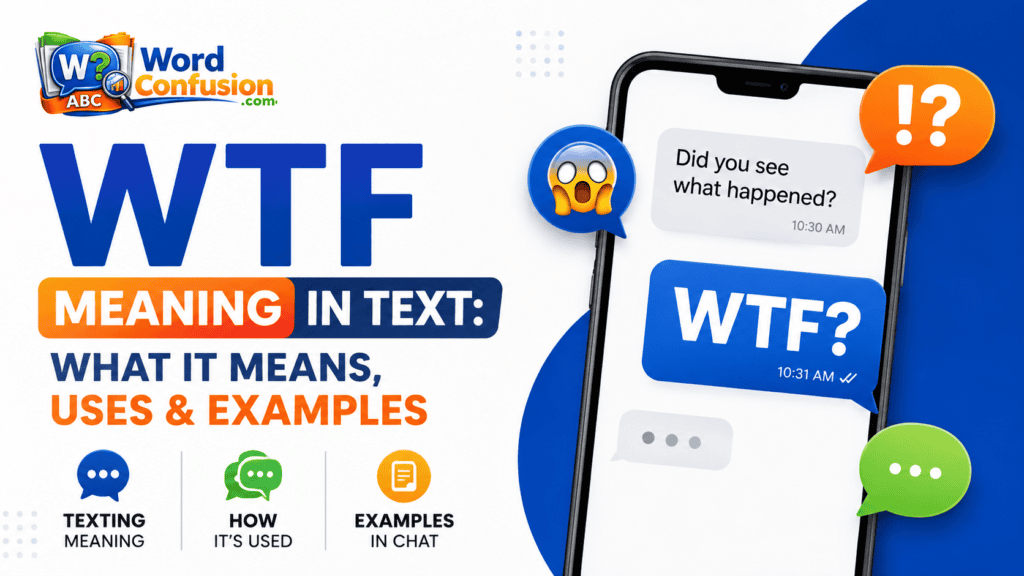
A friend shares a shocking news headline, and a reply arrives with three letters: WTF. Those letters appear in millions of chats, comments, and captions, yet many readers miss their tone.
This guide explains WTF meaning in text through its tone, clean alternatives, and other neutral uses. It also covers social media habits, workplace etiquette, and polite ways to reply to the abbreviation. Readers who decode texting slang may also like our guide to imk meaning in text.
This article keeps every explanation family-friendly, so parents, teachers, and students can read it comfortably. It describes how the abbreviation works without repeating the vulgar word behind its most common form.
Quick Answer: What Does WTF Mean in Text?
WTF in text usually expresses strong shock, disbelief, confusion, or frustration about something surprising. Its common full form contains a vulgar word, so many people treat WTF as rude. In formal or family settings, polite options like “What the heck” or “Are you serious?” work better. Rarely, WTF also stands for neutral names, such as Twitter’s old “Who To Follow” feature.
WTF Meaning in Text at a Glance
| Context | What WTF Signals | Example |
|---|---|---|
| Casual texting | Shock or disbelief | “WTF, it snowed in May?” |
| Group chats | Confusion | “WTF happened here?” |
| Video comments | Amazed surprise | “WTF, how is that possible?” |
| Old Twitter feature | Who To Follow | Suggested accounts box |
| Sports history | World Taekwondo Federation | Former name before 2017 |
| Programming humor | Confusing code | “WTFs per minute” |
Casual chats use WTF as a reaction, while organizations and features use the letters as initials.
What Does WTF Stand For?
WTF stands for a short exclamation that people type when something surprises or confuses them. The full phrase starts with “What the” and ends with a vulgar word that this guide skips. That rude ending explains why parents, teachers, and employers often discourage the abbreviation in messages.
The meaning matters more than the letters, because WTF works as a reaction instead of information. Readers should focus on what surprised the sender, since that detail drives the whole message. A clean phrase such as “What on earth?” carries the same reaction without any offensive language.
In simple words, WTF is a loud “What?!” that signals shock or deep confusion.
Key Characteristics of WTF in Text
The following key characteristics help readers recognize WTF and its tone in any message:
- WTF works as a reaction, so it rarely carries facts, plans, or new details by itself.
- The abbreviation signals strong emotion, usually shock, disbelief, confusion, or mild frustration about an event.
- Its common full form includes a vulgar word, which makes WTF unsuitable for formal writing.
- Writers type it in capitals or lowercase, and both forms carry the same basic meaning.
- Punctuation changes the tone, so “wtf?” sounds confused while “WTF!!!” sounds angry or amazed.
- Outside slang, the same letters once named a sports federation and a Twitter recommendation feature.
Why Do People Type WTF Instead of Full Sentences?
Texting rewards speed, so people shrink strong reactions into three quick letters during busy conversations. A sender who types WTF reacts in under a second, while a full sentence takes longer. That speed explains why the abbreviation spreads fastest in group chats, live streams, and gaming sessions.
Social habits also play a part, because young users copy the reactions they see from friends. Many teens type WTF without thinking about its vulgar root or how elders might read it. Gentle conversations about tone help them pick cleaner reactions without any shame or embarrassment.
How People Use WTF in Text Messages
People send WTF in five main situations, and each one carries a slightly different emotional tone.
WTF to Show Shock
Shock drives most WTF messages, especially after surprising news, sudden changes, or unexpected results. A text such as “WTF, the exam moved to tomorrow?” shows the sender did not expect it. A calm reply that confirms the facts helps the sender process the surprise quickly.
WTF to Express Disbelief
Disbelief appears when a sender cannot accept a claim, a price, or a story as true. Someone who reads “Concert tickets cost $400” might reply “WTF?” because the price seems unreal. Sharing a source or a screenshot usually settles that doubt within a single message.
WTF to Signal Confusion
Confused senders use “wtf?” with a question mark when a message makes no sense to them. A garbled voice note, a strange meme, or a typo can trigger this reaction in group chats. Clarifying the original message in plain words resolves the confusion faster than an argument would.
WTF to Vent Frustration
Frustrated senders type WTF when apps crash, buses run late, or plans fall apart suddenly. The anger in these messages usually targets the situation, not the person reading the text. A patient, sympathetic reply calms the conversation better than matching the sender’s rough language.
WTF as Amazed Praise
Friends sometimes send WTF after an impressive goal, drawing, or talent show performance online. In that case, the letters carry amazement, similar to saying “How did you do that?” Emojis like the shocked face or fire symbol usually reveal this positive reading clearly.
| Situation | Emotion | Clue |
|---|---|---|
| Surprising news | Shock | Exclamation marks |
| Unbelievable claim | Disbelief | Question marks |
| Strange message | Confusion | Lowercase “wtf?” |
| Broken plan | Frustration | Angry emojis |
| Amazing skill | Amazement | Fire or star emojis |
Punctuation and emojis around WTF reveal the emotion faster than the letters themselves ever could.
Is WTF Rude or Offensive?
Yes, many people consider WTF rude, because its full form includes a vulgar swear word. Close friends may shrug it off, but elders, teachers, and managers often react with real disapproval. The abbreviation hides the swear word visually, yet every reader still knows what the letters represent.
Platforms also treat WTF differently, since several school apps and workplace tools filter it automatically. Families and faith communities that value clean speech often ask children to avoid the abbreviation entirely. Choosing gentler words shows respect for readers and keeps conversations calm and dignified.
| Setting | How WTF Comes Across | Better Choice |
|---|---|---|
| Close friends | Casual but crude | “No way!” |
| Family chat | Disrespectful | “What on earth?” |
| School group | Inappropriate | “Wait, seriously?” |
| Work message | Unprofessional | “Could you clarify?” |
| Public comment | Rude to strangers | “Wow, that’s surprising.” |
The more formal the setting, the more damage WTF can do to the sender’s reputation.
Clean and Polite Alternatives to WTF
Polite alternatives carry the same surprise as WTF while keeping the conversation respectful and clean. Many people prefer the softer abbreviation WTH, which often stands for “What the heck.” Fully clean phrases such as “What on earth?” or “Are you serious?” suit every audience.
| Alternative | Tone | Best Setting |
|---|---|---|
| What on earth? | Surprised | Family and school |
| Are you serious? | Disbelief | Any chat |
| No way! | Excited shock | Friends |
| Wait, what? | Confused | Group chats |
| That’s unbelievable | Strong surprise | Comments |
| Could you explain? | Calm confusion | Work |
| WTH | Mild surprise | Casual friends |
Each alternative matches one emotion behind WTF, so pick the phrase that fits the moment.
Benefits of Choosing Polite Alternatives
Swapping WTF for cleaner reactions brings five clear benefits in personal and professional chats:
- Polite reactions protect relationships with elders, teachers, and managers who dislike crude abbreviations.
- Clean words keep group chats welcoming for children, relatives, and members from different cultures.
- Specific phrases like “Could you explain?” tell the sender exactly what the reader needs next.
- Respectful language avoids content filters on school platforms, workplace tools, and moderated online communities.
- Gentle reactions calm tense conversations instead of adding anger to an already stressful moment.
Other Meanings of WTF
Outside casual slang, the letters WTF have served as initials for three neutral names and terms.
WTF as “Who To Follow” on Twitter
Twitter once labeled its account suggestion box “Who To Follow,” which users shortened to WTF. Twitter engineers even published a research paper about the service under that playful abbreviation. Readers of older tech articles may still meet WTF in this harmless recommendation sense.
WTF as World Taekwondo Federation
The global taekwondo body operated as the World Taekwondo Federation, or WTF, for decades. In 2017, the organization renamed itself World Taekwondo, partly because of the slang meaning online. Older match reports and athlete profiles still mention WTF in this official sporting sense.
WTF in Programming Humor
Programmers joke that code quality depends on the number of WTF reactions per minute during review. A long-running tech humor site even rebranded briefly as “Worse Than Failure” to soften its name. These uses still lean on the slang reaction, so they suit casual tech conversations only.
Playful Clean Backronyms
Creative users invent clean expansions such as “Wow, That’s Fantastic” or “Where’s The Food?” for fun. These backronyms appear in jokes and captions, but readers rarely assume them without extra context. Writers who want a clear meaning should spell the full phrase instead of trusting the initials.
| Expansion | Field | Status |
|---|---|---|
| Who To Follow | Twitter feature | Older usage |
| World Taekwondo Federation | Sports | Renamed in 2017 |
| Worse Than Failure | Tech humor | Brief rebrand |
| Wow, That’s Fantastic | Playful backronym | Rare joke |
| Where’s The Food? | Playful backronym | Rare joke |
These neutral expansions exist, but casual readers still default to the slang reaction in most chats.
WTF Meaning on Social Media
Social media users post WTF in comments, captions, and replies whenever content surprises or confuses them. Each platform adds its own habits, so the sections below explain how the abbreviation appears there.
WTF on Instagram
Instagram users drop WTF in comments under surprising Reels, magic tricks, or extreme sports clips. Creators who want family friendly comment sections often hide or filter the abbreviation with keyword tools. Followers who prefer clean replies can type “No way!” or the shocked face emoji instead.
WTF on TikTok
TikTok viewers comment WTF when a video shows an unexpected twist, prank, or science experiment. Certain creators add the letters to on-screen text, which pushes curious viewers to keep watching. Brands avoid crude captions, so clean hooks like “Wait, what?” suit accounts that target younger audiences.
WTF on X (Twitter)
On X, users quote post surprising headlines with WTF to show shock in a few characters. Short reactions spread quickly there, alongside abbreviations explained in our guide to rt meaning in text. Older tech posts on the platform may also mention WTF as the Who To Follow feature.
WTF on Snapchat
Snapchat friends send WTF as a quick caption on surprising snaps or reply to odd photos. Because snaps vanish quickly, senders often treat WTF as a throwaway reaction instead of serious criticism. Parents who review a child’s Snapchat should talk calmly about cleaner words instead of punishing harshly.
WTF on WhatsApp
WhatsApp family groups usually frown on WTF, especially when elders and young children share the chat. Friend groups may use it casually, but a forwarded screenshot can reach unexpected readers later. Typing “What happened?” in these groups keeps the tone warm and invites a clear explanation.
WTF in Gaming and Discord
Gamers type WTF after surprise defeats, glitches, or lucky shots during fast online matches. Many Discord servers set auto-moderation rules that block or warn about crude abbreviations like this. Players who want to stay friendly can type “No way!” or “How?!” after a wild moment.
WTF on YouTube
YouTube commenters write WTF under surprising science videos, sports highlights, or unbelievable world records. Channels that target kids and families often block the abbreviation through YouTube’s comment filters. Viewers who want positive engagement can write “This blew my mind” or “Incredible!” instead.
| Platform | Typical WTF Use | Clean Swap |
|---|---|---|
| Comments on surprising Reels | “No way!” | |
| TikTok | Reactions to twists | “Wait, what?” |
| X | Shocked quote posts | “Unbelievable.” |
| Snapchat | Quick snap captions | “Seriously?” |
| Group chat reactions | “What happened?” | |
| Discord | Gaming surprises | “How?!” |
| YouTube | Comments on records | “Incredible!” |
Every platform offers a clean swap that keeps the surprise while removing the crude undertone.
WTF vs WTH vs SMH: What Is the Difference?
WTF, WTH, and SMH all react to surprising news, but their tone and politeness differ. The table below compares these three reactions and one fully clean option for formal chats.
| Term | Meaning | Politeness |
|---|---|---|
| WTF | Strong shock with a vulgar root | Rude |
| WTH | What the heck | Mildly casual |
| SMH | Shaking my head | Neutral disapproval |
| Wait, what? | Plain confusion | Fully polite |
Pick SMH for quiet disapproval and “Wait, what?” for confusion when politeness matters most.
WTF in School and Workplace Messages
Teachers and managers usually treat WTF as unprofessional, even inside private chats or quick messages. A student who sends it in a class group risks a warning from the teacher or school. Employees who use it on Slack or Teams may face complaints from colleagues or human resources.
Professional messages need clear, specific language, so “I’m confused about this change” works far better. That phrase names the problem and invites help instead of leaving the reader to guess. Screenshots of crude messages can travel far, so careful wording protects a person’s reputation for years.
WTF and Respectful Speech Across Cultures and Faiths
Many cultures and faith traditions value clean, gentle speech in daily conversations and online chats. Islamic teachings, for example, encourage believers to avoid foul language and to speak kindly. Readers from these backgrounds often avoid WTF entirely, even when friends use it casually.
Respecting these values in mixed groups shows good manners and keeps every member comfortable. A simple “Wow, that surprised me” carries honest emotion without offending anyone in the chat.
How Parents Can Talk to Kids About WTF
Parents often spot WTF on a child’s phone and wonder how to respond without starting a fight. A calm talk about tone and respect works better than strict punishment for a first mistake. Explaining why the abbreviation sounds rude helps children choose better words on their own.
Families can agree on a short list of clean reactions that children can use in every chat. Phrases like “No way!” and “That’s unbelievable” give kids an easy swap for surprising moments. Parents who model clean language in family groups make those habits far easier for children to follow.
Real Examples of WTF in Text Conversations
Example 1: A Sudden Schedule Change
Ali texts his friend, “WTF, practice moved to 6 a.m.?” after reading the coach’s update. Here, WTF shows shock, and a cleaner version would read “Wait, practice moved to 6 a.m.?”
Example 2: An Unbelievable Price
Maya sees a $90 phone case online and messages her sister, “WTF? Who pays that much?” The letters signal disbelief, and “Are you serious? Who pays that much?” carries the same reaction politely.
Example 3: A Confusing Group Message
Someone posts a garbled voice note in a class group, and a classmate replies “wtf?” The lowercase reply shows confusion, and “Sorry, I couldn’t hear that” would sound far kinder.
Example 4: An Amazing Goal
Omar shares a video of his long-range goal, and his cousin comments “WTF 🔥🔥”. The fire emojis turn the reaction into praise, much like writing “That goal was incredible!”
Example 5: A Crashed App
Sara loses her unsaved homework when an app crashes and texts her friend, “WTF, it’s all gone!” Frustration drives this message, and a supportive reply such as “Let’s try to recover it” helps most.
Each example shows that punctuation, emojis, and context reveal the emotion behind WTF within seconds.
How to Reply When Someone Sends WTF
Five calm steps help readers respond to WTF without escalating the conversation or matching crude language.
Step 1: Identify the Emotion
Read the punctuation and emojis first, because they reveal shock, confusion, frustration, or amazement. A question mark points to confusion, while fire emojis point toward praise or excitement.
Step 2: Find What Triggered It
Scroll up to the previous message, photo, or link that likely surprised the sender. Knowing the trigger lets the reply address the real issue instead of the abbreviation itself.
Step 3: Clarify or Confirm
If the sender seems confused, restate the original point in plain, simple words. If the sender seems shocked, confirm the facts calmly and share a source when possible.
Step 4: Keep the Reply Language Clean
Avoid answering with crude words, because matching rough language usually raises tension in the chat. Phrases like “I know, right?” or “Let me explain” keep the exchange friendly and respectful.
Step 5: Set a Gentle Boundary When Needed
In family or school groups, a polite note can ask members to keep the language clean. A message such as “Let’s keep this chat kid-friendly, please” sets the tone without shaming anyone.
Rule of thumb: answer the surprise behind WTF, not the rude letters themselves.
| Signal | Likely Emotion | Good Reply |
|---|---|---|
| “wtf?” | Confusion | “Let me explain.” |
| “WTF!!!” | Shock or anger | “I know, it surprised me too.” |
| “WTF 🔥” | Amazement | “Thank you!” |
| “WTF 😡” | Frustration | “That’s rough, how can I help?” |
| “WTF 😂” | Amused surprise | “Right? So funny.” |
Matching the reply to the signal keeps the chat calm and shows genuine attention to the sender.
Tips for Avoiding WTF in Everyday Messages
Follow these tips to express surprise clearly while keeping every message clean and respectful:
- Keep a short list of clean reactions like “No way!” and “What on earth?” ready.
- Use emojis such as the shocked face to show surprise without typing any crude letters.
- Name the exact surprise, such as “The price shocked me,” instead of reacting with initials.
- Pause for a few seconds before replying to frustrating news, so anger does not choose the words.
- Turn on available app filters that flag crude abbreviations before a message goes out.
- Model clean language in family groups, because children copy the reactions they see from adults.
- Choose “Could you clarify?” at work, since managers respond better to specific and polite questions.
Common Mistakes With WTF in Text
1. Assuming WTF Is Harmless Everywhere
Young readers often treat WTF as mild slang and send it to teachers, relatives, or clients. Its vulgar root offends many readers, so clean alternatives suit those audiences far better.
2. Taking Every WTF as an Insult
Readers sometimes assume WTF attacks them, when the sender only reacted to surprising news. Check the trigger first, because most WTF messages target a situation instead of a person.
3. Ignoring Punctuation and Emojis
Readers who skip punctuation miss the difference between confused, angry, and amazed WTF messages. A quick look at question marks, exclamation marks, and emojis prevents awkward misunderstandings.
4. Replying With Crude Language
Do not answer WTF with stronger swear words, because that turns a small surprise into a heated argument. Calm, clean replies lower the temperature and keep the focus on solving the real problem.
5. Trusting Clean Backronyms Too Much
Writers who claim WTF means “Wow, That’s Fantastic” may still confuse or offend their readers. Spell out the full positive phrase, because most readers assume the slang meaning by default.
6. Posting WTF in Public Comments
Public comments stay visible to strangers, employers, and family members for years after posting. Choose clean reactions online, since a single crude comment can damage a person’s reputation.
WTF Meaning in Text Checklist
Run through this checklist whenever WTF appears in a message, comment, or caption:
- Check the punctuation and emojis to identify shock, confusion, frustration, or amazement behind the letters.
- Scroll up and find the exact message, photo, or link that triggered the sender’s reaction.
- Confirm whether the setting is casual, family, school, or work before deciding how to reply.
- Consider neutral expansions like Who To Follow when the topic involves older Twitter features.
- Reply with clean, calm language instead of matching any crude words in the original message.
- Swap WTF for phrases like “What on earth?” before sending messages to elders or teachers.
- Ask politely for clean language in family groups when children or elders share the chat.
Frequently Asked Questions
What does WTF mean in text?
WTF meaning in text usually covers strong shock, disbelief, confusion, or frustration about something surprising. Its common full form contains a vulgar word, so many people treat it as rude.
Is WTF a bad word?
WTF counts as crude language because its full form includes a well-known swear word. Teachers, parents, and employers usually expect people to avoid it in their messages.
What can I say instead of WTF?
Clean alternatives include “What on earth?” “Are you serious?” “No way!”, and “Wait, what?” These phrases carry the same surprise as WTF while keeping the conversation respectful.
What does lowercase wtf mean?
Lowercase wtf carries the same meaning as the capitalized form in most text messages. A lowercase “wtf?” with a question mark often signals mild confusion instead of anger.
What does WTF mean on Twitter?
On Twitter, WTF once named the Who To Follow feature that suggested accounts to users. In everyday posts on X, WTF usually works as a shocked reaction to news or videos.
What does WTF stand for in taekwondo?
In taekwondo, WTF stood for the World Taekwondo Federation, the sport’s global governing body. The organization later changed its official name to World Taekwondo in 2017.
Is WTF rude to say to friends?
WTF can still sound rude between friends, depending on the group’s habits and values. Clean reactions like “No way!” work in every friendship without risking offense.
What does WTF mean with a fire emoji?
WTF with a fire emoji usually expresses amazement at an impressive skill, goal, or creation. The emoji turns the shocked reaction into praise, similar to saying “That was incredible!”
How should I reply to WTF in a text?
Reply to WTF by addressing the surprise behind it, such as explaining or confirming the news. Keep the reply clean and calm, because matching crude language usually raises tension.
What is the difference between WTF and WTH?
WTF carries a vulgar full form, while WTH usually stands for the milder phrase “What the heck.” Both express surprise, but WTH sounds far less offensive in casual conversations.
Key Takeaways
- WTF meaning in text covers shock, disbelief, confusion, frustration, or amazement about surprising events.
- The common full form includes a vulgar word, so many readers consider WTF rude.
- Punctuation and emojis reveal the emotion, with question marks signaling confusion and fire emojis signaling praise.
- Clean alternatives like “What on earth?” and “Are you serious?” carry the same surprise respectfully.
- WTH sounds milder, while SMH shows quiet disapproval instead of shock or strong confusion.
- Twitter once called its account suggestion feature Who To Follow, which people shortened to WTF.
- The World Taekwondo Federation used WTF as initials before renaming itself World Taekwondo in 2017.
- Teachers, managers, and elders usually view WTF as unprofessional, even inside private chats.
- Many faith traditions, including Islam, encourage clean speech and discourage foul language in conversations.
- The best reply addresses the surprise behind WTF and keeps the language calm and clean.
- Public comments with WTF can damage reputations, so clean reactions suit every online platform.
- Spelling out positive phrases works better than trusting clean backronyms like “Wow, That’s Fantastic.”
Final Thoughts
WTF looks like a quick reaction, yet those three letters carry strong emotion and a crude undertone. Readers who check punctuation, emojis, and context can spot shock, confusion, or amazement within seconds. Neutral expansions like Who To Follow exist, but casual chats almost always use the slang reaction.
Clean phrases such as “What on earth?” express the same surprise while respecting every reader in the chat. Choosing those words protects relationships, reputations, and the calm tone that good conversations need. With this knowledge, WTF meaning of WTF in text becomes easier to read and easier to replace.
Explore more text meaning guides on Word Confusion and keep every chat clear and respectful.
Written by
 Abdul Moeed
 is a professional content writer and SEO link-building specialist with 5+ years of experience. He creates search-optimized content and develops effective SEO strategies that improve website visibility, authority, and organic growth.
View LinkedIn profileLatest posts
 Solace Meaning: Definition, Origin, Usage & Examples
 LLM Meaning: Definition, Examples, Uses & How It Works
 Solve vs. Evaluate vs. Simplify: What Do Math Questions Really Ask?
 ICYMI Meaning: Definition, Origin, Usage & Examples
 Hurly Burly Meaning: Definition, Origin, Synonyms & Examples
 Fatigue Meaning: Definition, Types, Origin & Examples