Unkept or Unkempt? Meaning, Difference & Correct Usage

If you’re wondering whether unkept or unkempt is the correct word, the answer may surprise you: both are correct English words, but they don’t always mean the same thing.
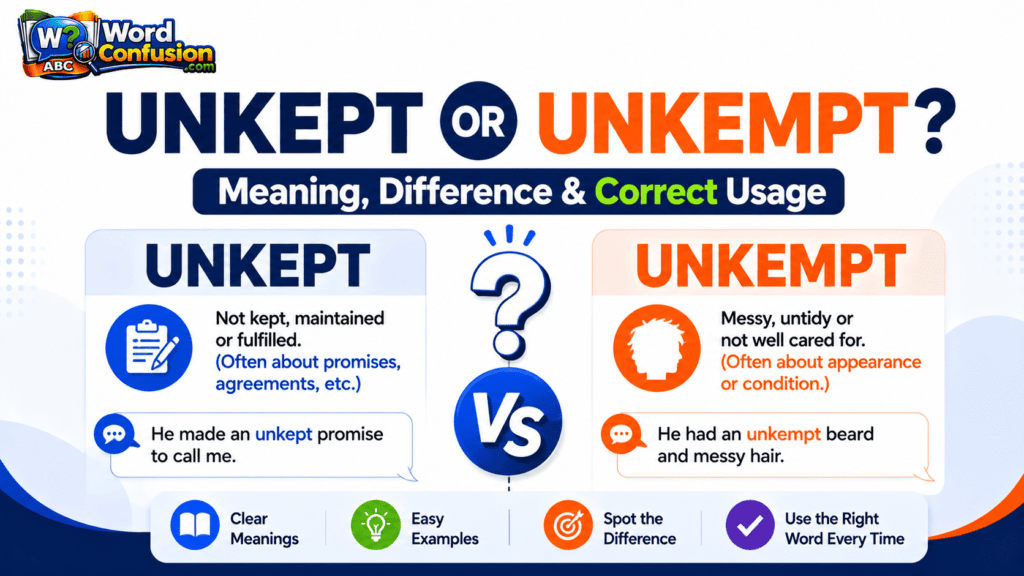
Unkept generally means something has not been kept, maintained, observed, or fulfilled, as in “an unkept promise.” Unkempt usually means untidy, messy, or poorly groomed, as in “unkempt hair.”
The easiest way to remember the difference is:
Unkept = not kept or maintained
Unkempt = untidy or poorly groomed
Let’s look at the difference more closely.
📖 See also:GTB Meaning in Text: What Does GTB Mean in Texting?
Unkept or Unkempt: Quick Answer
Both “unkept” and “unkempt” are correct words. Use unkept when something has not been kept, maintained, or fulfilled. Use unkempt when describing something untidy, messy, or poorly groomed.
For example:
- He made an unkept promise.
- His hair looked unkempt.
- The garden was unkept because nobody maintained it.
- The garden looked unkempt and overgrown.
So, don’t automatically treat unkept as a misspelling of unkempt. The right choice depends on what you mean.
What Does Unkept Mean?
Unkept is an adjective meaning not kept, maintained, observed, or fulfilled.
It is formed from kept, the past participle of keep, with the prefix un-.
The word can be used for things that have not been maintained as well as promises, commitments, or other obligations that have not been fulfilled.
Examples of Unkept
- He apologized for his unkept promise.
- The property had become unkept over the years.
- The once-beautiful garden was now unkept.
- The company was criticized for its unkept commitments.
Notice that unkept often focuses on something that was supposed to be kept, maintained, or fulfilled.
Unkept Promise
One of the clearest examples is unkept promise.
If someone makes a promise and does not do what they promised, the promise is unkept.
She was disappointed by his unkept promise to call her.
Here, unkempt would not work because a promise cannot normally be messy or poorly groomed.
What Does Unkempt Mean?
Unkempt means untidy, messy, neglected, or poorly groomed.
It is especially common when describing someone’s hair, beard, clothes, appearance, or personal grooming. It can also describe physical places such as gardens or lawns when they look untidy or neglected.
Examples of Unkempt
- His unkempt hair needed a haircut.
- She arrived at the meeting with an unkempt beard.
- The man’s clothes looked old and unkempt.
- The garden had an unkempt appearance.
When you mean that something looks messy or untidy, unkempt is usually the more natural choice.
What Is the Difference Between Unkept and Unkempt?
The main difference is what you are emphasizing.
Unkept emphasizes something that has not been kept, maintained, or fulfilled.
Unkempt emphasizes something that looks untidy, messy, or poorly groomed.
| Word | Main meaning | Common uses | Example |
| Unkept | Not kept, maintained, or fulfilled | Promises, commitments, property, gardens | an unkept promise |
| Unkempt | Untidy, messy, or poorly groomed | Hair, beard, appearance, clothes, gardens | unkempt hair |
A useful way to think about the distinction is:
Unkept → What happened to the thing?
It wasn’t kept or maintained.
Unkempt → What does the thing look like?
It looks untidy or poorly cared for.
Is Unkept a Correct Word?
Yes. Unkept is a correct English word.
It is sometimes mistaken for a misspelling of unkempt, especially when someone sees it used to describe something neglected or poorly maintained.
However, dictionaries recognize unkept as an established adjective.
For example:
- an unkept promise
- an unkept commitment
- an unkept garden
- an unkept property
The important point is that unkept does not simply mean “incorrectly spelled unkempt.”
It has its own meaning and legitimate uses.
📖 See also:Wack or Whack? The Difference, Meaning & Correct Spelling
When Should You Use Unkept?
Use unkept when you mean that something has not been kept, maintained, honored, or fulfilled.
1. Promises
He apologized for his unkept promise.
2. Commitments
Her unkept commitment caused problems for the team.
3. Agreements or obligations
The customer complained about the company’s unkept agreement.
4. Property or gardens
The house stood behind an unkept garden.
In the last example, the focus is on the lack of maintenance.
When Should You Use Unkempt?
Use unkempt when you want to describe something that appears messy, untidy, or poorly groomed.
1. Hair
His unkempt hair made it look as though he had just woken up.
2. Beard
He arrived with an unkempt beard.
3. Appearance
The employee’s unkempt appearance was inappropriate for the formal event.
4. Clothes
His clothes looked unkempt after several days of travel.
5. Garden
The garden looked unkempt, with weeds covering the flower beds.
The emphasis here is on the appearance or condition of the thing.
Can Unkept and Unkempt Mean the Same Thing?
Sometimes they can overlap, especially when describing neglected physical things, but they are not completely interchangeable.
Consider a garden.
The garden was unkept.
This suggests that the garden had not been properly maintained.
The garden was unkempt.
This emphasizes that the garden looked untidy or neglected.
Both sentences can make sense, but the emphasis is slightly different.
Now consider a promise:
He made an unkept promise. ✓
He made an unkempt promise. ✗
A promise can be unkept because it wasn’t fulfilled. It cannot normally be unkempt because a promise cannot have messy hair or an untidy appearance.
The same distinction works in reverse:
She had unkempt hair. ✓
When you’re describing messy hair, unkempt is the natural choice.
Unkept vs. Unkempt Examples
Here are some quick examples to make the difference easier to remember:
| Situation | Correct word | Example |
| Promise not fulfilled | Unkept | an unkept promise |
| Commitment not fulfilled | Unkept | an unkept commitment |
| Property not maintained | Unkept | an unkept property |
| Garden not maintained | Unkept | an unkept garden |
| Messy hair | Unkempt | unkempt hair |
| Messy beard | Unkempt | an unkempt beard |
| Untidy appearance | Unkempt | an unkempt appearance |
| Untidy garden | Unkempt | an unkempt garden |
The garden example is the one where the words can overlap most naturally. The intended emphasis determines which adjective sounds better.
Why Do People Confuse Unkept and Unkempt?
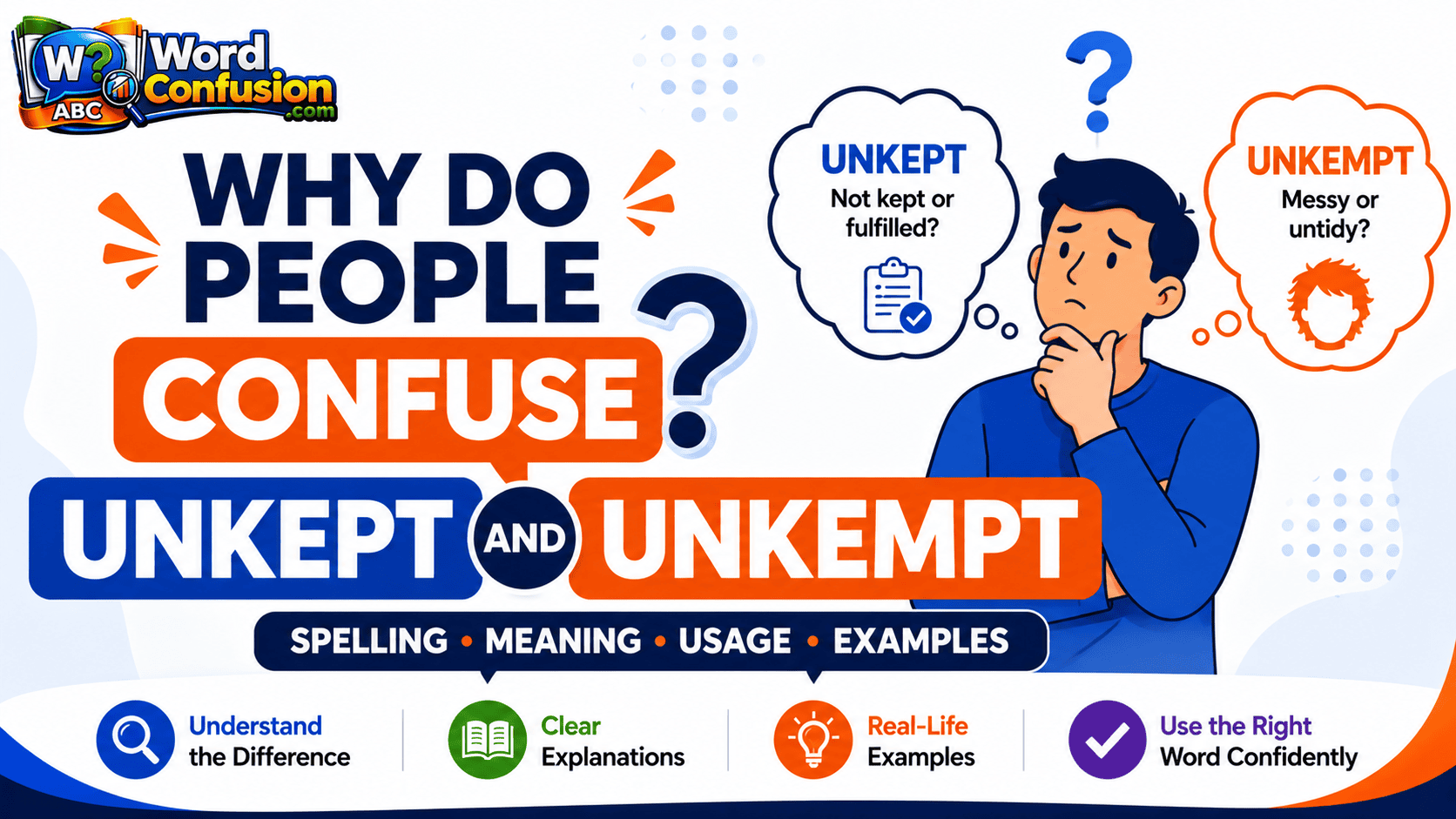
The confusion is understandable.
1. “Kept” seems like the obvious starting point
People know:
keep → kept
So when they want to describe something that hasn’t been maintained, unkept seems completely logical.
And in many contexts, it is correct.
2. “Kempt” is less familiar
The word kempt is much less common in everyday English than kept.
Because of this, people may assume that unkempt is simply an unusual spelling of unkept.
It isn’t.
Unkempt is its own established word.
3. The meanings can overlap
Both words can sometimes describe neglected physical things.
For example:
an unkept garden
and
an unkempt garden
can both be used, but they emphasize slightly different ideas.
That overlap makes the distinction harder to remember.
4. People associate “unkempt” strongly with appearance
Most people encounter unkempt in phrases such as:
- unkempt hair
- unkempt beard
- unkempt appearance
As a result, some writers incorrectly replace unkept with unkempt whenever they see something described as neglected.
Does Unkempt Mean Dirty?
Not necessarily.
Unkempt usually means untidy, messy, ungroomed, or not well cared for.
Someone can have unkempt hair without having dirty hair.
For example:
His hair was clean but unkempt after being outside in the wind.
Here, the hair is messy rather than necessarily dirty.
This distinction is useful because unkempt describes a lack of neatness or grooming more than cleanliness itself.
📖 See also:Different or Diffrent? Correct Spelling, Meaning & Usage
Common Mistakes With Unkept and Unkempt
Mistake 1: Thinking “unkept” is always wrong
Incorrect idea:
“Unkept is just a misspelling of unkempt.”
Better understanding:
Both words are legitimate. Their meanings and typical uses differ.
Mistake 2: Using “unkempt” for promises
an unkempt promise ✗
Use:
an unkept promise ✓
Mistake 3: Assuming “unkempt” always means dirty
An unkempt person may simply look untidy or poorly groomed.
Mistake 4: Treating the words as perfect synonyms
They overlap in some contexts, especially with neglected physical things, but their core meanings are different.
Mistake 5: Choosing based only on spelling
Don’t ask only, “Which spelling looks right?”
Ask:
Am I talking about something that wasn’t kept or maintained, or am I describing something that looks untidy?
That question will usually lead you to the right word.
A Simple Memory Trick
Use this quick trick:
UNKEPT → KEPT
If something wasn’t kept, maintained, or fulfilled, think unkept.
an unkept promise
UNKEMPT → UNTIDY
If you’re describing messy hair, a messy beard, or an untidy appearance, think unkempt.
unkempt hair
So remember:
Unkept wasn’t kept. Unkempt isn’t neat.
Unkept or Unkempt: Final Answer
Both unkept and unkempt are correct English words, but they serve different purposes.
Use unkept when something has not been kept, maintained, observed, or fulfilled:
an unkept promise
Use unkempt when something is untidy, messy, or poorly groomed:
unkempt hair
When the two overlap, such as with a neglected garden, consider what you want to emphasize: lack of maintenance points toward unkept, while untidy appearance points toward unkempt.
📖 See also:OTS Meaning in Text: What Does OTS Mean in Texting & Chat?
Frequently Asked Questions
Is it unkept or unkempt?
Both are correct words. Use unkept for something not kept, maintained, or fulfilled, and unkempt for something untidy, messy, or poorly groomed.
Is unkept a correct word?
Yes. Unkept is a legitimate English adjective. It can describe something that has not been maintained or a promise or commitment that has not been fulfilled.
What does unkept mean?
Unkept means not kept, maintained, observed, or fulfilled. Common examples include an unkept promise, an unkept commitment, and an unkept garden.
What does unkempt mean?
Unkempt means untidy, messy, neglected, or poorly groomed. It is commonly used for hair, beards, clothing, appearance, gardens, and similar things.
What is the difference between unkept and unkempt?
Unkept focuses on something not being kept, maintained, or fulfilled. Unkempt focuses on something being untidy or poorly groomed.
Can unkept and unkempt be used interchangeably?
Not always. They can overlap when describing neglected physical things, but they cannot normally replace each other in every context. For example, unkept promise is correct, while unkempt promise is not.
What does an unkempt appearance mean?
An unkempt appearance is an appearance that looks untidy, messy, ungroomed, or poorly cared for.
What does an unkept promise mean?
An unkept promise is a promise that someone made but did not fulfill.
Does unkempt mean dirty?
No. Unkempt usually means untidy, messy, or poorly groomed. Something can look unkempt without necessarily being dirty.
Key Takeaway
If you’re describing something that wasn’t kept or maintained, choose unkept.
If you’re describing something that looks untidy or poorly groomed, choose unkempt.
Unkept = not kept.
Unkempt = not neat.
Once you connect each word with its core meaning, the spelling confusion becomes much easier to avoid.
Looking for more English word meanings, grammar tips, and commonly confused words? Visit the WordConfusion homepage to explore our latest language guides, spelling differences, vocabulary explanations, text abbreviations, and practical examples. Whether you’re learning English or improving your writing skills, you’ll find clear, easy-to-understand resources for everyday communication.
Written by
 Abdul Moeed
Abdul Moeed is a professional content writer and SEO link-building specialist with 5+ years of experience. He creates search-optimized content and develops effective SEO strategies that improve website visibility, authority, and organic growth.
View LinkedIn profileLatest posts
 What Does PG Mean in Text? Meaning, Examples & Usage
 What Does OFCC Mean in Text? Meaning, Uses & Examples
 What Does MSG Mean in Text? Meaning, Examples & Usage
 What Does STY Mean in Text? Meaning, Examples & Usage
 What Does “Twin” Mean in Slang? Meaning, Text & Examples
 What Does LMC Mean in Text? Meaning, Examples & Usage