PM Meaning in Text: What It Means, PM vs DM & Examples

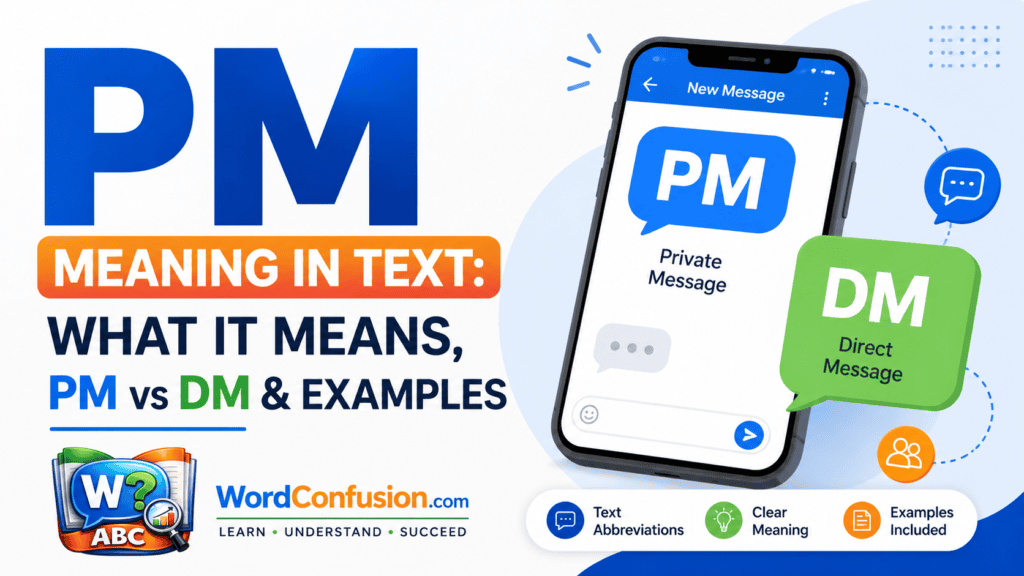
If you’ve ever seen someone write “PM me” in a text message, social media comment, or online forum, you may have wondered what PM means. Unlike many internet abbreviations that have several possible meanings, PM most commonly refers to a Private Message in online communication.
People use PM to move a conversation from a public space—such as a Facebook post, Instagram comment, Discord server, or forum—to a private one-to-one chat. In some contexts, PM can also mean Personal Message, and both terms refer to sending a message directly to another person rather than posting publicly.
In this guide, you’ll learn what PM means in text, how it’s used across different platforms, how it differs from DM, and how to respond when someone says “PM me.”
Quick Answer
PM usually stands for Private Message in text messages, social media, and online chats. It refers to a message sent privately between two people instead of being visible to everyone. On some platforms, PM may also mean Personal Message, but both meanings involve private communication.
Featured Snippet Answer
PM means “Private Message” in texting and online communication. When someone says “PM me,” they’re asking you to continue the conversation privately rather than in a public comment or group chat. Although some people use PM to mean “Personal Message,” the two terms are commonly used interchangeably.
What Does PM Mean in Text?
In texting, PM most commonly means Private Message.
A private message is a direct conversation between two people that cannot be seen by other users. Instead of replying publicly, one person invites the other to continue the discussion in a private chat.
For example:
Sarah: Does anyone know a good graphic designer?
Alex: PM me—I have a recommendation.
Here, PM me means:
“Send me a private message.”
Simple Definition
PM = Private Message
It refers to a message sent privately through:
- Social media
- Messaging apps
- Online forums
- Gaming platforms
- Community groups
- Marketplace apps
Unlike public comments, private messages are visible only to the people involved in the conversation.
Why Do People Use PM?
People use PM for many practical reasons.
Common situations include:
- Sharing personal information
- Exchanging phone numbers
- Sending email addresses
- Discussing prices
- Asking sensitive questions
- Continuing long conversations
- Protecting privacy
Instead of posting personal details where everyone can see them, users often say:
“PM me.”
What Does PM Stand For?
In online communication, PM usually has two accepted meanings.
1. Private Message (Most Common)
This is by far the most common meaning.
A Private Message is a direct message sent between two users.
Example:
“I’ll PM you the details.”
Meaning:
“I’ll send you the information privately.”
2. Personal Message
Some websites and older online forums use Personal Message instead of Private Message.
Although the wording is different, the meaning is essentially the same.
Example:
“Send me a PM.”
Meaning:
“Send me a personal/private message.”
Today, most people understand both expressions to mean a direct one-to-one conversation.
What Does “PM Me” Mean?
One of the most common expressions you’ll see online is:
PM me
It simply means:
“Send me a private message.”
People use this phrase when they don’t want to continue a conversation publicly.
For example:
User A: Is the bike still available?
Seller: Yes, PM me.
The seller wants the buyer to continue the conversation privately.
Another example:
Nice artwork!
Thanks! PM me if you’d like a custom design.
The artist is inviting potential customers to discuss details in private.
PM vs. DM: What’s the Difference?
Many people wonder whether PM and DM mean the same thing.
The short answer is almost always yes.
Both refer to private conversations between two users, but different platforms prefer different terms.
| Term | Full Form | Most Common Use |
| PM | Private Message | Forums, Facebook groups, gaming communities, online marketplaces |
| DM | Direct Message | Instagram, X (Twitter), TikTok, Threads |
| IM | Instant Message | Chat apps and messaging services |
PM
Often used on:
- Facebook Groups
- Reddit communities
- Online forums
- Gaming communities
- Marketplace websites
Example:
PM me for more information.
DM
Commonly used on:
- TikTok
- X (Twitter)
- Threads
Example:
DM me for the link.
IM
Usually refers to live messaging.
Examples include:
- Skype
- Microsoft Teams
- Slack
- Google Chat
Which Term Should You Use?
It depends on the platform.
- Instagram: DM is more common.
- Facebook Groups: PM is still widely used.
- Discord: Either PM or DM may be understood, though “DM” is increasingly common.
- Gaming communities: PM remains popular.
- Forums: PM is often the preferred term.
Regardless of which abbreviation is used, the goal is the same—moving the conversation from a public space to a private chat.
Is PM Still Used Today?
Yes. Although DM (Direct Message) has become the preferred term on many modern social media platforms, PM is still widely used across the internet.
You’ll frequently see PM in:
- Facebook Groups
- Facebook Marketplace
- Reddit communities
- Online discussion forums
- Gaming communities
- Discord servers
- Hobby groups
- Local buy-and-sell pages
Many users even use PM and DM interchangeably because both refer to sending a private message.
PM Meaning Across Different Platforms
Although PM has the same core meaning—Private Message—the wording and frequency of its use can vary depending on the platform.
PM Meaning on Instagram
On Instagram, DM (Direct Message) is the official term, but many users still say PM in comments or captions.
Example:
“PM me for the price.”
Meaning:
“Send me a private message so we can discuss the details.”
PM Meaning on Facebook
Facebook is one of the platforms where PM is still extremely common.
You’ll often see phrases such as:
- “PM me for more information.”
- “Please PM me your address.”
- “PM sent.”
Example conversation:
Buyer:
Is this still available?
Seller:
Yes, PM me.
The seller wants to continue the conversation privately through Facebook Messenger.
PM Meaning on WhatsApp
Although WhatsApp is already a private messaging app, people sometimes use PM when asking someone to message them directly instead of discussing something in a group chat.
Example:
“PM me your number.”
Meaning:
“Send me your number in a private chat.”
PM Meaning on Snapchat
On Snapchat, users occasionally say PM, even though the app mainly uses direct chats.
Example:
“PM me later.”
Meaning:
“Send me a private message later.”
PM Meaning on TikTok
TikTok users often write:
“PM me for details.”
This is common in:
- Business accounts
- Influencer collaborations
- Product sales
- Giveaways
- Service inquiries
It simply means:
“Contact me privately.”
PM Meaning on Discord
Discord users commonly use both PM and DM.
Example:
“I’ll PM you the server link.”
Meaning:
“I’ll send the link privately.”
PM Meaning in Gaming
Gaming communities have used PM for many years.
Players often say:
- PM me your username.
- PM for an invite.
- PM if you want to join.
This allows players to exchange information privately instead of posting it in public chat.
Examples of PM in Text Conversations
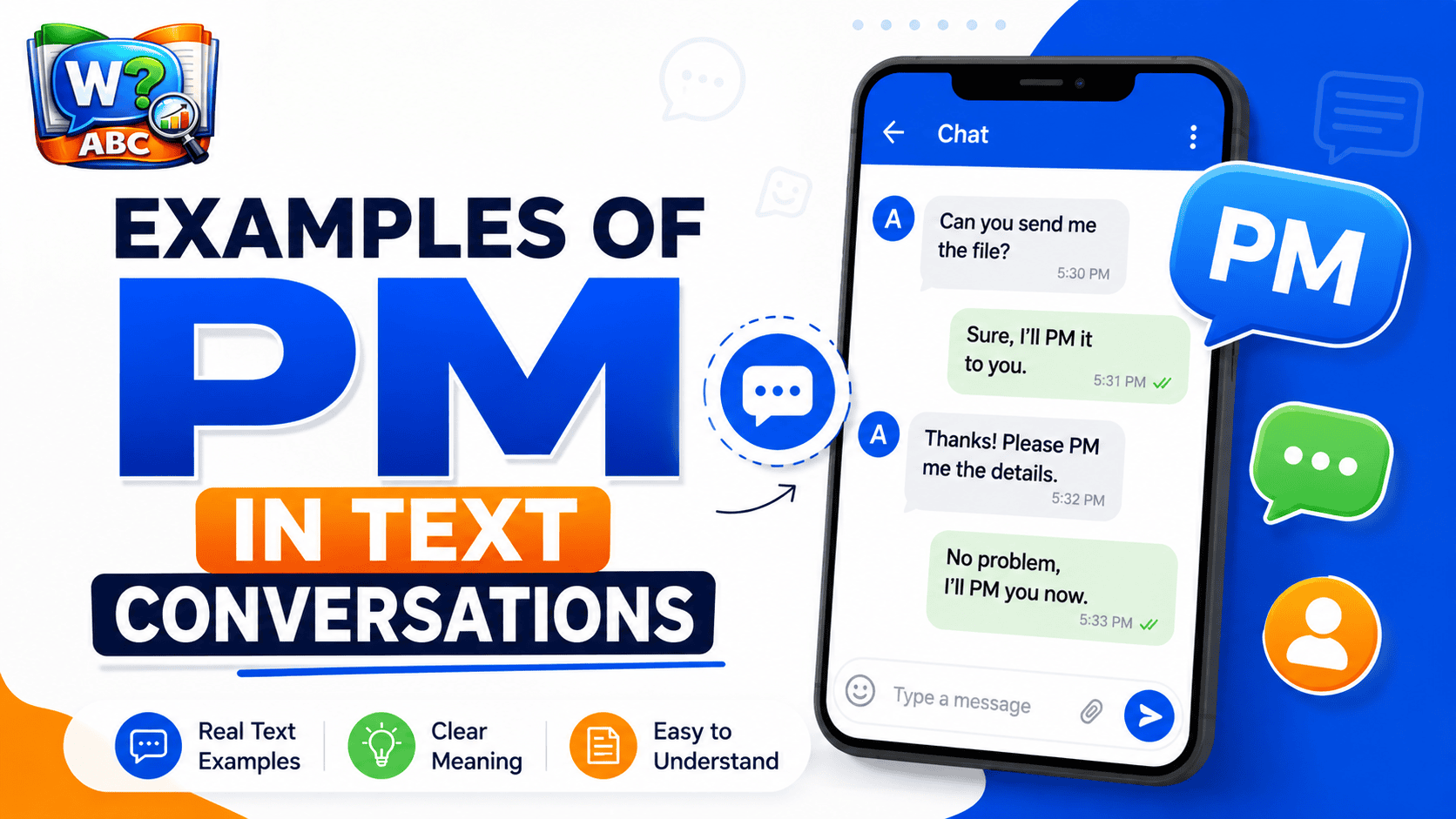
Here are some real-world examples.
Example 1
Emma:
I love your artwork.
Noah:
Thanks! PM me if you’d like a custom design.
Example 2
Customer:
How much does it cost?
Seller:
PM me for today’s price.
Example 3
Alex:
Can someone recommend a tutor?
Taylor:
PM me. I’ll send you their contact information.
Example 4
Chris:
Is the apartment still available?
Owner:
Yes. PM me for viewing details.
Example 5
Jordan:
Does anyone have today’s meeting notes?
Morgan:
Sure. I’ll PM them to you.
How to Reply When Someone Says “PM Me”
Your response depends on the conversation, but here are some natural replies.
If Someone Says:
“PM me.”
You can reply:
- “Sure!”
- “I’ll message you now.”
- “Just sent you a PM.”
- “Check your inbox.”
- “I’ll send the details privately.”
If Someone Says:
“I’ll PM you.”
You could respond:
- “Sounds good.”
- “Thanks!”
- “I’ll look out for it.”
- “Okay, I’ll check my messages.”
If Someone Says:
“PM me for pricing.”
You might reply:
- “Just sent you a message.”
- “I’ve messaged you.”
- “Please check your inbox.”
These responses sound natural across most messaging platforms.
Common Mistakes
1. Thinking PM Only Means “Private Message”
Although Private Message is the most common meaning, some communities use Personal Message. In everyday conversations, however, both are generally understood to mean the same thing.
2. Confusing PM with Time (P.M.)
In English, P.M. can also refer to the time after noon (post meridiem).
For example:
“Let’s meet at 7 PM.”
This has nothing to do with messaging. Always use the surrounding context to determine the correct meaning.
3. Assuming PM and DM Are Completely Different
In most online conversations, PM and DM serve the same purpose—they both refer to private one-to-one communication. The preferred term simply varies by platform.
4. Posting Sensitive Information Publicly
If someone asks you to PM them, don’t continue sharing private details in the public comments. Move the conversation to a private chat instead.
Pro Tips
- Read the context first. If the discussion is about messaging or social media, PM almost always means Private Message.
- Know the platform. Instagram users often say DM, while Facebook groups and forums still commonly use PM.
- Use PM for privacy. It’s the best option when exchanging personal information, prices, or contact details.
- Don’t confuse PM with time. A sentence about schedules usually refers to post meridiem, not messaging.
Frequently Asked Questions
What does PM mean in text?
PM usually stands for Private Message, meaning a direct message sent privately between two people.
What does PM stand for?
The most common full forms are:
- Private Message
- Personal Message
Both refer to private communication rather than public posts.
What does “PM me” mean?
It means “Send me a private message.” The speaker wants to continue the conversation privately.
Is PM the same as DM?
Almost always, yes. Both refer to private conversations. DM (Direct Message) is more common on platforms like Instagram and X, while PM remains widely used on Facebook, forums, and gaming communities.
What does PM mean on Instagram?
On Instagram, PM means Private Message, although DM is the platform’s official term and is more commonly used.
What does PM mean on Facebook?
It refers to sending someone a private message through Facebook Messenger instead of replying publicly.
What does PM mean on WhatsApp?
On WhatsApp, PM generally means messaging someone privately, especially outside of a group conversation.
Is PM still used today?
Yes. Although DM has become more common on many social media platforms, PM is still widely used in Facebook groups, online forums, gaming communities, and marketplace conversations.
How do you use PM in a sentence?
Here are a few examples:
- “PM me the details.”
- “I’ll PM you the address.”
- “Please PM me your email.”
- “She sent me a PM yesterday.”
Conclusion
PM most commonly means Private Message in text messages, social media, online forums, and gaming communities. It allows two people to continue a conversation privately instead of posting information in a public comment or group chat.
While some people interpret PM as Personal Message, both meanings refer to direct, private communication. Although DM (Direct Message) has become the preferred term on platforms like Instagram and X, PM remains widely understood and commonly used across Facebook, forums, marketplaces, and many online communities.
Understanding the context—and knowing the difference between PM, DM, and IM—will help you communicate more confidently online.
If you’re learning English vocabulary and commonly confused words, you may also enjoy our guides on What Does HWY Mean in Text?, What Does FAFO Mean in Text?, and What Does W Mean in Text? Understanding these distinctions will make your writing clearer, more accurate, and more professional.
Written by
 Abdul Moeed
Abdul Moeed is a professional content writer and SEO link-building specialist with 5+ years of experience. He creates search-optimized content and develops effective SEO strategies that improve website visibility, authority, and organic growth.
View LinkedIn profileLatest posts
 Exempt vs Non Exempt: Meaning, Overtime Rules & Examples
 What Does PG Mean in Text? Meaning, Examples & Usage
 What Does OFCC Mean in Text? Meaning, Uses & Examples
 What Does MSG Mean in Text? Meaning, Examples & Usage
 What Does STY Mean in Text? Meaning, Examples & Usage
 What Does “Twin” Mean in Slang? Meaning, Text & Examples