Plurals of Ox and Fox: Oxen vs Foxes in English Explained Simply

Introduction
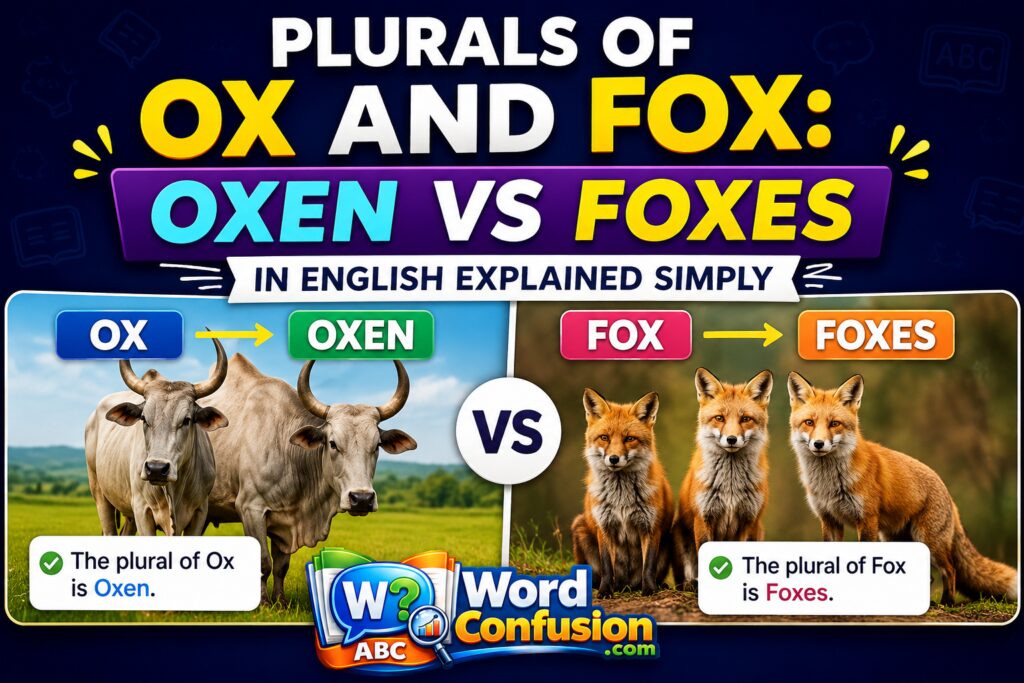
The plural of ox is oxen, and the plural of fox is foxes. These two words confuse many English learners because they follow different plural rules. While “fox” uses a normal rule by adding -es, “ox” is an irregular noun that comes from Old English, where its plural form became “oxen.”
In this guide, you’ll clearly understand both forms, the grammar rules behind them, and why English has such unusual plural patterns.
Quick Answer: Oxen vs Foxes
- Ox → Oxen (irregular plural form)
- Fox → Foxes (regular plural with -es rule)
Featured Snippet Answer
The plural of ox is oxen, an irregular form from Old English. The plural of fox is foxes, formed by adding -es because it ends in -x. English uses both regular and irregular plural rules depending on a word’s history and structure.
What is the Plural of Ox?
The plural of ox is oxen, not “oxes.”
- Singular: ox
- Plural: oxen
Example:
- The farmer owns two oxen.
What is the Plural of Fox?
The plural of fox is foxes, following a standard English rule.
- Singular: fox
- Plural: foxes
Example:
- We saw three foxes in the forest.
Why Ox Becomes Oxen
Old English Origin
The word oxen comes from Old English, where adding -en was a common plural marker for certain nouns.
Linguistic Roots
In earlier forms of English, several animal names used the -en ending. Over time, most disappeared, but a few survived like:
- ox → oxen
- child → children (similar historical pattern)
Common Grammar Mistake
Many learners incorrectly say:
- ❌ oxes
But this is wrong because “ox” is an irregular noun.
Why Fox Becomes Foxes
Modern English Rule: Add -es
Words ending in -x, -s, -ch, -sh usually take -es in plural form.
So:
- fox → foxes
- box → boxes
- bus → buses
Example:
- The zoo has many foxes.
Common Grammar Mistake
- ❌ foxen (incorrect)
- ❌ foxs (incorrect)
Oxen vs Foxes: Side-by-Side Comparison
| Feature | Ox | Fox |
| Singular | ox | fox |
| Plural | oxen | foxes |
| Rule Type | Irregular | Regular (-es rule) |
| Origin | Old English | Modern English rule |
| Example | two oxen | three foxes |
English Plural Formation Rules
Regular Plurals
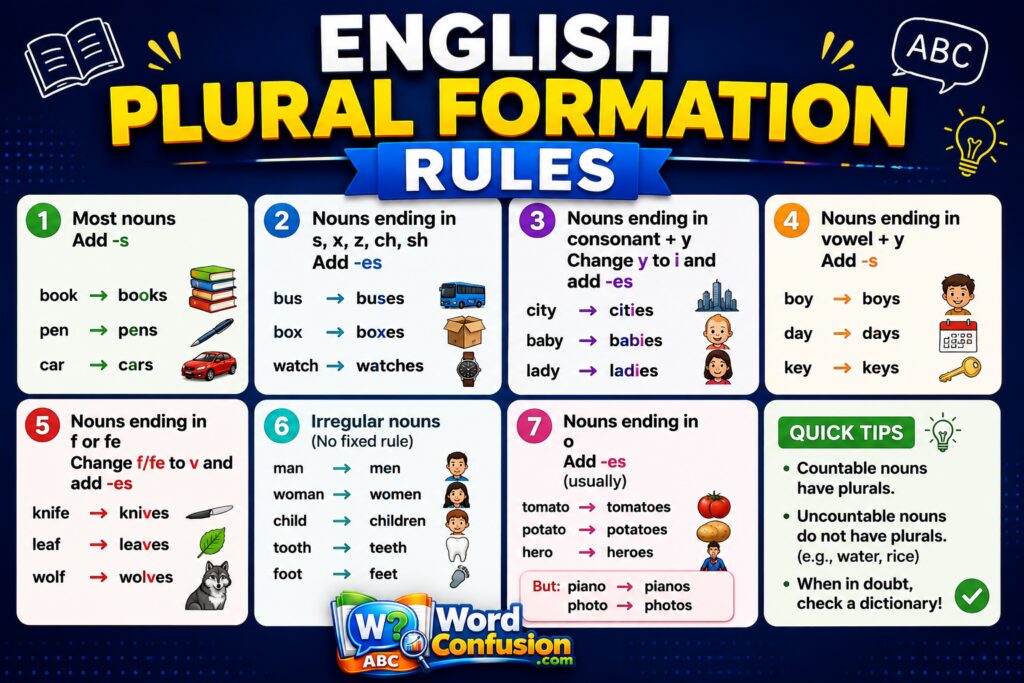
Most English nouns simply add:
- -s (cat → cats)
- -es (box → boxes)
Irregular Plurals
Some nouns change completely or use old endings:
- ox → oxen
- man → men
- mouse → mice
- goose → geese
These do not follow normal rules and must be memorized.
Common Confusions and Mistakes
Many learners mix up plural rules:
❌ oxes → incorrect
❌ foxen → incorrect
❌ foxs → incorrect
✔ oxen → correct
✔ foxes → correct
Why English Has Irregular Plurals
English comes from multiple historical languages (Old English, Latin, Germanic influences). Because of this:
- Some words kept ancient plural forms
- Others followed modern grammar rules
- Over time, both systems survived together
This is why English feels inconsistent.
Examples of Other Irregular Plurals
Here are common irregular plural nouns:
- goose → geese
- mouse → mice
- child → children
- tooth → teeth
- person → people
Tips to Remember Plurals
Easy Mnemonics
- “Ox is old → oxen is old style”
- “Fox follows modern rule → add -es”
Rule Shortcut
- Ends in -x? → add -es
- Ancient animal word? → might be irregular (like ox → oxen)
Practice Sentences
- The farmer works with two oxen daily.
- The forest is full of foxes at night.
- We saw one ox and several foxes on the farm.
Common Mistakes Learners Make
- Treating all plurals as +s
- Overusing “-s” instead of “-es”
- Trying to apply modern rules to old English words
Pro Tips
- Memorize irregular plurals as small groups
- Learn spelling patterns like -x → -es
- Don’t assume English is always logical—history matters
FAQs About the Plurals of Ox and Fox
What is the plural of ox and fox?
The plural of ox is oxen, and the plural of fox is foxes.
Is it correct to say oxes?
No, “oxes” is incorrect. The correct plural is oxen.
Why is the plural of ox oxen and not oxes?
Because “ox” comes from Old English, which used the -en plural ending.
Why is the plural of fox not foxen?
Because “fox” follows the modern rule for words ending in -x, which becomes -es.
Are there other words like oxen?
Yes, examples include children, men, and geese (historically irregular plurals).
What’s the difference between oxen and foxes?
Oxen is an irregular plural, while foxes is a regular plural formed by adding -es.
Conclusion
The plural of ox is oxen due to its Old English origin, while the plural of fox is foxes, following a standard modern English rule. Understanding the difference helps learners avoid common grammar mistakes and improves overall English fluency.
If you’re learning English vocabulary and commonly confused words, you may also enjoy our guides on WTV Meaning, WRYD Meaning, and Unenroll vs Disenroll. Understanding these distinctions will make your writing clearer, more accurate, and more professional.
Written by
 Abdul Moeed
Abdul Moeed is a professional content writer and SEO link-building specialist with 5+ years of experience. He creates search-optimized content and develops effective SEO strategies that improve website visibility, authority, and organic growth.
View LinkedIn profileLatest posts
 What Does PG Mean in Text? Meaning, Examples & Usage
 What Does OFCC Mean in Text? Meaning, Uses & Examples
 What Does MSG Mean in Text? Meaning, Examples & Usage
 What Does STY Mean in Text? Meaning, Examples & Usage
 What Does “Twin” Mean in Slang? Meaning, Text & Examples
 What Does LMC Mean in Text? Meaning, Examples & Usage