What Does YU Mean in Text? Meaning, Usage & Examples (2026)
 Abdul Moeed
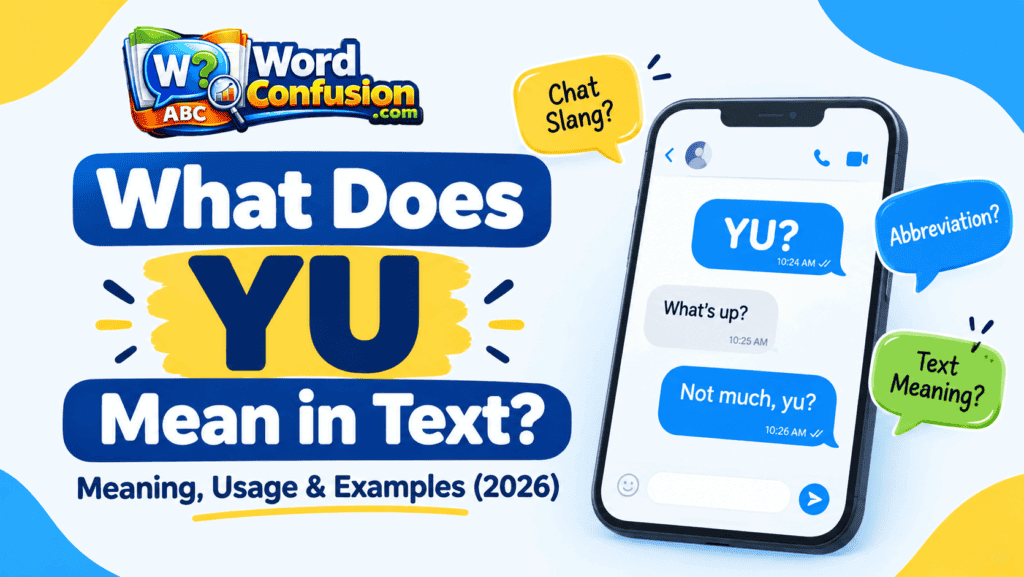
If you see YU in a text message, chat, or social media post, it usually means “you.” It is an informal texting shorthand or stylized spelling of the standard English word you. People may use YU in casual texts, DMs, comments, gaming chats, and other informal online conversations.
For example, “Miss yu!” simply means “Miss you!” The meaning is usually straightforward, but the tone depends on the rest of the message and the relationship between the people communicating.
Quick Answer: What Does YU Mean in Text?
YU usually means “you” in texting and online chat. It is an informal shorthand or stylized spelling used in casual messages, social media, DMs, and group chats. YU has the same basic meaning as you, but it is not standard English spelling and should generally be avoided in formal or professional writing.
What Does YU Mean in Texting?
In texting, YU = you.
It is a shortened, informal way of writing the word you. The pronunciation generally remains the same as standard you, but the spelling has been changed for casual digital communication.
For example:
- “What are yu doing?” = “What are you doing?”
- “Miss yu!” = “Miss you!”
- “Can yu help me?” = “Can you help me?”
- “I’ll see yu later.” = “I’ll see you later.”
YU is therefore best understood as informal texting shorthand or a stylized spelling, rather than a standard English spelling.
This is similar to how other short forms appear in digital communication. For example, WordConfusion’s guide to TBF meaning in text explains another common texting abbreviation and how context affects its use.
Is YU Short for “You”?
Yes. In casual texting, YU is generally used as a short form of “you.”
The important distinction is that you is the standard English word, while YU is an informal digital form.
| Form | Meaning | Usage |
|---|---|---|
| you | The standard English word | Formal and informal |
| YU | You | Informal texting |
| U | You | Very informal texting |
| UR | Your / you’re, depending on context | Informal texting |
For example:
“Can yu come over?”
means:
“Can you come over?”
The meaning has not changed. Only the spelling has.
Why Do People Use YU Instead of You?
People may use YU for several practical reasons.
1. Casual communication
Texting is generally less formal than essays, reports, or business writing. People often shorten words because the conversation is relaxed.
2. Personal texting style
Some people naturally use shortened spellings such as YU, U, or other texting forms. It can become part of their online writing style.
3. Faster or easier typing
Short forms can reduce the number of characters someone needs to type, although saving time is not necessarily the reason every person uses YU.
4. Internet culture
Digital communication has created many informal spellings and abbreviations. YU fits into this broader style of casual online language.
Not every shortened word is a fixed abbreviation with one official expansion. As with TF meaning in text, the surrounding message and context can help explain how a short form is being used.
How Is YU Used in Texting?
YU can replace you in many ordinary casual sentences.
Example 1: Asking a question
“Are yu coming tonight?”
Meaning:
“Are you coming tonight?”
Here, YU simply replaces the word you.
Example 2: Asking for help
“Can yu help me with this?”
Meaning:
“Can you help me with this?”
Example 3: Showing affection
“Miss yu ❤️”
Meaning:
“Miss you ❤️”
The affectionate tone comes from the phrase and the heart emoji, not from YU itself.
Example 4: Casual conversation
“I’ll text yu when I get there.”
Meaning:
“I’ll text you when I get there.”
Example 5: Social media
“Did yu see my new post?”
Meaning:
“Did you see my new post?”
The same basic meaning can appear in texts, comments, DMs, and other informal online conversations.
YU vs U vs You: What’s the Difference?
Although all three can refer to the same word, they are not equally appropriate in every situation.
| Form | Meaning | Tone | Formal English? |
|---|---|---|---|
| you | You | Standard | Yes |
| YU | You | Informal/stylized | No |
| U | You | Very informal | No |
You
You is the normal spelling and should be used in standard English.
Example:
“Can you send me the file?”
YU
YU is an informal texting form.
Example:
“Can yu send me the file?”
U
U is another informal shorthand for you.
Example:
“Can u send me the file?”
For school, work, professional emails, applications, and formal writing, you is the safest choice.
Is YU Slang or an Abbreviation?
YU is commonly described as texting slang, shorthand, or an informal abbreviation. However, calling it a formal abbreviation can be misleading.
A more precise description is:
YU is an informal texting shorthand or stylized spelling of “you.”
It is not a standard dictionary spelling that should replace you in formal English.
This distinction matters because not every short form seen online functions like a conventional acronym. For example, WordConfusion’s OPT meaning in text guide explains why context is important when deciding whether a short form is actually slang or simply an ordinary English word.
What Does YU Mean on Social Media?
On social media, YU generally carries the same meaning: “you.”
You may encounter it in:
- Instagram DMs
- Snapchat messages
- TikTok comments
- WhatsApp chats
- Facebook Messenger
- Discord conversations
- Gaming chats
- Casual comments and posts
There is usually no special platform-specific definition.
For example:
“Did yu watch the video?”
means:
“Did you watch the video?”
Similarly:
“This reminds me of yu 😂”
means:
“This reminds me of you 😂”
Social media context may change the tone, but it normally does not change what YU refers to.
If you’re learning how online abbreviations work, you can also see how context affects terms in WordConfusion’s guide to SH meaning in text.
Is YU Friendly, Rude, or Flirty?
YU itself is not inherently friendly, rude, or flirty.
The surrounding words, punctuation, emojis, and relationship between the speakers determine the tone.
Friendly
“Miss yu 😂”
This could simply be a friendly message between friends.
Affectionate
“Love yu ❤️”
Here, the surrounding words create an affectionate tone.
Neutral
“Are yu coming?”
This is simply a question.
Annoyed
“Why are yu doing that again?”
The frustration comes from the complete sentence, not from the use of YU.
So, if someone sends you YU, don’t automatically assume they are flirting or expressing romantic interest.
What Does YU Mean From a Girl or Guy?
The meaning of YU does not normally change based on whether the sender is a girl or a guy.
If a girl writes:
“Can yu call me?”
YU means you.
If a guy writes:
“Miss yu.”
YU still means you.
The important clues are the surrounding words and conversation, not the sender’s gender.
If a message seems romantic, look at the complete message rather than trying to interpret YU by itself.
Is YU Appropriate in Formal English?
Generally, no.
Use you instead of YU in formal, academic, or professional communication.
| Situation | YU appropriate? |
|---|---|
| Texting a close friend | ✅ Yes |
| Casual group chat | ✅ Yes |
| Informal DM | ✅ Yes |
| Gaming chat | ✅ Yes |
| Social media comment | Usually |
| Business email | ❌ No |
| Academic assignment | ❌ No |
| Job application | ❌ No |
| Professional report | ❌ No |
| Formal letter | ❌ No |
Compare:
Casual text:
“Can yu send me the photo?”
Professional email:
“Could you please send me the photo?”
The second version uses standard English and is more appropriate for professional communication.
How Do You Reply to “YU” in a Text?
Because YU usually means you, you don’t need a special response just because someone used it.
Simply respond to the meaning of the complete sentence.
Example
Person A: “Are yu coming?”
You: “Yes, I’ll be there in 10 minutes.”
Example
Person A: “Miss yu!”
You: “Miss you too!”
Example
Person A: “Can yu help me?”
You: “Sure. What do you need?”
Example
Person A: “Did yu see that?”
You: “Yeah, I just saw it!”
If you’re unsure what the person means, consider the entire conversation before assuming that YU has another meaning.
Common Misunderstandings About YU
1. Thinking YU is standard English spelling
It isn’t.
You is the standard spelling. YU is an informal digital form.
2. Assuming YU always means “why you”
This is an important distinction.
YU itself generally means you. A sentence may express a question involving why because of its surrounding words, but that does not mean YU is a standard abbreviation for “why you.”
For example:
“Why are yu leaving?”
Here, yu = you.
The word why is already written separately.
3. Assuming YU is automatically romantic
It isn’t.
“Are yu home?”
is simply a question.
Context determines whether a message is friendly, romantic, annoyed, or neutral.
4. Using YU in formal writing
Even if the reader understands it, YU can make formal writing look overly casual.
Use you in professional, academic, and formal contexts.
5. Assuming capitalization changes the meaning
YU and yu generally refer to the same informal shorthand in texting. Capitalization may simply reflect someone’s typing style.
YU Text Examples at a Glance
| Text message | Standard English |
|---|---|
| “What are yu doing?” | “What are you doing?” |
| “Can yu call me?” | “Can you call me?” |
| “Miss yu!” | “Miss you!” |
| “I’ll see yu tomorrow.” | “I’ll see you tomorrow.” |
| “Did yu get home?” | “Did you get home?” |
| “I told yu already.” | “I told you already.” |
The easiest way to remember it is:
YU = you in informal texting.
YU and Other Texting Short Forms
YU is part of a much larger group of informal online expressions.
For example:
- TBF = To Be Fair
- TF = The Fuck
- OOTD = Outfit of the Day
- SH = Shh
- FMB = a context-dependent abbreviation
If you’re learning texting language more broadly, WordConfusion’s OOTD meaning in text guide shows how an abbreviation can function differently from a simple shortened spelling.
Likewise, FMB meaning in text is a useful example of why context matters when an abbreviation can have multiple interpretations.
Frequently Asked Questions About YU Meaning in Text
What does YU mean in text?
YU usually means “you” in texting and online conversations. It is an informal shorthand or stylized spelling used instead of the standard word you.
What does YU stand for in texting?
In texting, YU generally stands for or represents “you.” It is better described as informal texting shorthand rather than a formal English abbreviation.
Is YU short for you?
Yes. YU is commonly used as a shortened, informal form of you in casual digital communication.
Is YU slang for you?
Yes, it can be considered informal texting slang or shorthand for you. It is not standard spelling.
Is YU the same as U?
They can both mean you, but they are different informal spellings. YU and U are not standard English forms.
Is YU rude?
No. YU is not inherently rude. Its tone depends on the complete message and the relationship between the people communicating.
Why do people text YU instead of you?
People may use YU because of casual texting habits, personal writing style, convenience, or internet culture. Not everyone uses it for the same reason.
Can I use YU in formal messages?
It is better to use you in formal messages. YU is appropriate mainly for casual texts, informal chats, DMs, and similar settings.
What does YU mean from a girl?
It normally means you. A girl’s use of YU does not create a special definition. The surrounding message determines the tone.
What does YU mean from a guy?
It normally means you as well. The sender’s gender does not change the basic meaning of YU.
How do I reply to YU?
Reply according to the complete message. For example, if someone asks “Are yu coming?” you can simply answer, “Yes, I’ll be there soon.”
Key Takeaways
- YU usually means “you” in text and online chat.
- It is an informal texting shorthand or stylized spelling.
- You is the standard English spelling.
- YU may appear in texts, DMs, comments, gaming chats, and social media.
- YU does not automatically mean the message is romantic, rude, or friendly.
- The sender’s gender does not change its basic meaning.
- YU is generally unsuitable for academic, professional, and formal writing.
- When interpreting YU, focus on the whole sentence and conversation context.
For more practical English vocabulary, grammar, spelling, and word-meaning guides, explore WordConfusion.
Final Thoughts
The YU meaning in text is usually simple: “you.” It is an informal shorthand used in casual digital communication, including texts, chats, DMs, comments, and social media.
The main thing to remember is that YU is not standard English spelling. It is a casual digital form of you, so it works best when the conversation is informal.
If you see YU in a message, read the surrounding words before interpreting the tone. In most cases, there is no hidden meaning—the sender simply means you.