TTYL Meaning in Text: What It Means, How to Use It & Examples

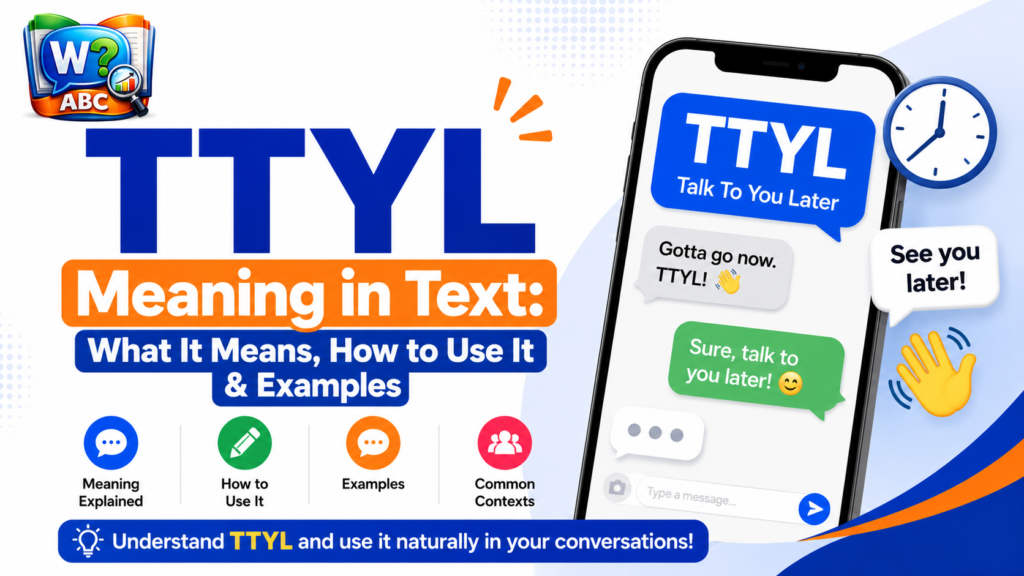
If you’ve received a message ending with “TTYL” and wondered what it means, you’re not alone. Texting abbreviations can be confusing, especially if you’re unfamiliar with internet slang or online messaging culture.
TTYL is one of the most common texting acronyms used in casual conversations. Whether you’re chatting on WhatsApp, Snapchat, Instagram, TikTok, Facebook Messenger, or SMS, understanding this abbreviation helps you communicate naturally and avoid misunderstandings.
In this guide, you’ll learn exactly what TTYL means in text, when to use it, how to reply to it, whether it’s considered rude, and how it compares with similar abbreviations like BRB and GTG.
Quick Answer
TTYL means “Talk To You Later.” It is a popular texting abbreviation used to politely end a conversation while letting the other person know you’ll continue talking another time. It is informal, friendly, and commonly used in text messages, chats, and social media conversations.
Featured Snippet Answer
TTYL stands for “Talk To You Later.” It is a widely used internet slang acronym that signals the end of a conversation while suggesting you’ll speak again soon. People commonly use TTYL in text messages, WhatsApp, Snapchat, Instagram, TikTok, Facebook Messenger, and other online chats as a casual way to say goodbye.
TTYL at a Glance
| Term | Meaning |
| Full Form | Talk To You Later |
| Type | Internet Acronym |
| Tone | Friendly and Informal |
| Used In | Text messages, chats, social media |
| Purpose | Politely end a conversation |
| Appropriate For | Friends, family, classmates, coworkers (informal chats) |
| Avoid In | Formal emails, official business communication |
What Does TTYL Mean in Text?
TTYL stands for “Talk To You Later.”
It’s an internet abbreviation people use when ending a conversation without making it sound final. Instead of saying “Goodbye,” TTYL tells the other person that you expect to continue the conversation later.
Unlike a permanent farewell, it leaves the conversation open for another time.
Simple Definition
TTYL = Talk To You Later
Meaning:
“I’m leaving this conversation now, but we’ll chat again later.”
It is one of the oldest and most recognized internet acronyms and remains widely used despite the popularity of newer slang.
What Does TTYL Stand For?
The letters represent:
- T = Talk
- T = To
- Y = You
- L = Later
Together, they create the phrase:
Talk To You Later
The abbreviation became popular during the early days of internet chat rooms, instant messaging services, and SMS texting when character limits encouraged shorter messages.
Today, it remains common across almost every messaging platform.
How Is TTYL Used in Texting?
People use TTYL when they need to end a conversation politely.
Instead of abruptly leaving the chat, it lets the other person know you’ll continue talking later.
Common situations include:
- Going to school
- Starting work
- Going to sleep
- Driving
- Studying
- Leaving home
- Finishing a conversation
- Ending a gaming session
It creates a friendly ending instead of an awkward silence.
When Should You Use TTYL?
TTYL works best in casual conversations.
Below are the most common situations where it’s appropriate.
1. Ending a Friendly Conversation
Example
Emma: Thanks for helping me today!
Lucas: Anytime! TTYL 😊
2. Before Going Offline
If you’re about to leave your phone or computer, TTYL is a quick way to end the chat.
Example
“I have class in five minutes. TTYL!”
3. Going to Sleep
Many people send TTYL before bed.
Example
“I’m exhausted. TTYL tomorrow!”
4. Leaving for Work or School
Example
“I have a meeting now. TTYL.”
5. Ending a Long Conversation
Instead of suddenly disappearing, TTYL politely closes the discussion.
Example
“This was fun! TTYL.”
Examples of TTYL in Text Messages
Understanding real conversations makes it easier to use TTYL naturally.
Example 1: Friends
Alex:
Want to play tonight?
Ryan:
Sure! I’ll message you later.
Alex:
Awesome, TTYL!
Example 2: Family
Mom:
Drive safely.
Emily:
Will do! TTYL ❤️
Example 3: Classmates
Sarah:
Did you finish the assignment?
Liam:
Almost. I’ll send it later.
Sarah:
Perfect, TTYL.
Example 4: Coworkers (Informal Chat)
Ben:
Lunch at noon?
Chris:
Sounds good. TTYL.
Example 5: Gaming
Player 1:
Great match!
Player 2:
GG! TTYL.
Why People Use TTYL Instead of “Goodbye”
Although both expressions end a conversation, they create different impressions.
| Saying | Impression |
| Goodbye | More final |
| Bye | Neutral |
| See you | Friendly |
| TTYL | Friendly and suggests you’ll chat again soon |
TTYL sounds warm and conversational, making it a favorite in online messaging.
Is TTYL Still Popular?
Yes. Although newer abbreviations and emojis have become common, TTYL is still widely recognized and regularly used in digital conversations.
You’ll often see it in:
- Text messages
- WhatsApp chats
- Snapchat conversations
- Instagram DMs
- Facebook Messenger
- Discord servers
- Online gaming chats
- Group conversations
Its meaning has remained consistent over the years, making it an evergreen piece of internet slang that people of different age groups understand.
TTYL Meaning on Different Platforms
One of the reasons TTYL has remained popular is that its meaning stays almost the same across different messaging apps and social media platforms. Regardless of where you see it, it generally means “Talk To You Later.” The context of the conversation may change, but the intention remains friendly and informal.
TTYL Meaning on WhatsApp
On WhatsApp, TTYL is commonly used to end a conversation politely without sounding abrupt.
Example
Sophia: Thanks for helping me with my project.
Mia: You’re welcome! TTYL. 😊
In most WhatsApp chats, TTYL simply means, “I’ll message you again later.”
TTYL Meaning on Snapchat
On Snapchat, conversations are usually quick and casual. People often send TTYL before logging off or ending a streak conversation.
Example
“I have to leave now. TTYL!”
It doesn’t carry any hidden meaning—it simply indicates the conversation will continue another time.
TTYL Meaning on Instagram
On Instagram DMs, TTYL is often used after commenting on posts, sharing reels, or chatting with friends.
Example
Alex: That vacation looked amazing!
Emma: Thanks! I’ll tell you all about it later. TTYL!
TTYL Meaning on TikTok
Although TikTok is mainly a video platform, users also chat through direct messages and comments.
Someone might write:
“I’m heading out now. TTYL.”
Here, it simply means they’ll continue the conversation later.
TTYL Meaning on Facebook Messenger
Facebook Messenger users frequently end conversations with TTYL because it sounds friendlier than simply saying “bye.”
Example
Daniel: I’ll send you the photos tomorrow.
Olivia: Great, TTYL!
TTYL Meaning in SMS (Text Messages)
TTYL originally became popular during the SMS era, when text messages had strict character limits. Shortening “Talk To You Later” into four letters saved time and space.
Even today, many people continue using it in standard text messages.
Does TTYL Mean Something Different on Social Media?
No. Whether you see TTYL on:
- Snapchat
- TikTok
- Facebook Messenger
- Discord
- SMS
…the meaning stays the same:
“Talk To You Later.”
The only difference is the style of conversation, not the definition.
TTYL Meaning From a Girl
When a girl sends TTYL, it usually has no special hidden meaning. In most cases, she’s simply ending the conversation politely and letting you know she’ll talk to you later.
For example:
You: Good luck with your exam!
Her: Thanks! TTYL. 😊
This doesn’t automatically mean she’s flirting or losing interest. The meaning depends on the overall conversation, not the abbreviation itself.
It may indicate that she:
- Has to leave
- Is busy
- Wants to continue talking later
- Is ending the conversation in a friendly way
Pay attention to the tone and context rather than assuming TTYL carries a secret message.
TTYL Meaning From a Guy
The meaning is essentially the same when a guy uses TTYL.
He may be:
- Going to work
- Playing games
- Driving
- Studying
- Ending the chat politely
- Planning to continue the conversation later
Example
You: Catch you tomorrow?
Him: Definitely. TTYL!
Again, the phrase is generally neutral and doesn’t reveal romantic interest by itself.
Is TTYL Rude?
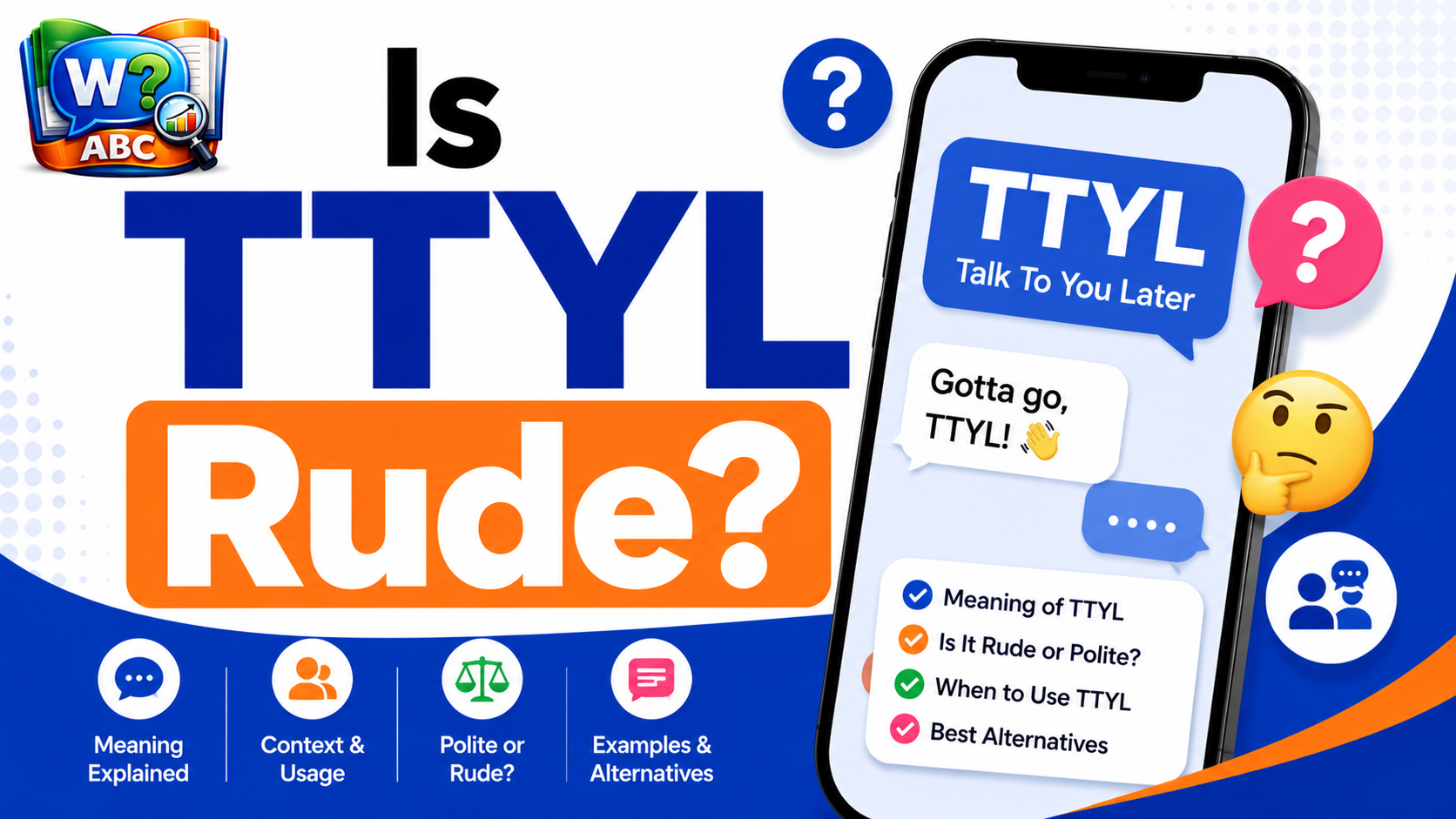
No, TTYL is not considered rude.
In fact, it’s often viewed as a polite way to end a casual conversation because it reassures the other person that you’ll speak again later.
However, tone and context matter.
TTYL sounds polite when:
- Talking with friends
- Chatting with family
- Messaging classmates
- Ending casual conversations
- Speaking with close coworkers in informal chats
It may sound inappropriate when:
- Replying to your manager in a formal workplace conversation
- Sending professional emails
- Communicating with clients
- Responding during serious discussions
In those situations, it’s better to use complete phrases like:
- “Talk to you later.”
- “Have a great day.”
- “I’ll speak with you tomorrow.”
Is TTYL Formal or Informal?
TTYL is an informal internet abbreviation.
It belongs to casual digital communication and should generally be reserved for conversations with people you know well.
| Situation | Use TTYL? |
| Friends | ✅ Yes |
| Family | ✅ Yes |
| Classmates | ✅ Yes |
| Gaming Chats | ✅ Yes |
| Group Chats | ✅ Yes |
| Coworkers (casual chat) | ✅ Usually |
| Business Email | ❌ No |
| Job Application | ❌ No |
| Academic Paper | ❌ Never |
| Official Letter | ❌ Never |
If you’re unsure whether the conversation is formal, it’s safer to write the full phrase instead of using the abbreviation.
How to Reply to TTYL
There isn’t a single correct response. Your reply depends on the conversation and your relationship with the other person.
Here are some natural responses:
| Someone Says | You Can Reply |
| TTYL! | Talk to you later! |
| TTYL 😊 | Sounds good! |
| TTYL | Bye! |
| TTYL | See you later! |
| TTYL | Have a great day! |
| TTYL | Take care! |
| TTYL | Looking forward to chatting later! |
Example Conversation
Emma: I need to finish my homework. TTYL!
Jake: No problem. Talk to you later!
Example 2
Lily: I’m heading to work. TTYL!
Chris: Have a good day!
Example 3
Noah: TTYL!
Ava: Bye! 😊
TTYL vs BRB vs GTG vs BBL
Many texting abbreviations are used when ending or pausing conversations, but they don’t all mean the same thing.
| Abbreviation | Full Form | Meaning | When to Use |
| TTYL | Talk To You Later | Ending the conversation for now | You’ll chat again later |
| BRB | Be Right Back | Temporary pause | You’ll return in a few minutes |
| GTG | Got To Go | Leaving immediately | You need to leave now |
| BBL | Be Back Later | Returning after a longer break | You’ll come back later today |
Quick Comparison
TTYL
- Friendly goodbye
- Conversation ends for now
- Implies you’ll reconnect later
BRB
- Very short break
- Conversation stays active
- You’re expected to return soon
GTG
- More urgent
- Indicates you must leave immediately
- Doesn’t necessarily promise another conversation
BBL
- Longer absence than BRB
- Suggests you’ll return later
- Often used when stepping away for hours
Choosing the right abbreviation helps make your message clearer and avoids confusing the other person.
Common Mistakes When Using TTYL
Although TTYL is simple to use, people sometimes misunderstand when and where it is appropriate. Avoid these common mistakes to make your messages sound natural.
1. Using TTYL in Formal Communication
TTYL is an informal texting abbreviation, so it doesn’t belong in professional emails, job applications, official letters, or academic writing.
❌ Incorrect:
Thank you for your time. TTYL.
✅ Better:
Thank you for your time. I look forward to speaking with you again.
2. Assuming TTYL Has a Hidden Meaning
Some people believe TTYL always signals flirting, rejection, or a loss of interest. In reality, it usually means exactly what it says—“Talk To You Later.”
Always consider the overall conversation instead of reading too much into the abbreviation.
3. Using It During Serious Conversations
If you’re discussing an important or emotional topic, ending the chat with only “TTYL” may seem too casual.
Instead, try a more thoughtful response such as:
“I need to go now, but let’s continue this conversation later.”
4. Overusing Texting Abbreviations
Using too many abbreviations in one message can make it difficult to read.
Example:
GTG BRB LOL TTYL
A clearer message is usually better than a string of acronyms.
Pro Tips for Using TTYL Naturally
Here are a few practical tips to help you use TTYL confidently.
✔ Match the Conversation
Use TTYL only when the conversation is casual and friendly.
✔ Consider Your Audience
Friends and family will usually understand TTYL immediately, but some people may prefer complete words.
✔ Pair It with a Friendly Closing
Adding a smiley or a short farewell can make your message feel warmer.
Examples:
- TTYL! 😊
- TTYL, have a great day!
- TTYL, take care!
✔ Don’t Use It in Every Conversation
Repeating TTYL too often may sound repetitive. Alternatives like “See you later,” “Catch you later,” or “Talk soon” can add variety.
✔ Use Complete Words When Needed
If you’re unsure whether the other person understands texting abbreviations, writing “Talk to you later” is always a safe choice.
Frequently Asked Questions (FAQs)
What does TTYL mean in texting?
TTYL stands for “Talk To You Later.” It is a common internet acronym used to politely end a conversation while indicating you’ll continue talking another time.
What does TTYL stand for?
TTYL stands for Talk To You Later.
Is TTYL slang?
Yes. TTYL is considered internet slang and a texting abbreviation commonly used in online conversations, messaging apps, and SMS.
Is TTYL rude?
No. In most situations, TTYL is friendly and polite. However, it may sound too informal in professional or formal communication.
Is TTYL still used?
Yes. Although many new slang terms have appeared over the years, TTYL remains widely recognized and is still used in text messages, social media, and online chats.
What does TTYL mean from a girl?
Usually, it simply means “Talk To You Later.” On its own, it doesn’t indicate romantic interest, flirting, or rejection. The surrounding conversation provides the real context.
What does TTYL mean from a guy?
The meaning is the same. It typically indicates that he is ending the conversation for now and expects to continue chatting later.
How do you reply to TTYL?
Some natural replies include:
- Talk to you later!
- See you!
- Bye!
- Have a great day!
- Take care!
- Sounds good!
Choose a response that matches the tone of your conversation.
When should you use TTYL?
Use TTYL in casual conversations with friends, family, classmates, or close coworkers when you’re ending a chat but expect to talk again later.
What is the difference between TTYL and BRB?
TTYL ends the conversation for now and suggests you’ll reconnect later.
BRB means “Be Right Back” and indicates only a short pause, with the expectation that you’ll return to the same conversation soon.
Final Thoughts
TTYL is one of the most recognizable texting abbreviations and remains a simple, friendly way to end a conversation. Short for “Talk To You Later,” it lets the other person know you’re leaving the chat for now while expecting to continue the conversation later.
Whether you’re using WhatsApp, Snapchat, Instagram, TikTok, Facebook Messenger, Discord, or SMS, TTYL carries the same meaning and is best suited for informal conversations with friends, family, and other close contacts.
By understanding when to use TTYL, how to reply to it, and how it differs from abbreviations like BRB, GTG, and BBL, you’ll be able to communicate more naturally and confidently in everyday digital conversations.
If you’re learning English vocabulary and commonly confused words, you may also enjoy our guides on IMAO Meaning, Hyy Meaning, and ARD Meaning. Understanding these distinctions will make your writing clearer, more accurate, and more professional.
Written by
 Abdul Moeed
Abdul Moeed is a professional content writer and SEO link-building specialist with 5+ years of experience. He creates search-optimized content and develops effective SEO strategies that improve website visibility, authority, and organic growth.
View LinkedIn profileLatest posts
 Exempt vs Non Exempt: Meaning, Overtime Rules & Examples
 What Does PG Mean in Text? Meaning, Examples & Usage
 What Does OFCC Mean in Text? Meaning, Uses & Examples
 What Does MSG Mean in Text? Meaning, Examples & Usage
 What Does STY Mean in Text? Meaning, Examples & Usage
 What Does “Twin” Mean in Slang? Meaning, Text & Examples