LOL Meaning in Text: What Does LOL Stand For?

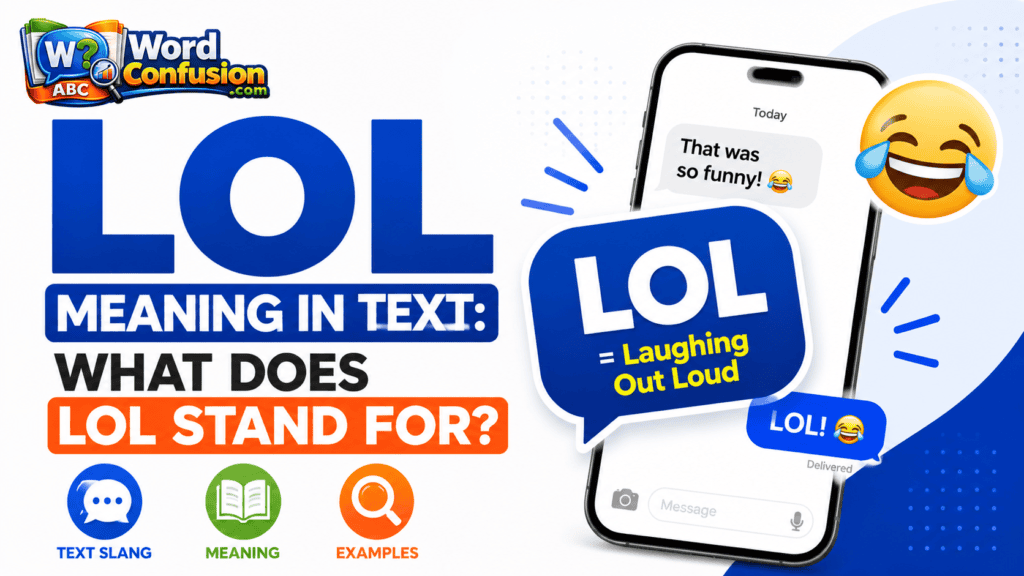
Have you ever received a text ending with “LOL” and wondered whether the person was actually laughing? You are not alone. LOL means “laughing out loud,” and it is one of the most recognizable abbreviations in texting, online chat, and social media.
However, LOL does not always mean someone is literally laughing. Depending on the conversation, it can show amusement, make a message sound friendlier, soften an awkward statement, or simply keep the conversation casual.
📖 See also:HMJ Meaning in Text: Slang, Examples & HMU Difference
In this guide, you’ll learn what LOL means in text, what it stands for, how people use it, what different forms such as “lol” and “LOL!” can suggest, and when it is appropriate to use.
Quick Answer: What Does LOL Mean in Text?
LOL stands for “laughing out loud.” In texting and online chat, people use it to express laughter, amusement, or a lighthearted reaction. In modern conversations, LOL can also soften a message or make it sound more casual, even when the sender is not literally laughing.
Example:
“That was the funniest thing I’ve seen all day lol.”
Here, LOL shows that the person found something amusing.
What Does LOL Stand For?
LOL = Laughing Out Loud
It is an informal abbreviation used in digital communication, including:
- Text messages
- Online chats
- Social media comments
- Direct messages
- Group chats
- Gaming conversations
- Casual online conversations
Major English dictionaries classify LOL/lol as an abbreviation for “laughing out loud.” Cambridge also lists it as an informal expression used in text messages and social media.
You may see it written as:
- LOL
- lol
- Lol
- LOL!
- lol 😂
The basic meaning remains the same, although capitalization, punctuation, emojis, and the surrounding sentence can affect the tone.
If you enjoy learning how internet abbreviations work in everyday communication, WordConfusion also covers related expressions such as TBF meaning in text.
Is LOL Slang or an Abbreviation?
The most precise answer is that LOL is an abbreviation used in informal internet language.
It is also commonly described as internet slang because it belongs to the informal vocabulary people use in texting, chats, and social media.
There is a small distinction worth understanding:
- Abbreviation describes a shortened form of words or a phrase.
- Initialism describes an abbreviation formed from initial letters that are pronounced separately.
- Slang refers to informal language used by particular groups or communities.
So, calling LOL “internet slang” is understandable, but calling it an internet abbreviation or initialism is more precise.
This distinction matters because not every abbreviation is slang, and not every slang expression is an abbreviation.
For comparison, other texting expressions can have very different levels of informality. For example, TF meaning in text explains an abbreviation that is considerably more vulgar and context-sensitive than LOL.
What Does LOL Mean in Modern Texting?
The traditional meaning of LOL is “laughing out loud.” But real conversations are more complicated than dictionary definitions.
People often use LOL in several different ways.
1. Genuine laughter
Sometimes LOL really does mean the person found something funny.
Example:
“That video was hilarious LOL.”
The sender is expressing genuine amusement.
2. Mild amusement
LOL does not necessarily mean something was extremely funny.
Example:
“You forgot your keys again lol.”
Here, the sender may be mildly amused rather than literally laughing out loud.
3. Softening a message
LOL can make a statement feel less serious or confrontational.
Example:
“I’m not mad lol.”
Without LOL, the message might sound more serious. Adding it can make the sentence feel lighter.
4. Making an awkward statement feel casual
People sometimes use LOL after admitting something embarrassing.
Example:
“I accidentally sent that message to the whole group lol.”
The sender may not actually be laughing. LOL helps communicate an informal, slightly embarrassed tone.
5. Showing friendly amusement
LOL can also make a response feel warmer.
Example:
“Sure, I can help you with that lol.”
The person may simply be keeping the conversation relaxed.
6. Signaling irony or sarcasm
LOL can sometimes accompany an ironic statement.
Example:
“Great, another meeting at 7 a.m. lol.”
The person probably is not genuinely happy about the meeting.
However, context matters. LOL does not automatically mean sarcasm.
📖 See also:DTTM Meaning in Text: What Does DTTM Mean in Chat?
Does LOL Always Mean Laughing Out Loud?
No.
LOL originally refers to “laughing out loud,” but modern texting has expanded its conversational function.
A person may type LOL without actually laughing. They might use it to:
- Show mild amusement
- Make a message less serious
- Sound friendly
- Acknowledge something awkward
- Signal playful disbelief
- Add an informal conversational tone
For example:
“I completely forgot about the deadline lol.”
The sender probably isn’t laughing at the deadline. Instead, LOL makes the embarrassing admission sound more casual.
This is one reason context is so important when interpreting texting abbreviations.
How to Use LOL in Texting
LOL is most natural in casual communication.
Good situations for LOL
You can generally use LOL when:
- Talking to close friends
- Messaging family members casually
- Responding to funny content
- Chatting on social media
- Participating in informal group chats
- Having a relaxed conversation with someone you know well
Examples:
“That cat is ridiculous lol.”
“I can’t believe you actually did that LOL.”
“Okay, you got me lol.”
Situations where you should be careful
LOL is less appropriate when the conversation is:
- Formal
- Academic
- Serious
- Sensitive
- Professional
- Customer-facing
For example, writing:
“Thank you for reviewing the proposal lol.”
would usually sound too casual for a formal business email.
If you are communicating professionally, it is generally better to express friendliness through clear wording rather than internet slang.
For another example of how context changes the meaning and appropriateness of an abbreviation, see GTFO meaning in text.
LOL Examples in Text Messages
| Situation | Example | Likely Meaning |
| Genuine humor | “That movie was hilarious lol.” | Actual amusement |
| Mild humor | “You forgot again lol.” | Playful amusement |
| Embarrassment | “I sent it to the wrong person lol.” | Softening an awkward admission |
| Friendly tone | “Sure lol.” | Casual friendliness |
| Irony | “Amazing, my phone died again lol.” | Possibly ironic or frustrated |
| Surprise | “You actually did it LOL!” | Strong amusement or surprise |
| Awkwardness | “So… that happened lol.” | Making an uncomfortable moment lighter |
Remember that these are likely interpretations, not fixed rules. The same LOL can communicate different things depending on the relationship and conversation.
What Does “LOL” at the End of a Sentence Mean?
When LOL appears at the end of a sentence, it often works as a tone marker.
For example:
“I forgot to bring my charger lol.”
The sentence itself is not necessarily funny. LOL makes the admission sound more relaxed and less serious.
Compare:
“I forgot to bring my charger.”
with:
“I forgot to bring my charger lol.”
The second version usually feels more casual.
Similarly:
“You are unbelievable lol.”
could be playful rather than genuinely angry.
The surrounding conversation determines the intended meaning.
LOL vs. Haha vs. LMAO vs. ROFL
These expressions are related, but they are not identical.
| Expression | Meaning | Typical Tone | General Use |
| LOL | Laughing out loud | Casual | Amusement or light laughter |
| Haha | Written representation of laughter | Natural/friendly | Mild to moderate amusement |
| LMAO | Laughing my ass off | Very informal | Strong amusement |
| LMFAO | Laughing my f***ing ass off | Very informal/vulgar | Strong or exaggerated amusement |
| ROFL | Rolling on the floor laughing | Playful/exaggerated | Very strong or humorous reaction |
There is no scientifically fixed “laugh intensity scale” for these expressions. People use them differently.
For example, someone might write LOL after something they genuinely find hilarious, while another person might use LMAO simply because it feels more expressive.
Cambridge classifies LMAO as a very informal abbreviation for “laughing my ass off,” reinforcing the difference in formality between LMAO and the milder LOL.
📖 See also:GL Meaning in Text: What Does “GL” Mean in Chat?
LOL vs. Haha: What’s the Difference?
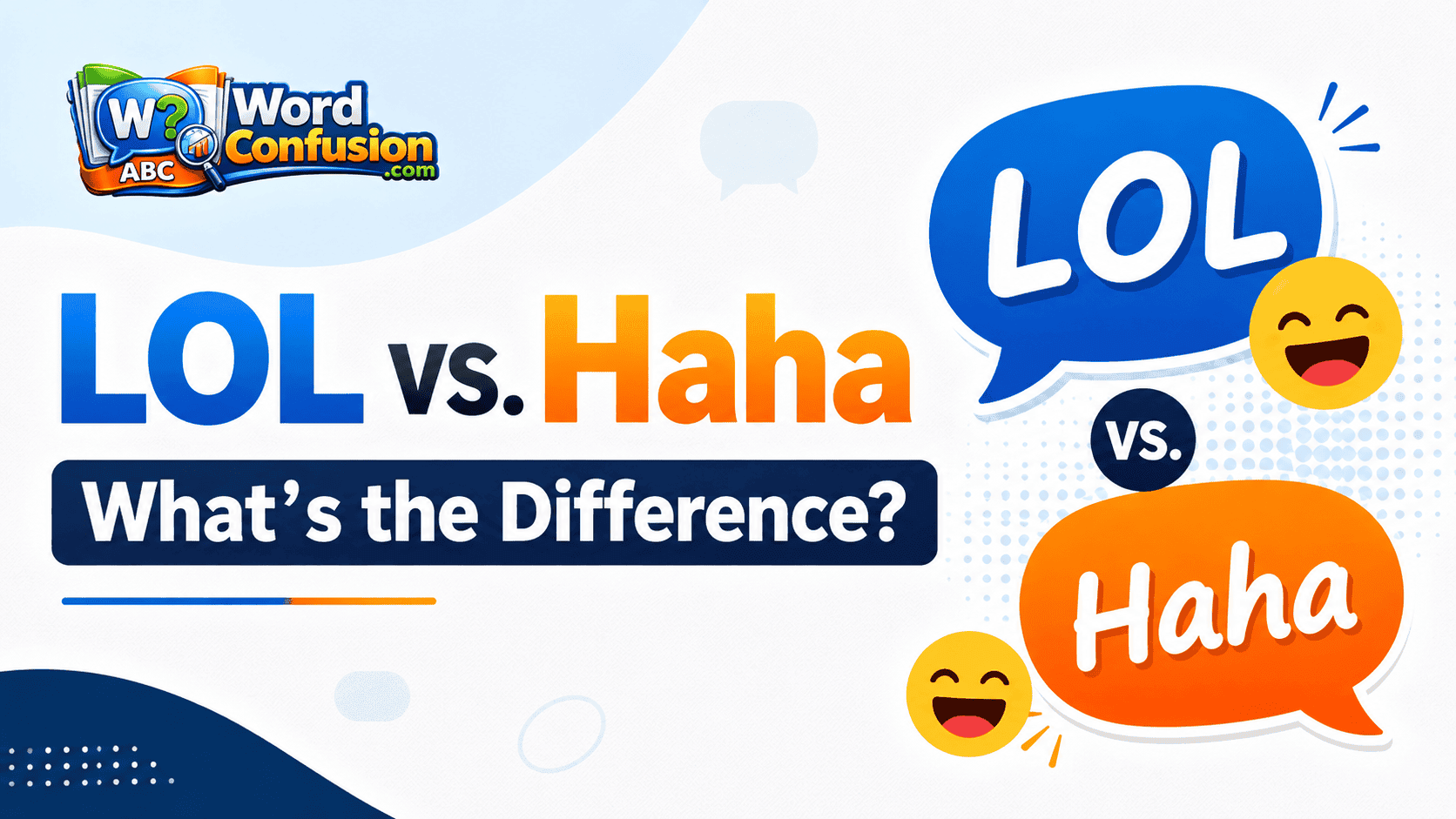
👉LOL and haha can both express amusement, but they often create slightly different impressions.
LOL is an abbreviation and can function as a reaction or tone marker.
“That is so true lol.”
Haha more directly represents written laughter.
“Haha, I can’t believe you said that.”
Neither is automatically stronger.
The choice depends on personal style, context, and the relationship between the people communicating.
LOL vs. LMAO: What’s the Difference?
LOL means “laughing out loud.”
LMAO means “laughing my ass off.”
LMAO is more informal and contains mild profanity, so it is generally less suitable for professional communication.
“That was funny lol.”
sounds fairly mild.
“That was hilarious lmao.”
sounds more expressive and casual.
LOL vs. ROFL: What’s the Difference?
ROFL stands for “rolling on the floor laughing.”
It is an exaggerated expression suggesting that something is extremely funny.
In everyday texting, however, people do not necessarily mean that they are literally rolling on the floor. Like LOL, it can simply be a playful way to show strong amusement.
Is LOL Appropriate in Professional Communication?
Usually, no in formal communication.
That does not mean LOL is forbidden everywhere in the workplace.
Consider the context:
| Situation | LOL? | Why |
| Close friend | Yes | Casual |
| Family group chat | Usually | Informal |
| Social media | Yes | Commonly accepted |
| Casual coworker chat | Sometimes | Depends on workplace culture |
| Formal client email | Usually avoid | Too informal |
| Job application | Avoid | Professional tone required |
| Academic paper | Avoid | Not appropriate for formal writing |
| Business report | Avoid | Informal internet language |
A casual workplace chat between colleagues can be very different from a formal email to a client.
The safest rule is simple:
Use LOL when the communication is clearly casual. Avoid it when professionalism, formality, or seriousness matters.
What Does LOL Mean on Social Media?
The basic meaning of LOL generally stays the same across social platforms.
You may see it on:
- TikTok
- Snapchat
- X
- Discord
- Messenger
For example:
“That comment took me out lol.”
or:
“I can’t believe this happened LOL.”
The platform does not automatically give LOL a different definition. Instead, the surrounding community, conversation, and tone can influence how it is interpreted.
This is similar to other internet abbreviations: the same short form can feel different depending on where and how it appears.
For example, SH meaning in text explains why context matters when interpreting short expressions in social media conversations.
What Does LOL Mean From a Girl?
There is no special dictionary meaning of LOL that applies when a girl uses it.
A girl using LOL could mean:
- She genuinely found something funny.
- She is mildly amused.
- She wants to keep the conversation casual.
- She is softening an awkward statement.
- She is responding playfully.
- She is simply using LOL as part of her normal texting style.
The same applies when a guy uses LOL.
You should not determine someone’s feelings or intentions from LOL alone.
Instead, consider:
- What was said before LOL?
- What is the relationship between you?
- Are they using emojis?
- Are they continuing the conversation?
- Is the overall message playful, serious, or sarcastic?
Context is much more reliable than gender.
📖 See also:Other Ways to Say “All the Best”: 40+ Formal, Warm & Alternatives
Does Capitalization Change the Meaning of LOL?
Usually, no.
These forms all refer to the same basic expression:
- LOL
- lol
- Lol
However, capitalization can affect the perceived emphasis.
For example:
“lol”
may look relaxed or understated.
“LOL!”
may appear more enthusiastic.
But these are not strict grammatical rules. People have individual texting styles, and capitalization alone should not be overinterpreted.
Punctuation and emojis can similarly affect tone:
“LOL 😂”
👉“lol…”
“LOL!”
The core meaning remains connected to laughter or amusement.
Is LOL Rude?
LOL is not inherently rude.
In most casual conversations, it is harmless and often friendly.
However, it can sound insensitive when used after something serious.
For example:
“I lost my job lol.”
might sound uncomfortable or dismissive depending on the situation.
Likewise:
“I’m sorry that happened lol.”
could be interpreted as insensitive because LOL conflicts with the seriousness of the message.
The problem is not the abbreviation itself. The problem is whether the tone fits the situation.
Common Mistakes When Using LOL
1. Assuming LOL always means genuine laughter
It can indicate amusement without literal laughter.
2. Using LOL in formal writing
Formal emails, reports, academic assignments, and professional documents usually require a more standard style.
3. Assuming LOL always means sarcasm
LOL can accompany sarcasm, but it does not automatically create sarcasm.
4. Trying to decode someone’s feelings from LOL alone
A single abbreviation is not enough to determine whether someone likes you, is annoyed, or is being sarcastic.
5. Thinking LOL has a different meaning based on gender
It does not.
6. Using LOL after serious statements
Sometimes it can make a message sound dismissive or insensitive.
7. Overusing LOL
Putting LOL at the end of every sentence can make your writing feel repetitive or unnatural.
For more examples of how short online expressions can change meaning depending on context, you can also explore FMB meaning in text.
A Short History of LOL
LOL developed as part of the broader evolution of computer-mediated communication and internet culture.
As online communities and instant messaging became more popular, users developed shorthand expressions that allowed them to communicate quickly and indicate emotions that are easier to express in face-to-face conversation.
LOL became one of the most widely recognized examples.
Its original expansion—laughing out loud—is still the standard dictionary meaning today. Modern dictionaries recognize LOL as an informal abbreviation used in text messages and social media.
The important point is that its function has expanded. Today, LOL can communicate not only laughter but also a lighter conversational tone.
Is LOL Still Used in 2026?
Yes.
LOL remains widely recognizable and continues to appear in texting, social media, messaging, and online conversations.
However, how people express laughter is constantly changing. Some people prefer:
- haha
- hahaha
- lol
- LOL
- LMAO
- 😂
- 💀
- “I’m dead”
Preferences can vary by age, platform, community, and individual texting style.
So it is more accurate to say that LOL remains part of modern digital communication, while its frequency and tone can vary among different groups.
How Do You Respond to LOL?
Your response depends on what the person said before LOL.
If they are laughing:
“Haha, exactly 😂”
If they are joking:
“I knew you’d find that funny.”
If they are teasing you:
“Very funny 😂”
If you’re not sure what they mean:
“Lol, what?”
If you want to continue the conversation:
“Haha, anyway, what happened next?”
You do not always need to respond specifically to the LOL. Treat it as part of the overall message.
Key Takeaways About LOL
- LOL means “laughing out loud.”
- It is an informal internet abbreviation used in texts, chats, and social media.
- LOL can indicate genuine laughter or simple amusement.
- It can also soften a message or make it sound more casual.
- Context determines the exact tone.
- “LOL,” “lol,” and “Lol” generally have the same basic meaning.
- LOL is suitable mainly for informal communication.
- It is usually best avoided in formal or academic writing.
- LOL does not have a special meaning when used by a particular gender.
- LOL, haha, LMAO, and ROFL are related expressions but have different levels of informality and typical usage.
Frequently Asked Questions About LOL
What does LOL mean in text?
LOL means “laughing out loud.” It is an informal abbreviation used in texts, chats, and social media to show amusement, laughter, or a lighthearted reaction. It can also soften a message or make it sound more casual.
What does LOL stand for?
LOL stands for “laughing out loud.”
What is the full form of LOL?
The full form of LOL is laughing out loud.
What does LOL mean in chat?
In online chat, LOL usually means laughing out loud and is used to show that something is funny or amusing. Depending on context, it can also make a message sound friendlier or less serious.
Is LOL slang or an abbreviation?
LOL is best described as an informal abbreviation or initialism that is widely used as part of internet slang.
Is LOL an acronym?
LOL is commonly called an acronym in everyday usage, but technically it is more precisely described as an initialism, because the letters are normally pronounced individually: “L-O-L.”
Does LOL always mean laughing out loud?
No. Although LOL stands for “laughing out loud,” people often use it to show mild amusement, soften a statement, or create a casual tone without literally laughing.
What does LOL mean when nothing is funny?
It can function as a conversational softener or tone marker. For example, “I completely forgot my appointment lol” may express embarrassment rather than actual laughter.
Is LOL rude?
No. LOL is generally not rude, but it can sound inappropriate or insensitive if it is used in a serious or sensitive conversation.
Can you use LOL in a professional email?
It is usually better to avoid LOL in formal professional emails. In an informal workplace chat with close colleagues, it may be acceptable depending on the workplace culture.
What does LOL mean from a girl?
LOL does not have a special gender-specific meaning. A girl may use it to show amusement, friendliness, awkwardness, or simply a casual texting style. Context matters more than gender.
What does LOL mean from a guy?
The same basic rule applies: LOL does not have a special meaning based on the sender’s gender. Look at the surrounding conversation and overall tone.
What is the difference between LOL and LMAO?
LOL means “laughing out loud,” while LMAO means “laughing my ass off.” LMAO is more informal and contains profanity, so it is generally less appropriate for professional communication.
What is the difference between LOL and ROFL?
LOL means “laughing out loud,” while ROFL means “rolling on the floor laughing.” ROFL is generally more exaggerated and playful, although people do not necessarily mean that they are literally rolling on the floor.
How do you respond to LOL?
You can respond naturally with “Haha,” “Right?”, “Exactly 😂,” or continue the conversation. The best response depends on what the person said before LOL.
Is LOL still used in 2026?
Yes. LOL remains a widely recognized expression in digital communication, although people vary in how frequently they use it and whether they prefer alternatives such as haha, LMAO, emojis, or other internet expressions.
📖 See also:IGHT Meaning in Text: What Does IGHT Mean in Chat?
Final Answer
LOL means “laughing out loud.” It is one of the most common informal abbreviations in texting and online communication.
But its modern use goes beyond literal laughter. Someone might write LOL because something is genuinely funny, mildly amusing, awkward, ironic, or simply because they want their message to sound more relaxed.
The best way to understand LOL is therefore to look at the whole conversation, not the abbreviation alone.
For more practical explanations of English words, expressions, and online language, explore WordConfusion.
Written by
 Abdul Moeed
Abdul Moeed is a professional content writer and SEO link-building specialist with 5+ years of experience. He creates search-optimized content and develops effective SEO strategies that improve website visibility, authority, and organic growth.
View LinkedIn profileLatest posts
 Exempt vs Non Exempt: Meaning, Overtime Rules & Examples
 What Does PG Mean in Text? Meaning, Examples & Usage
 What Does OFCC Mean in Text? Meaning, Uses & Examples
 What Does MSG Mean in Text? Meaning, Examples & Usage
 What Does STY Mean in Text? Meaning, Examples & Usage
 What Does “Twin” Mean in Slang? Meaning, Text & Examples