Fatigue Meaning: Definition, Types, Origin & Examples

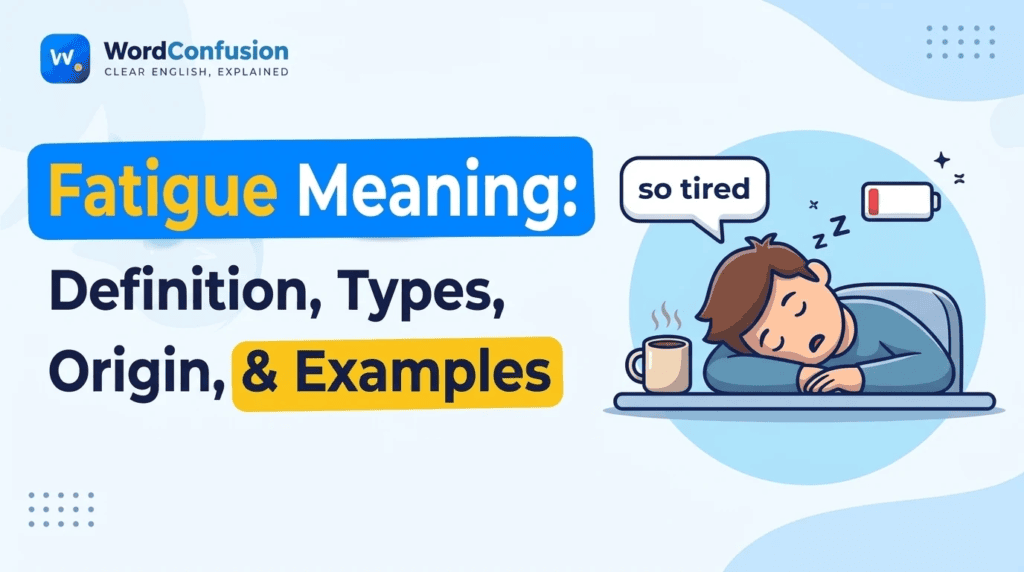
A nurse finishes a double shift and tells a coworker she feels pure fatigue, not ordinary tiredness. That word choice raises a fair question about the exact fatigue meaning and its everyday use.
This guide covers the definition, origin, and pronunciation of fatigue, plus its many compound forms. It also compares fatigue with tiredness, exhaustion, and sleepiness, then shows correct usage with clear example sentences.
Readers who enjoy words with layered senses may also like our guide on discernment meaning. Both words carry an everyday sense and a more technical sense that changes with context.
Quick Answer: What Does Fatigue Mean?
Fatigue means a deep, lasting tiredness of the body or mind that rest does not quickly fix. As a verb, fatigue means to make someone or something tired or worn out. In engineering, metal fatigue describes material weakening after repeated stress over long periods of use.
Fatigue Meaning at a Glance
The table below gathers the main senses of fatigue in one place for quick reference.
| Sense | Part of speech | Short meaning | Example context |
|---|---|---|---|
| Physical fatigue | Noun | Body tiredness | After a long hike |
| Mental fatigue | Noun | Worn out mind | After hours of study |
| To fatigue | Verb | To make tired | Long meetings fatigue staff |
| Metal fatigue | Noun | Material weakening | Aircraft parts and bridges |
| Fatigues | Plural noun | Military work clothes | Soldiers in camouflage |
| Compassion fatigue | Noun phrase | Drained empathy | Caregivers and nurses |
The core idea across every sense is wear caused by repeated or prolonged effort.
Definition of Fatigue
Dictionaries such as Merriam Webster and Oxford define fatigue as weariness from labor, stress, or exertion. The key feature of fatigue is duration, because it lingers longer than simple short term tiredness.
A person with fatigue may sleep through the night and still wake up with low energy. That pattern separates fatigue from the sleepy feeling that usually disappears after a good nap.
Fatigue as a Noun
As a noun, fatigue names the state of being worn out in body, mind, or both together. Writers use it in sentences like “Fatigue set in after the third hour of the exam.”
The noun also appears in technical writing about machines, materials, and even public attention spans. In each case, the word points to decline caused by repeated strain over time.
Fatigue as a Verb
As a verb, fatigue means to tire someone out, usually through effort, repetition, or long exposure. A coach might say that repeated sprints fatigue the legs faster than steady jogging does.
The verb form sounds formal and appears more often in writing than in casual speech. Most speakers prefer “tire out” or “wear out” in relaxed conversations with friends and family.
Fatigued as an Adjective
The past participle fatigued works as an adjective and describes someone who feels deeply worn out. Doctors and researchers often write “fatigued patients” when they describe people with persistent low energy.
In simple words, fatigue is tiredness that stays around even after rest.
Origin and Etymology of Fatigue
Fatigue entered English from French in the seventeenth century, carrying the sense of weariness and toil. The French word came from the Latin verb fatigare, which meant to tire out or weary.
Some etymologists link fatigare to the Latin phrase ad fatim, meaning to bursting or to excess. That link suggests an old image of effort pushed so far that the body gives way.
The military sense of fatigues appeared later and first described manual labor duties given to soldiers. Over time, the name moved from the labor itself to the work clothes worn during it.
How to Pronounce Fatigue
Fatigue has two syllables and sounds like “fuh TEEG,” with stress on the second syllable. The final “ue” stays silent, which often confuses learners who expect a third syllable at the end.
| Word | Pronunciation | Syllables |
|---|---|---|
| Fatigue | fuh TEEG | 2 |
| Fatigued | fuh TEEGD | 2 |
| Fatigues | fuh TEEGZ | 2 |
| Fatiguing | fuh TEEG ing | 3 |
The silent ending mirrors words like intrigue and league, which also drop the final vowel sound.
Types of Fatigue
Fatigue appears in several forms, and each type has its own causes and common contexts. Knowing the type helps speakers choose the most accurate phrase for a situation.
The four main types often overlap, since a long week can drain the body and mind together. Writers can name more than one type when a situation clearly involves several sources of strain.
A teacher during report season may describe physical fatigue from standing and mental fatigue from grading. Naming both types paints a fuller picture than a single general word like tired.
Physical Fatigue
Physical fatigue describes muscles and the body feeling heavy, weak, or slow after effort. Athletes, builders, and warehouse workers often report physical fatigue after long workdays or intense training.
Mental Fatigue
Mental fatigue describes a tired mind that struggles with focus, memory, and quick decisions. Students during exam season and programmers after long debugging sessions often mention mental fatigue.
Emotional Fatigue
Emotional fatigue follows long periods of stress, worry, or caring for others through hard times. People with emotional fatigue may feel numb, irritable, or detached from activities they once enjoyed.
Chronic Fatigue
Chronic fatigue refers to tiredness that lasts for months and does not improve with normal rest. Do not treat chronic fatigue as ordinary tiredness, because doctors should check persistent symptoms carefully.
Medical sources such as the CDC and NHS describe a specific condition called ME/CFS with defined criteria. Only a qualified doctor can diagnose that condition, so this guide covers the word and not medical advice.
Common Compound Phrases With Fatigue
English builds many useful phrases around fatigue, and each one points to a specific form of wearing down.
| Phrase | Meaning | Common setting |
|---|---|---|
| Compassion fatigue | Drained ability to care | Nursing, social work |
| Decision fatigue | Worse choices after many decisions | Shopping, management |
| Zoom fatigue | Tiredness from video calls | Remote work |
| Alert fatigue | Ignoring frequent warnings | IT, hospitals |
| Voter fatigue | Weariness from many elections | Politics |
| Donor fatigue | Reduced giving after repeated appeals | Charities |
| Battle fatigue | Older term for combat stress | Military history |
| Metal fatigue | Material cracking from repeated stress | Engineering |
Each phrase keeps the same root idea, which is decline after repeated exposure to one demand.
Compassion Fatigue
Compassion fatigue describes caregivers who slowly lose the emotional energy to respond to suffering. Nurses, therapists, and rescue workers use this phrase when long exposure to pain drains their empathy.
Decision Fatigue
Decision fatigue means that the quality of choices drops after a long series of earlier decisions. Shoppers who grab snacks at checkout after an hour of comparing prices show this pattern well.
Metal Fatigue
Metal fatigue describes small cracks that grow in metal parts after repeated loading cycles. Engineers inspect aircraft wings, bridges, and train axles for metal fatigue to prevent sudden failures.
Alert Fatigue
Alert fatigue happens when people see so many warnings that they start ignoring every single one. Hospital staff and IT teams face this problem when monitoring systems send too many low value alarms.
Fatigue vs Tiredness
Tiredness and fatigue overlap, but they differ in depth, duration, and how quickly rest fixes them.
| Factor | Tiredness | Fatigue |
|---|---|---|
| Duration | Short | Long or repeated |
| Fixed by sleep | Usually yes | Often not fully |
| Depth | Mild | Deep |
| Tone | Casual | Formal or clinical |
Tiredness passes with rest, while fatigue lingers and often signals deeper strain on the body or mind.
Fatigue vs Exhaustion
Exhaustion describes the far end of fatigue, where energy feels fully used up for the moment. Fatigue can build slowly over weeks, while exhaustion often arrives suddenly after one extreme effort.
| Factor | Fatigue | Exhaustion |
|---|---|---|
| Intensity | Moderate to deep | Extreme |
| Onset | Gradual | Often sudden |
| Typical cause | Ongoing strain | Single intense effort |
| Recovery | Slow | Faster with full rest |
A marathon runner feels exhaustion at the finish line, while a new parent feels fatigue for months.
Fatigue vs Sleepiness
Sleepiness means a strong urge to fall asleep, while fatigue means low energy without that urge. A fatigued person may lie awake at night yet still struggle through the next day.
| Factor | Sleepiness | Fatigue |
|---|---|---|
| Main feeling | Urge to sleep | Lack of energy |
| Eyes | Heavy, closing | May stay alert |
| Fixed by nap | Usually yes | Often not |
Doctors separate these terms because each one points toward different causes and different checks.
Fatigue vs Lethargy
Lethargy describes sluggishness and a lack of drive, often with slow movement and dull responses. Fatigue focuses on energy, while lethargy focuses on drive, mood, and the desire to act.
Writers sometimes treat these words as equal, but careful usage keeps them apart for precision. A lethargic cat ignores its toy, while a fatigued cat plays briefly and then rests.
Fatigue vs Burnout
Burnout describes long term exhaustion tied to work or caregiving, often with cynicism and reduced performance. Fatigue can be one part of burnout, but burnout adds emotional distance and a loss of motivation.
| Factor | Fatigue | Burnout |
|---|---|---|
| Main focus | Energy level | Work related exhaustion |
| Emotional tone | Neutral | Cynical or detached |
| Typical cause | Any strain | Chronic job stress |
| Common setting | Anywhere | Workplace, caregiving |
Burnout always includes fatigue, but fatigue alone does not always mean a person has burnout.
The World Health Organization lists burnout as an occupational phenomenon tied to unmanaged workplace stress. That framing keeps burnout linked to jobs, while fatigue stays a broader word for any setting.
Words That Describe Levels of Tiredness
English offers a ladder of words that move from mild tiredness to extreme exhaustion. Picking the right rung on this ladder makes writing more precise and more believable.
| Level | Word | Typical use |
|---|---|---|
| Mild | Drowsy | Light urge to rest |
| Mild | Tired | Ordinary low energy |
| Moderate | Weary | Tired from long effort |
| Moderate | Fatigued | Deep and lasting tiredness |
| Severe | Exhausted | Energy fully used up |
| Severe | Depleted | Nothing left to give |
Fatigued sits in the middle of the ladder, which explains its popularity in formal and clinical writing.
Key Characteristics of Fatigue
The points below list the key characteristics that separate fatigue from ordinary short term tiredness:
- Fatigue lasts longer than normal tiredness and often continues after a full night of sleep.
- Fatigue affects focus, memory, and mood along with physical strength and daily movement.
- Fatigue usually builds gradually from repeated effort, ongoing stress, or long periods of strain.
- Fatigue can appear in people, groups, machines, and materials, depending on the context word.
- Fatigue often reduces performance quality before a person notices a clear drop in energy.
Fatigue in Different Contexts
Context decides which sense of fatigue a speaker means, so reading the surrounding words matters. The same word can describe a tired worker, a cracked bridge, or a weary public audience.
Fatigue at Work
Workplace fatigue describes employees who feel drained after long hours, night work, or heavy workloads. Safety agencies treat workplace fatigue seriously because tired workers make more mistakes with machines.
Our guide on furlough meaning covers another workplace term that often appears in news about labor and employment. Both words show up in reports about staff wellbeing, shift patterns, and company policy changes.
Fatigue in Sports
Coaches and trainers use fatigue to describe declining performance during training sessions or long matches. Sports scientists measure fatigue through heart rate, sprint speed, and recovery time between efforts.
Fatigue in the Military
In military language, fatigues refers to the practical work uniforms soldiers wear for daily duties. The older phrase “fatigue duty” described cleaning, digging, and other manual labor tasks.
Fatigue in Public Life
Writers use fatigue to describe public weariness toward a repeated topic, such as election fatigue. News outlets also mention pandemic fatigue when people grow tired of long safety restrictions.
Fatigue in Text Messages and Social Media
Online writers often stretch fatigue into playful phrases that describe boredom with a repeated trend. Posts about “sequel fatigue” or “superhero fatigue” mean audiences feel tired of seeing the same formula.
This online sense keeps the core idea of weariness from repetition, though the tone stays light. Readers should not confuse these joking uses with real health complaints about lasting tiredness.
Some users write “fatigue is real” as a caption under photos of late nights or busy weeks. The phrase works as a relatable joke, and most followers read it as everyday tiredness.
Everyday Causes Linked to Fatigue
Writers often explain fatigue by naming its cause, so knowing common causes improves descriptive accuracy. Health sources usually list several everyday factors, though only a doctor can confirm any personal cause.
| Common factor | How it links to fatigue |
|---|---|
| Poor sleep | Rest feels shallow or broken |
| Long work hours | Little recovery time between days |
| Ongoing stress | Mind stays on alert for long periods |
| Low activity | Fitness drops and effort feels harder |
| Dehydration | Energy and focus often decline |
| Illness | Body spends energy on recovery |
These factors explain the word in context, but they never replace a proper medical check.
Writers describing a character can use these causes to make fatigue feel concrete and believable. A sentence like “Weeks of night work left him in a gray fatigue” paints a clear picture.
Idioms and Expressions Related to Fatigue
English speakers rarely say fatigue in casual talk, so they reach for colorful idioms with the same meaning.
| Expression | Meaning |
|---|---|
| Dead on one’s feet | Extremely tired while still standing |
| Running on empty | Continuing with no energy left |
| Bone tired | Tired deep in the body |
| Worn to a frazzle | Fully drained by stress |
| Out of steam | Lacking the energy to continue |
These idioms add color to fiction and speech, while fatigue suits formal reports and essays.
Real World Example: Fatigue in a Workplace Report
A hospital manager writes a short report after staff complain about long weeks and missed breaks. The first draft says “staff are tired,” which sounds vague and fails to show the real problem.
The revised draft reports ongoing fatigue among staff and early signs of compassion fatigue. That version names the depth, the duration, and the specific emotional strain in one clear sentence.
The manager also adds “decision fatigue during late handovers” to explain a rise in small charting errors. Precise wording helps leaders see the issue clearly and plan rest periods with more confidence.
Fatigue in Academic and Formal Writing
Academic writers prefer fatigue over tired because it sounds precise, neutral, and suitable for research reports. Studies in psychology, sports science, and engineering all use the term with defined measurement methods.
A research paper might measure mental fatigue with reaction time tests or self reported rating scales. An engineering report might measure metal fatigue through the number of stress cycles before a crack forms.
Students writing essays should define the type of fatigue early and keep that definition through the paper. Clear definitions help markers follow the argument and judge the evidence fairly and consistently.
When Fatigue Deserves Medical Attention
Health services like the NHS suggest seeing a doctor when tiredness lasts weeks without clear reason. Sudden weight changes, ongoing low mood, or breathing trouble alongside fatigue also call for a medical check.
This article explains the word fatigue and its uses, so it cannot judge any personal health situation. Anyone worried about lasting tiredness should speak with a qualified doctor instead of relying on online lists.
Fatigue Meaning in Different Languages
Many languages share the same Latin root, so the word looks familiar across Europe and beyond.
| Language | Word | Notes |
|---|---|---|
| French | Fatigue | Same spelling, similar meaning |
| Spanish | Fatiga | Also means shortness of breath |
| Italian | Fatica | Also means hard work |
| Portuguese | Fadiga | Common in medical writing |
| German | Ermüdung | Used for people and metals |
| Urdu | Thakan | Everyday word for tiredness |
| Hindi | Thakaan | Close to the Urdu form |
The Romance languages keep the Latin root, while German and Urdu use unrelated native words.
Synonyms and Antonyms of Fatigue
Synonyms help writers avoid repetition, though each one carries a slightly different shade of meaning.
| Synonyms | Antonyms |
|---|---|
| Weariness | Energy |
| Exhaustion | Strength |
| Tiredness | Freshness |
| Lethargy | Liveliness |
| Burnout | Vigor |
| Languor | Alertness |
Weariness sits closest in meaning, while burnout adds a stronger link to long term work stress.
Example Sentences Using Fatigue
The examples below show fatigue as a noun, verb, adjective, and compound phrase in natural sentences.
- After twelve hours on the ward, the nurse felt a heavy fatigue in her legs.
- Long video meetings fatigue remote teams faster than short in person conversations do.
- The fatigued hikers rested beside the river before the final climb to camp.
- Engineers found signs of metal fatigue near the bolts on the old railway bridge.
- Decision fatigue made the manager approve the last request without reading it carefully.
- The soldiers changed into their fatigues before the morning training exercise began.
- Compassion fatigue led the counselor to take a short break from difficult cases.
Each sentence keeps the same root idea while the context changes the exact sense of the word.
How to Use Fatigue Correctly Step by Step
The steps below help writers pick the right form and context for fatigue in any sentence.
Step 1: Identify the Subject
Decide whether the subject is a person, a group, a machine, or an abstract idea like public opinion. People and groups suit physical or mental fatigue, while machines and materials suit metal fatigue.
Step 2: Choose the Part of Speech
Pick the noun for a state, the verb for an action, and the adjective for a description. “Fatigue set in” uses the noun, while “the hike fatigued them” uses the verb form.
Step 3: Check the Intensity
Use tiredness for mild cases, fatigue for deep or lasting cases, and exhaustion for extreme cases. Matching intensity keeps writing precise and stops readers from misjudging the situation.
Step 4: Add a Clear Context Word
Pair fatigue with a context word like mental, compassion, or metal when the meaning could be unclear. That pairing removes doubt and makes the sentence easier for readers to follow quickly.
Step 5: Read the Sentence Aloud
Reading aloud reveals awkward rhythm, wrong forms, and missing context words before the text goes live. If the sentence sounds stiff, try a simpler verb like tire or wear out instead.
Tips for Using Fatigue in Writing
The tips below help writers use fatigue accurately in essays, reports, and everyday messages:
- Use fatigue for lasting tiredness and keep tired for short, ordinary low energy moments.
- Add a context word like mental or physical when the type of fatigue matters to readers.
- Prefer simple verbs like tire in casual writing, because the verb fatigue sounds formal.
- Spell fatigue with the silent ue ending, and never drop those two final letters.
- Use fatigues only for military clothing, and keep fatigue singular for the feeling itself.
- Avoid medical claims about fatigue unless a qualified source or doctor supports the statement.
Common Mistakes With Fatigue
1. Misspelling the Word
Writers sometimes type “fatige” or “fatigeu” because the silent ending feels unusual in English spelling. Remember the pattern from intrigue and league to keep the final letters in the right order.
2. Using Fatigue for Mild Tiredness
Calling a brief afternoon slump fatigue can sound dramatic or overly clinical in casual conversation. Save fatigue for deeper or longer tiredness, and use tired for small everyday dips in energy.
3. Confusing Fatigue and Fatigues
Fatigue means tiredness, while fatigues means military work clothes, so the final s changes the meaning. A sentence like “He wore fatigue” sounds wrong because clothing needs the plural form.
4. Treating Fatigue and Sleepiness as Equal
Fatigue and sleepiness feel different, and mixing them can confuse readers in health related writing. Describe an urge to sleep as sleepiness, and describe low energy without that urge as fatigue.
5. Mispronouncing the Ending
Some learners say “fa ti gyoo” with three syllables because they read the silent letters aloud. The correct pronunciation keeps two syllables and stresses the second one clearly.
Fatigue Usage Checklist
Use this checklist before submitting any essay, report, or post that includes the word fatigue:
- The word describes lasting or deep tiredness and not a short, ordinary dip in energy.
- The part of speech matches the sentence, whether noun, verb, adjective, or compound phrase.
- A context word like mental, physical, or metal clarifies the type when meaning could blur.
- The spelling keeps the silent ue ending in every form, including fatigued and fatiguing.
- Fatigues appears only for military clothing and never for the feeling of tiredness itself.
- Health statements about fatigue come from trusted medical sources instead of personal guesses.
Best Practices for Describing Fatigue
Good descriptions of fatigue show its effects instead of naming the word again and again. Mention slow steps, heavy eyelids, missed details, or short tempers to make the state visible.
Vary the vocabulary with weariness, low energy, or drained, but keep each choice true to the intensity. A reader trusts writing that matches the size of the feeling to the size of the cause.
In formal reports, define the type of fatigue once and then use the same term consistently. Switching between tired, exhausted, and fatigued in one report can confuse readers about severity.
Test Your Knowledge: Fatigue Practice Questions
Practice questions help learners check whether the main senses and forms of fatigue feel clear.
First, fill the gap in this sentence: after the flight, she felt a lingering ___ for days. The best answer is fatigue, because the tiredness lasted several days instead of a few hours.
Second, fill this gap with the correct form: the soldiers wore their ___ during training. The answer is fatigues, since the sentence refers to military work clothes instead of tiredness.
Third, pick the right phrase for an engineer who finds cracks after years of vibration in a part. The answer is metal fatigue, which describes material weakening under repeated stress cycles.
Next Step: Build a Sharper Vocabulary
Fatigue belongs to a family of words that describe energy, mood, and effort with fine differences. Learning these words together helps readers write clearer essays, reports, and everyday messages.
Pick three related words each week, such as weariness, lethargy, and vigor, and practice each one. Small, steady practice builds a vocabulary that feels natural instead of forced or memorized.
Frequently Asked Questions
What is the simple fatigue meaning?
The simple fatigue meaning is deep tiredness of the body or mind that rest does not quickly fix. It lasts longer than ordinary tiredness and often follows repeated effort or stress.
Is fatigue the same as being tired?
Fatigue is not exactly the same as being tired, because fatigue usually lasts longer and runs deeper. Tiredness often disappears after sleep, while fatigue can remain even after a full night of rest.
What does fatigue mean in medical terms?
In medical terms, fatigue means persistent low energy that affects daily activities and does not improve with rest. Doctors treat ongoing fatigue as a symptom that may need checks for underlying causes.
What does metal fatigue mean?
Metal fatigue means weakening and cracking in metal parts after repeated stress cycles over long periods. Engineers inspect bridges, aircraft, and machines for metal fatigue to prevent dangerous failures.
What is the origin of the word fatigue?
Fatigue came into English from French in the seventeenth century, carrying the sense of weariness. The French word traces back to the Latin verb fatigare, which meant to tire out.
How do you pronounce fatigue?
Fatigue sounds like “fuh TEEG,” with two syllables and stress on the second syllable. The final ue letters stay silent, similar to the endings of intrigue and league.
What is the plural of fatigue?
Fatigue as a feeling usually has no plural, since it works as an uncountable noun. The plural fatigues exists, though it mainly refers to military work clothes and not tiredness.
What does compassion fatigue mean?
Compassion fatigue means a gradual loss of emotional energy to care for others after long exposure to suffering. Nurses, counselors, and caregivers often use this fatigue phrase to describe drained empathy.
What does decision fatigue mean?
Decision fatigue means that choice quality drops after a person makes many decisions in a row. Shoppers and managers often show decision fatigue late in the day or after long meetings.
What is a good synonym for fatigue?
Weariness is the closest synonym for fatigue, since both describe deep and lasting tiredness. Exhaustion works for extreme cases, while burnout fits long term work related fatigue meaning.
Key Takeaways
- Fatigue means deep, lasting tiredness of the body or mind that rest does not quickly fix.
- The word works as a noun, a verb, and an adjective through the form fatigued.
- Fatigue entered English from French and traces back to the Latin verb fatigare.
- The correct pronunciation is fuh TEEG, with two syllables and a silent ue ending.
- Physical, mental, emotional, and chronic fatigue describe different sources and patterns of tiredness.
- Compound phrases like compassion fatigue and decision fatigue keep the root idea of repeated strain.
- Metal fatigue describes material cracking in engineering and has nothing to do with human tiredness.
- Fatigue differs from tiredness, exhaustion, sleepiness, and lethargy in depth, onset, and recovery.
- Fatigues with an s refers to military work clothes and never to the feeling itself.
- Persistent fatigue deserves attention from a qualified doctor instead of guesses or online self diagnosis.
Final Thoughts
Fatigue looks like a simple word, yet it covers bodies, minds, machines, and even public moods. Knowing its forms and close cousins helps writers describe tiredness with far more accuracy and care.
Choose the context word carefully, match the intensity, and keep the silent ending in every spelling. For more word meanings, slang guides, and grammar help, explore Word Confusion and keep building a sharper vocabulary.
Written by
 Bilal Internee
Latest posts
 Solace Meaning: Definition, Origin, Usage & Examples
 LLM Meaning: Definition, Examples, Uses & How It Works
 Solve vs. Evaluate vs. Simplify: What Do Math Questions Really Ask?
 ICYMI Meaning: Definition, Origin, Usage & Examples
 Hurly Burly Meaning: Definition, Origin, Synonyms & Examples
 Bussin Meaning: Definition, Origin, Examples & Usage