TBF Meaning in Text: What It Means, How to Use It & Examples

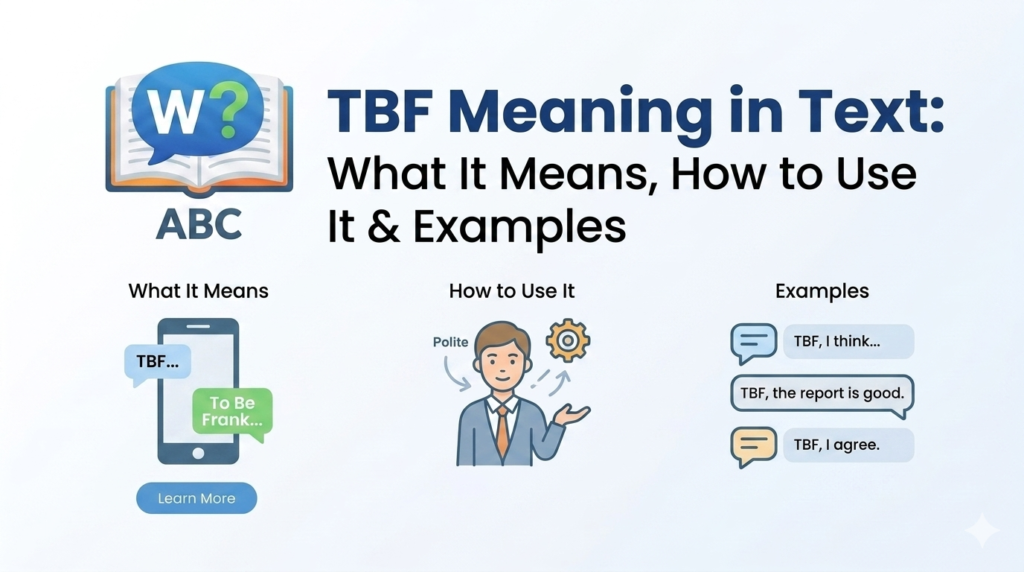
Have you ever received a message that says “TBF, you handled that really well” or seen someone write “TBF, they had a good reason” in a social media comment? If so, you may have wondered what TBF means and why people use it so often.
TBF is one of the most common internet abbreviations used in texting, online chats, and social media. While it usually stands for “To Be Fair,” its exact meaning depends on the conversation. Understanding how and when to use it can help you communicate more naturally and avoid misunderstandings.
In this guide, you’ll learn what TBF means in text, how it’s used on platforms like Snapchat, TikTok, Instagram, WhatsApp, and Discord, see real conversation examples, compare it with similar abbreviations like TBH and IMO, and discover when you should—and shouldn’t—use it.
Quick Answer: What Does TBF Mean in Text?
TBF stands for “To Be Fair.” It’s a popular texting abbreviation people use before giving a balanced opinion, acknowledging another perspective, or adding important context to a conversation.
Example
Friend 1: That movie was boring.
Friend 2: TBF, it did have some amazing visual effects.
In this example, TBF introduces a fair point instead of completely disagreeing.
Featured Snippet Answer
TBF means “To Be Fair.” It is commonly used in text messages, social media posts, and online conversations when someone wants to introduce a balanced opinion or acknowledge another side of an argument. For example, “TBF, they did apologize,” shows the speaker is considering another perspective before making a judgment.
What Does TBF Stand For?
The abbreviation TBF almost always stands for:
To Be Fair
People use it when they want to:
- present a balanced opinion
- acknowledge another viewpoint
- soften disagreement
- add context before making a point
- avoid sounding overly critical
Instead of arguing directly, TBF signals that the speaker is trying to be reasonable and objective.
Simple Definition
TBF (To Be Fair) is an internet slang abbreviation used to introduce a fair, balanced, or honest opinion during conversations.
Why Do People Use TBF?
Online conversations can sometimes seem blunt or emotional because text lacks facial expressions and tone of voice. Adding TBF tells the reader that you’re trying to consider both sides before expressing your opinion.
For example:
Without TBF:
That restaurant wasn’t very good.
With TBF:
TBF, it was extremely busy, so the slow service was understandable.
The second version sounds much more balanced and thoughtful.
How to Use TBF in Text Messages
The easiest way to use TBF is at the beginning of a sentence before making a fair observation.
1. Before Sharing a Balanced Opinion
Example:
TBF, she finished the project earlier than expected.
You’re recognizing something positive before making another point.
2. To Add Context
Example:
TBF, nobody knew the meeting had been moved.
This gives additional information that changes how people see the situation.
3. To Soften Disagreement
Instead of saying:
You’re wrong.
Many people write:
TBF, I think there’s another way to look at it.
This sounds more respectful and encourages healthy discussion.
4. During Friendly Debates
Sports fans, gamers, and movie lovers frequently use TBF during discussions.
Example:
TBF, that player was injured most of the season.
5. In Group Chats
When several people are discussing the same topic, TBF helps introduce another perspective without creating unnecessary conflict.
Example:
TBF, everyone made mistakes during the project.
Real Examples of TBF in Conversations
Here are realistic examples you might encounter every day.
Friends
Alex: That exam was impossible.
Ben: TBF, the teacher gave us plenty of practice questions.
Family
Mom: Your brother forgot to call.
Dad: TBF, he’s been working overtime this week.
Workplace Chat
Sarah: The presentation started late.
John: TBF, the internet connection failed right before the meeting.
Gaming Chat
Player 1:
Our team lost because of you.
Player 2:
TBF, everyone missed a few important plays.
Movie Discussion
TBF, the ending was much better than I expected.
Restaurant Review
TBF, the food was excellent even though the service was slow.
School Conversation
TBF, the assignment instructions weren’t very clear.
Travel Discussion
TBF, our flight was delayed because of bad weather.
Shopping Review
TBF, the product quality is impressive for the price.
Social Media Comment
TBF, everyone deserves a second chance.
These examples show that TBF can fit naturally into many different types of conversations.
TBF Meaning on Different Social Media Platforms
Although TBF usually means “To Be Fair” everywhere, people may use it in slightly different ways depending on the platform.
TBF Meaning on Snapchat
On Snapchat, TBF is commonly used in casual conversations between friends. It often introduces a fair opinion or explanation.
Example:
TBF, I didn’t see your message until now.
TBF Meaning on Instagram
On Instagram, people use TBF in comments, captions, and replies when discussing posts or sharing balanced opinions.
Example:
TBF, that outfit actually looks great on you.
TBF Meaning on TikTok
TikTok users frequently use TBF in comment sections while discussing trends, creators, or viral videos.
Example:
TBF, the creator explained everything in the next video.
TBF Meaning on WhatsApp
In WhatsApp conversations, TBF helps make discussions sound more polite.
Example:
TBF, nobody expected the meeting to last that long.
TBF Meaning on Discord
Gamers and online communities often use TBF during debates.
Example:
TBF, the update fixed several major bugs.
TBF Meaning on Facebook Messenger
Messenger users often use TBF while discussing family, friends, or current events.
Example:
TBF, they were trying to help.
TBF Meaning on X (formerly Twitter)
On X, users commonly begin replies with TBF before offering a balanced opinion in discussions about news, sports, entertainment, or trending topics.
Example:
TBF, the article raises some valid points even if I don’t agree with everything.
Is TBF Positive or Negative?
One of the reasons TBF is so popular is that it isn’t inherently positive or negative. Instead, it signals fairness and balance.
It can introduce praise:
TBF, she handled the situation really well.
Or it can gently disagree:
TBF, I don’t think that’s what happened.
The tone depends on the rest of the sentence, not the abbreviation itself.
When Should You Use TBF?
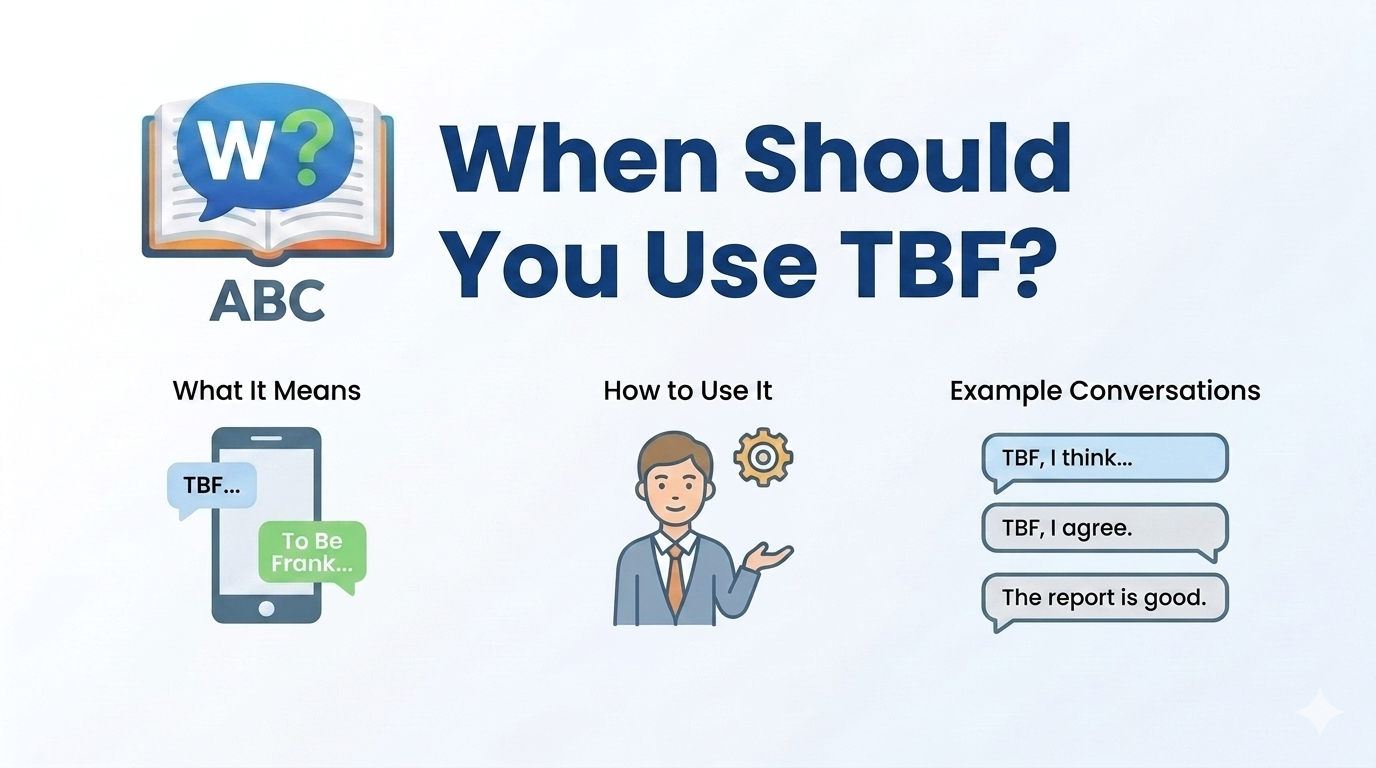
You can use TBF (To Be Fair) whenever you want to introduce a balanced opinion or acknowledge another perspective. It’s especially useful in informal conversations where you’re trying to sound reasonable rather than argumentative.
Here are some common situations where TBF fits naturally:
When Giving Both Sides of an Argument
If someone shares a one-sided opinion, you can use TBF to offer another viewpoint.
Example
Friend: That restaurant was terrible.
You: TBF, the food was excellent—it was just the service that was slow.
When Defending Someone
Sometimes people make quick judgments. Using TBF lets you defend someone politely.
Example
TBF, she apologized as soon as she realized her mistake.
When Adding Context
Extra information can completely change how a situation is viewed.
Example
TBF, they only had one day to finish the project.
During Friendly Discussions
Whether you’re talking about sports, movies, games, or current events, TBF helps keep conversations respectful.
Example
TBF, that team improved a lot during the second half.
Before Constructive Criticism
Instead of sounding harsh, start with TBF to acknowledge something positive or provide context.
Example
TBF, the presentation was well organized, but the slides could have been clearer.
When Should You Avoid Using TBF?
Although TBF is common in casual conversations, there are situations where it’s better not to use it.
In Formal Writing
Avoid internet abbreviations in:
- Business emails
- Academic papers
- Reports
- Job applications
- Professional presentations
Instead, write the full phrase:
To be fair, …
When Your Audience May Not Know the Abbreviation
Not everyone is familiar with texting slang. If you’re writing to someone who rarely uses internet abbreviations, spelling out “To be fair” is clearer.
During Serious Professional Discussions
In formal workplace communication, abbreviations can appear too casual.
Instead of:
TBF, we missed the deadline.
Write:
To be fair, several unexpected issues affected the timeline.
TBF vs TBH vs IMO vs IMHO
Many texting abbreviations look similar, but they serve different purposes.
| Abbreviation | Stands For | Primary Purpose | Example |
| TBF | To Be Fair | Introduce a balanced opinion | TBF, they tried their best. |
| TBH | To Be Honest | Share an honest opinion | TBH, I didn’t enjoy it. |
| IMO | In My Opinion | Express a personal opinion | IMO, the sequel is better. |
| IMHO | In My Humble Opinion | Share an opinion politely | IMHO, this design looks cleaner. |
TBF vs TBH
These two abbreviations are often confused.
TBF
Focuses on fairness.
Example:
TBF, everyone made mistakes.
TBH
Focuses on honesty.
Example:
TBH, I wasn’t paying attention.
A simple way to remember the difference:
- TBF = Fairness
- TBH = Honesty
TBF on Different Platforms
| Platform | Common Meaning | Usage |
| Snapchat | To Be Fair | Private chats |
| To Be Fair | Comments and captions | |
| TikTok | To Be Fair | Video comments |
| To Be Fair | Personal conversations | |
| Discord | To Be Fair | Gaming and community chats |
| Facebook Messenger | To Be Fair | Group and private messages |
| X (Twitter) | To Be Fair | Public discussions and replies |
Across these platforms, TBF almost always means “To Be Fair.”
Other Meanings of TBF
Although “To Be Fair” is by far the most common meaning in texting and social media, TBF can have different meanings in specialized fields.
| Field | Possible Meaning |
| Medicine | May represent different medical terms depending on the context. |
| Science | Used as an abbreviation for specific technical terms in research. |
| Engineering | Can refer to project- or industry-specific terminology. |
| Business | Occasionally used as an internal acronym within organizations. |
Unless you’re reading technical or professional material, you can safely assume TBF means “To Be Fair.”
Common Mistakes People Make
Confusing TBF with TBH
These abbreviations are similar but have different meanings.
❌ TBH, everyone deserves another chance.
✅ TBF, everyone deserves another chance.
Using It in Formal Emails
Internet slang isn’t appropriate for professional communication.
Instead of:
TBF, we completed the report late.
Write:
To be fair, we completed the report later than expected due to technical issues.
Assuming Everyone Knows It
If you’re communicating with people unfamiliar with texting abbreviations, spell out the phrase instead.
Overusing TBF
Using it before every opinion can make your writing repetitive.
Instead of:
- TBF… TBF… TBF…
Mix in alternatives like:
- To be honest
- In my opinion
- From my perspective
- On the other hand
- That said
Pro Tips for Using TBF Naturally
- ✔ Use it when introducing another perspective.
- ✔ Keep the rest of your sentence polite and respectful.
- ✔ Spell out “To be fair” in formal writing.
- ✔ Don’t use it in every message—variety makes your writing sound more natural.
- ✔ Pair it with facts or explanations rather than emotional reactions.
- ✔ Consider your audience. Friends and social media users will understand TBF, while professional contacts may prefer the full phrase.
Frequently Asked Questions
What does TBF mean in text?
TBF means “To Be Fair.” It’s used before giving a balanced opinion or acknowledging another point of view.
What does TBF stand for?
In texting and social media, TBF stands for “To Be Fair.”
Does TBF always mean “To Be Fair”?
Most of the time, yes. While it can have technical meanings in certain industries, “To Be Fair” is the standard interpretation in online conversations.
What does TBF mean on Snapchat?
On Snapchat, TBF usually means “To Be Fair” and is used in chats to introduce a fair opinion or explanation.
What does TBF mean on TikTok?
On TikTok, people commonly use TBF in comments when offering a balanced perspective on a video or discussion.
What does TBF mean on Instagram?
On Instagram, TBF often appears in comments and replies to acknowledge another side of a conversation.
Is TBF the same as TBH?
No.
- TBF = To Be Fair
- TBH = To Be Honest
They serve different purposes in conversations.
Can I use TBF in professional emails?
It’s better to avoid abbreviations in formal communication. Write “To be fair” instead.
Is TBF considered internet slang?
Yes. TBF is a widely recognized internet slang abbreviation used in texting, messaging apps, and social media.
How do you use TBF in a sentence?
Here are a few examples:
- TBF, they finished the project ahead of schedule.
- TBF, the weather made traveling difficult.
- TBF, everyone deserves a chance to explain.
- TBF, the update solved most of the problems.
Conclusion
TBF stands for “To Be Fair,” and it’s one of the most useful abbreviations in modern texting. Whether you’re chatting with friends, commenting on social media, or participating in online discussions, it helps introduce balanced opinions, provide context, and keep conversations respectful.
While it’s perfectly suited for casual communication on platforms like Snapchat, TikTok, Instagram, WhatsApp, Discord, and Facebook Messenger, it’s best to spell out “To be fair” in formal writing or professional settings.
Understanding abbreviations like TBF not only improves your digital communication skills but also helps you interpret online conversations more accurately. As internet slang continues to evolve, knowing when and how to use these expressions will make your messages clearer and more natural.
If you’re learning English vocabulary and commonly confused words, you may also enjoy our guides on DL Meaning, LYK Meaning, and FMB Meaning. Understanding these distinctions will make your writing clearer, more accurate, and more professional.
Written by
 Abdul Moeed
Abdul Moeed is a professional content writer and SEO link-building specialist with 5+ years of experience. He creates search-optimized content and develops effective SEO strategies that improve website visibility, authority, and organic growth.
View LinkedIn profileLatest posts
 Exempt vs Non Exempt: Meaning, Overtime Rules & Examples
 What Does PG Mean in Text? Meaning, Examples & Usage
 What Does OFCC Mean in Text? Meaning, Uses & Examples
 What Does MSG Mean in Text? Meaning, Examples & Usage
 What Does STY Mean in Text? Meaning, Examples & Usage
 What Does “Twin” Mean in Slang? Meaning, Text & Examples