Traveled or Travelled: Which Spelling Should You Use?

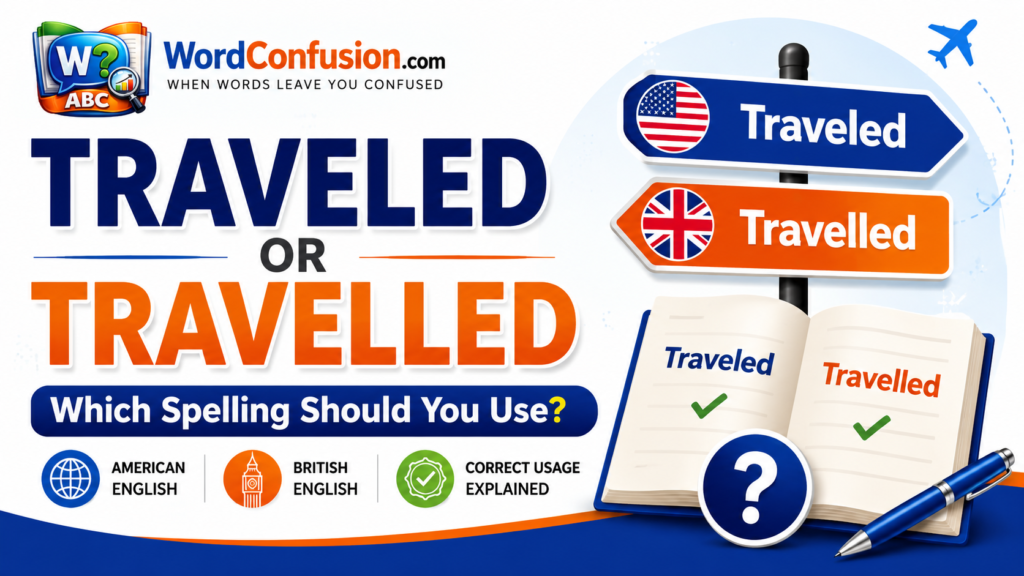
If you’re wondering whether traveled or travelled is the correct spelling, the answer is simple: both are correct. The difference depends on the type of English you’re using. Traveled is the preferred spelling in American English, while travelled is the standard spelling in British English, Canadian English, and Australian English.
Many writers become confused because both versions appear in books, websites, and dictionaries. This guide explains the difference, the spelling rules behind it, and when to use each form correctly.
Quick Answer: Traveled or Travelled?
| Spelling | Used In | Correct? |
| Traveled | American English (US) | ✅ Yes |
| Travelled | British English (UK), Canada, Australia | ✅ Yes |
Example:
- I traveled across the United States last summer. (American English)
- I travelled across Europe last summer. (British English)
Both sentences are correct. The choice depends on your audience and writing style.
Featured Snippet Answer
The difference between traveled and travelled is regional spelling. Traveled is the preferred spelling in American English, while travelled is preferred in British English and many other English-speaking countries. Both words have the same meaning and function as the past tense and past participle of the verb travel.
Is Traveled or Travelled Correct?
The Short Answer
Yes, both spellings are correct.
The distinction comes from regional spelling conventions rather than grammar. Neither spelling changes the meaning of the word.
Why Both Spellings Exist
English developed differently in various countries over time.
American English generally favors simplified spellings, while British English often preserves traditional forms. As a result:
- Americans usually write traveled
- Britons usually write travelled
- Canadians often prefer travelled
- Australians generally use travelled
The meaning remains exactly the same regardless of spelling.
Traveled vs Travelled Comparison Table
| Feature | Traveled | Travelled |
| Meaning | Past tense of travel | Past tense of travel |
| Grammar Function | Past tense & past participle | Past tense & past participle |
| American English | Preferred | Rare |
| British English | Uncommon | Preferred |
| Canadian English | Less common | Preferred |
| Australian English | Less common | Preferred |
| Pronunciation | Same | Same |
What Does Traveled Mean?
Traveled is the American English past tense and past participle form of the verb travel.
Definition
To have gone from one place to another.
Example Sentences
- She traveled to New York for a conference.
- We traveled by train throughout the country.
- He has traveled extensively for work.
- They traveled thousands of miles during their vacation.
In the United States, this is the spelling most dictionaries and style guides recommend.
What Does Travelled Mean?
Travelled is the British English past tense and past participle form of travel.
Definition
To have gone from one place to another.
Example Sentences
- She travelled around Europe for six months.
- We travelled by bus across England.
- He has travelled widely throughout Asia.
- They travelled together during the summer holiday.
In the United Kingdom and many Commonwealth countries, this spelling is considered standard.
American English vs British English Spelling
The difference between traveled and travelled follows a broader pattern seen in many English words.
Traveled in American English
American English often uses a single L when adding suffixes such as:
- -ed
- -ing
- -er
Examples:
| Base Word | American Spelling |
| Travel | Traveled |
| Travel | Traveling |
| Traveler | Traveler |
| Label | Labeled |
| Cancel | Canceled |
Travelled in British English
British English typically doubles the L before adding suffixes.
Examples:
| Base Word | British Spelling |
| Travel | Travelled |
| Travel | Travelling |
| Traveller | Traveller |
| Label | Labelled |
| Cancel | Cancelled |
Canadian and Australian Usage
Canada and Australia generally follow British spelling conventions, meaning:
- Travelled
- Travelling
- Traveller
are usually preferred.
However, some Canadian publications occasionally accept American spellings.
Why Does Travelled Have Two Ls?
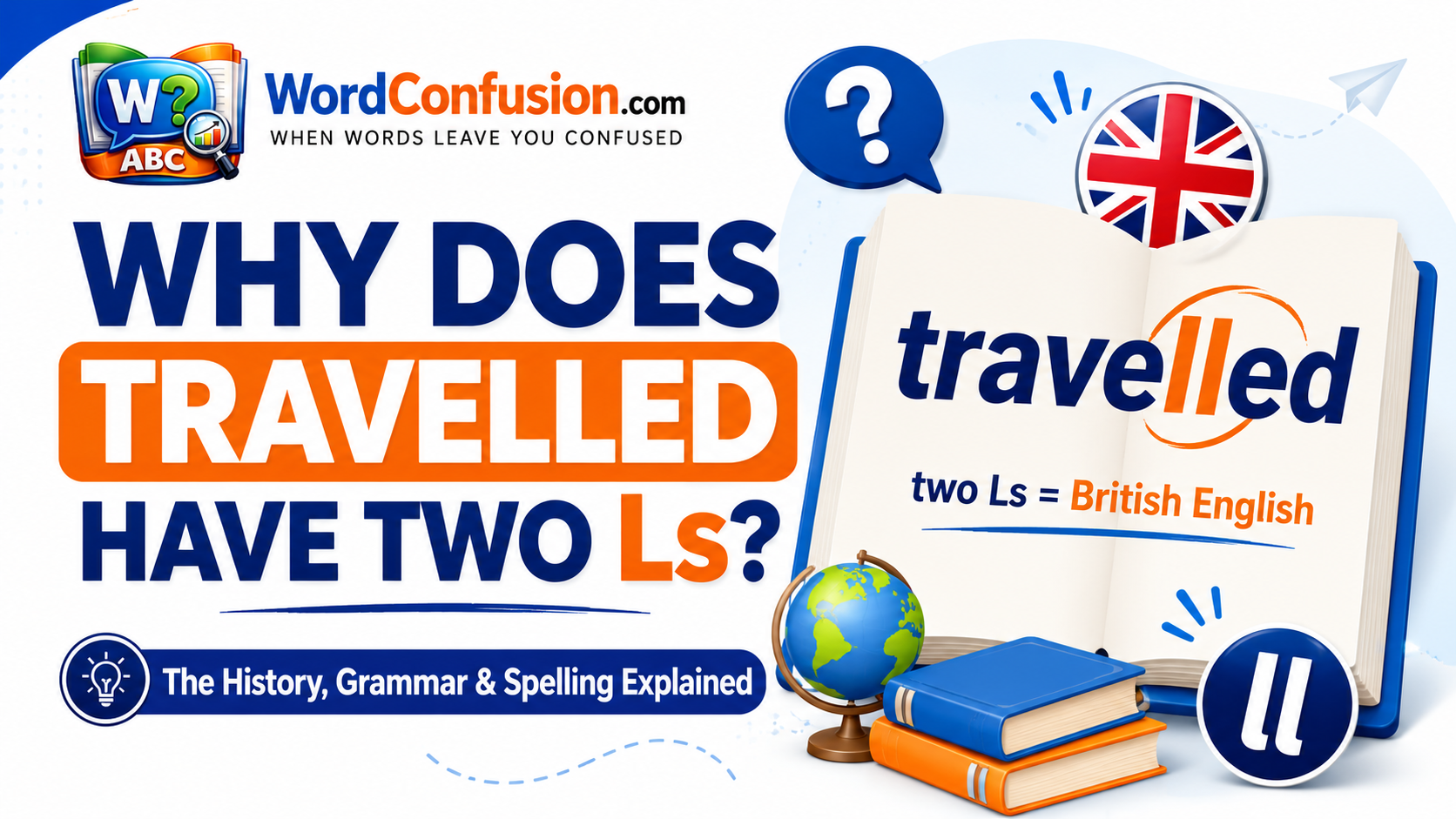
This question appears frequently because the spelling seems inconsistent.
The Double-L Rule
In British English, many verbs ending in an unstressed vowel plus L double the L when a suffix is added.
Examples include:
| Base Word | British Form |
| Travel | Travelled |
| Cancel | Cancelled |
| Label | Labelled |
| Signal | Signalled |
Why American English Uses One L
American spelling reforms popularized simpler spellings.
As a result:
- traveled
- canceled
- labeled
- signaling
became standard in American English.
The simplified forms are now accepted across the United States.
Travel Word Family Explained
Many writers become confused because the spelling pattern affects several related words.
Traveler or Traveller
| American English | British English |
| Traveler | Traveller |
Examples
- She is an experienced traveler. (US)
- She is an experienced traveller. (UK)
Traveling or Travelling
| American English | British English |
| Traveling | Travelling |
Examples
- We are traveling across Texas. (US)
- We are travelling across Scotland. (UK)
Traveled or Travelled
| American English | British English |
| Traveled | Travelled |
Maintaining consistency across all forms is important.
Travel Verb Forms Table
| Verb Form | American English | British English |
| Base Form | Travel | Travel |
| Present Participle | Traveling | Travelling |
| Past Tense | Traveled | Travelled |
| Past Participle | Traveled | Travelled |
| Noun | Traveler | Traveller |
This table provides a quick reference for every common form of the word.
When Should You Use Traveled?
Use traveled when:
- Writing for an American audience.
- Following American English style guides.
- Creating content primarily for readers in the United States.
- Writing for US businesses, schools, or publications.
Examples
- The company traveled to several states.
- She traveled frequently for business.
- We have traveled across the country.
When Should You Use Travelled?
Use travelled when:
- Writing for a British audience.
- Following UK spelling conventions.
- Creating content for readers in the UK, Canada, Australia, or New Zealand.
- Following British style guides.
Examples
- They travelled throughout Europe.
- He travelled extensively during university.
- We have travelled around the world.
Common Mistakes Writers Make
Mixing US and UK Spellings
One of the most common mistakes is switching between spelling systems.
Incorrect:
- We travelled to France and later traveled to Spain.
Correct:
- We travelled to France and later travelled to Spain.
- We traveled to France and later traveled to Spain.
Choose one style and remain consistent.
Using the Wrong Audience Style
Always consider who will read your content.
A US audience generally expects:
- traveled
- traveler
- traveling
A UK audience generally expects:
- travelled
- traveller
- travelling
Inconsistent Editing
Writers often copy content from multiple sources and accidentally mix spellings.
Before publishing, run a spell check and standardize your preferred variant.
Pro Tips for Choosing the Correct Spelling
Know Your Audience
Audience expectations should guide your spelling choice.
Follow a Style Guide
If your organization follows a specific style guide, use the spelling it recommends.
Stay Consistent
Consistency matters more than the choice itself.
Use Your Software Settings
Word processors and grammar tools can help maintain either American or British spelling throughout a document.
Similar American and British Spelling Differences
The traveled/travelled distinction is part of a larger pattern in English.
| American English | British English |
| Canceled | Cancelled |
| Labeled | Labelled |
| Modeled | Modelled |
| Traveler | Traveller |
| Traveling | Travelling |
| Favorite | Favourite |
| Color | Colour |
| Center | Centre |
| Defense | Defence |
| Check | Cheque |
Understanding these patterns makes it easier to recognize regional spelling differences.
Frequently Asked Questions
Is traveled or travelled correct?
Both are correct. Traveled is American English, while travelled is British English.
Which spelling is used in the UK?
The preferred UK spelling is travelled.
Which spelling is used in the US?
The preferred US spelling is traveled.
Why does travelled have two Ls?
British English commonly doubles the letter L before adding suffixes such as -ed and -ing.
Is traveler or traveller correct?
Both are correct. Traveler is American English, and traveller is British English.
Is traveling or travelling correct?
Both are correct. The preferred spelling depends on whether you’re using American or British English.
Are traveled and travelled pronounced differently?
No. Both spellings are pronounced exactly the same way.
Which spelling should I use?
Use the version that matches your audience:
- US audience → traveled
- UK audience → travelled
Is traveled a real word?
Yes. Traveled is the standard American English spelling and appears in major dictionaries and style guides.
What is the difference between traveled and travelled?
There is no difference in meaning. The only difference is regional spelling preference.
Final Verdict: Traveled or Travelled
The debate over traveled or travelled comes down to regional spelling conventions rather than correctness. Traveled is the standard spelling in American English, while travelled is preferred in British English, Canadian English, and Australian English.
The key is consistency. Once you choose a spelling style, use it throughout your writing. Whether you write traveled or travelled, your readers will understand exactly what you mean—as long as the spelling matches the language variety you’re using.
If you’re wondering whether traveled or travelled is the correct spelling, the answer is simple: both are correct. The difference depends on the type of English you’re using. Traveled is the preferred spelling in American English, while travelled is the standard spelling in British English, Canadian English, and Australian English.
Many writers become confused because both versions appear in books, websites, and dictionaries. This guide explains the difference, the spelling rules behind it, and when to use each form correctly.
Quick Answer: Traveled or Travelled?
| Spelling | Used In | Correct? |
| Traveled | American English (US) | ✅ Yes |
| Travelled | British English (UK), Canada, Australia | ✅ Yes |
Example:
- I traveled across the United States last summer. (American English)
- I travelled across Europe last summer. (British English)
Both sentences are correct. The choice depends on your audience and writing style.
Featured Snippet Answer
The difference between traveled and travelled is regional spelling. Traveled is the preferred spelling in American English, while travelled is preferred in British English and many other English-speaking countries. Both words have the same meaning and function as the past tense and past participle of the verb travel.
Is Traveled or Travelled Correct?
The Short Answer
Yes, both spellings are correct.
The distinction comes from regional spelling conventions rather than grammar. Neither spelling changes the meaning of the word.
Why Both Spellings Exist
English developed differently in various countries over time.
American English generally favors simplified spellings, while British English often preserves traditional forms. As a result:
- Americans usually write traveled
- Britons usually write travelled
- Canadians often prefer travelled
- Australians generally use travelled
The meaning remains exactly the same regardless of spelling.
Traveled vs Travelled Comparison Table
| Feature | Traveled | Travelled |
| Meaning | Past tense of travel | Past tense of travel |
| Grammar Function | Past tense & past participle | Past tense & past participle |
| American English | Preferred | Rare |
| British English | Uncommon | Preferred |
| Canadian English | Less common | Preferred |
| Australian English | Less common | Preferred |
| Pronunciation | Same | Same |
What Does Traveled Mean?
Traveled is the American English past tense and past participle form of the verb travel.
Definition
To have gone from one place to another.
Example Sentences
- She traveled to New York for a conference.
- We traveled by train throughout the country.
- He has traveled extensively for work.
- They traveled thousands of miles during their vacation.
In the United States, this is the spelling most dictionaries and style guides recommend.
What Does Travelled Mean?
Travelled is the British English past tense and past participle form of travel.
Definition
To have gone from one place to another.
Example Sentences
- She travelled around Europe for six months.
- We travelled by bus across England.
- He has travelled widely throughout Asia.
- They travelled together during the summer holiday.
In the United Kingdom and many Commonwealth countries, this spelling is considered standard.
American English vs British English Spelling
The difference between traveled and travelled follows a broader pattern seen in many English words.
Traveled in American English
American English often uses a single L when adding suffixes such as:
- -ed
- -ing
- -er
Examples:
| Base Word | American Spelling |
| Travel | Traveled |
| Travel | Traveling |
| Traveler | Traveler |
| Label | Labeled |
| Cancel | Canceled |
Travelled in British English
British English typically doubles the L before adding suffixes.
Examples:
| Base Word | British Spelling |
| Travel | Travelled |
| Travel | Travelling |
| Traveller | Traveller |
| Label | Labelled |
| Cancel | Cancelled |
Canadian and Australian Usage
Canada and Australia generally follow British spelling conventions, meaning:
- Travelled
- Travelling
- Traveller
are usually preferred.
However, some Canadian publications occasionally accept American spellings.
Why Does Travelled Have Two Ls?
This question appears frequently because the spelling seems inconsistent.
The Double-L Rule
In British English, many verbs ending in an unstressed vowel plus L double the L when a suffix is added.
Examples include:
| Base Word | British Form |
| Travel | Travelled |
| Cancel | Cancelled |
| Label | Labelled |
| Signal | Signalled |
Why American English Uses One L
American spelling reforms popularized simpler spellings.
As a result:
- traveled
- canceled
- labeled
- signaling
became standard in American English.
The simplified forms are now accepted across the United States.
Travel Word Family Explained
Many writers become confused because the spelling pattern affects several related words.
Traveler or Traveller
| American English | British English |
| Traveler | Traveller |
Examples
- She is an experienced traveler. (US)
- She is an experienced traveller. (UK)
Traveling or Travelling
| American English | British English |
| Traveling | Travelling |
Examples
- We are traveling across Texas. (US)
- We are travelling across Scotland. (UK)
Traveled or Travelled
| American English | British English |
| Traveled | Travelled |
Maintaining consistency across all forms is important.
Travel Verb Forms Table
| Verb Form | American English | British English |
| Base Form | Travel | Travel |
| Present Participle | Traveling | Travelling |
| Past Tense | Traveled | Travelled |
| Past Participle | Traveled | Travelled |
| Noun | Traveler | Traveller |
This table provides a quick reference for every common form of the word.
When Should You Use Traveled?
Use traveled when:
- Writing for an American audience.
- Following American English style guides.
- Creating content primarily for readers in the United States.
- Writing for US businesses, schools, or publications.
Examples
- The company traveled to several states.
- She traveled frequently for business.
- We have traveled across the country.
When Should You Use Travelled?
Use travelled when:
- Writing for a British audience.
- Following UK spelling conventions.
- Creating content for readers in the UK, Canada, Australia, or New Zealand.
- Following British style guides.
Examples
- They travelled throughout Europe.
- He travelled extensively during university.
- We have travelled around the world.
Common Mistakes Writers Make
Mixing US and UK Spellings
One of the most common mistakes is switching between spelling systems.
Incorrect:
- We travelled to France and later traveled to Spain.
Correct:
- We travelled to France and later travelled to Spain.
- We traveled to France and later traveled to Spain.
Choose one style and remain consistent.
Using the Wrong Audience Style
Always consider who will read your content.
A US audience generally expects:
- traveled
- traveler
- traveling
A UK audience generally expects:
- travelled
- traveller
- travelling
Inconsistent Editing
Writers often copy content from multiple sources and accidentally mix spellings.
Before publishing, run a spell check and standardize your preferred variant.
Pro Tips for Choosing the Correct Spelling
Know Your Audience
Audience expectations should guide your spelling choice.
Follow a Style Guide
If your organization follows a specific style guide, use the spelling it recommends.
Stay Consistent
Consistency matters more than the choice itself.
Use Your Software Settings
Word processors and grammar tools can help maintain either American or British spelling throughout a document.
Similar American and British Spelling Differences
The traveled/travelled distinction is part of a larger pattern in English.
| American English | British English |
| Canceled | Cancelled |
| Labeled | Labelled |
| Modeled | Modelled |
| Traveler | Traveller |
| Traveling | Travelling |
| Favorite | Favourite |
| Color | Colour |
| Center | Centre |
| Defense | Defence |
| Check | Cheque |
Understanding these patterns makes it easier to recognize regional spelling differences.
Frequently Asked Questions
Is traveled or travelled correct?
Both are correct. Traveled is American English, while travelled is British English.
Which spelling is used in the UK?
The preferred UK spelling is travelled.
Which spelling is used in the US?
The preferred US spelling is traveled.
Why does travelled have two Ls?
British English commonly doubles the letter L before adding suffixes such as -ed and -ing.
Is traveler or traveller correct?
Both are correct. Traveler is American English, and traveller is British English.
Is traveling or travelling correct?
Both are correct. The preferred spelling depends on whether you’re using American or British English.
Are traveled and travelled pronounced differently?
No. Both spellings are pronounced exactly the same way.
Which spelling should I use?
Use the version that matches your audience:
- US audience → traveled
- UK audience → travelled
Is traveled a real word?
Yes. Traveled is the standard American English spelling and appears in major dictionaries and style guides.
What is the difference between traveled and travelled?
There is no difference in meaning. The only difference is regional spelling preference.
Final Verdict: Traveled or Travelled
The debate over traveled or travelled comes down to regional spelling conventions rather than correctness. Traveled is the standard spelling in American English, while travelled is preferred in British English, Canadian English, and Australian English.
The key is consistency. Once you choose a spelling style, use it throughout your writing. Whether you write traveled or travelled, your readers will understand exactly what you mean—as long as the spelling matches the language variety you’re using.
If you’re wondering whether traveled or travelled is the correct spelling, the answer is simple: both are correct. The difference depends on the type of English you’re using. Traveled is the preferred spelling in American English, while travelled is the standard spelling in British English, Canadian English, and Australian English.
Many writers become confused because both versions appear in books, websites, and dictionaries. This guide explains the difference, the spelling rules behind it, and when to use each form correctly.
Quick Answer: Traveled or Travelled?
| Spelling | Used In | Correct? |
| Traveled | American English (US) | ✅ Yes |
| Travelled | British English (UK), Canada, Australia | ✅ Yes |
Example:
- I traveled across the United States last summer. (American English)
- I travelled across Europe last summer. (British English)
Both sentences are correct. The choice depends on your audience and writing style.
Featured Snippet Answer
The difference between traveled and travelled is regional spelling. Traveled is the preferred spelling in American English, while travelled is preferred in British English and many other English-speaking countries. Both words have the same meaning and function as the past tense and past participle of the verb travel.
Is Traveled or Travelled Correct?
The Short Answer
Yes, both spellings are correct.
The distinction comes from regional spelling conventions rather than grammar. Neither spelling changes the meaning of the word.
Why Both Spellings Exist
English developed differently in various countries over time.
American English generally favors simplified spellings, while British English often preserves traditional forms. As a result:
- Americans usually write traveled
- Britons usually write travelled
- Canadians often prefer travelled
- Australians generally use travelled
The meaning remains exactly the same regardless of spelling.
Traveled vs Travelled Comparison Table
| Feature | Traveled | Travelled |
| Meaning | Past tense of travel | Past tense of travel |
| Grammar Function | Past tense & past participle | Past tense & past participle |
| American English | Preferred | Rare |
| British English | Uncommon | Preferred |
| Canadian English | Less common | Preferred |
| Australian English | Less common | Preferred |
| Pronunciation | Same | Same |
What Does Traveled Mean?
Traveled is the American English past tense and past participle form of the verb travel.
Definition
To have gone from one place to another.
Example Sentences
- She traveled to New York for a conference.
- We traveled by train throughout the country.
- He has traveled extensively for work.
- They traveled thousands of miles during their vacation.
In the United States, this is the spelling most dictionaries and style guides recommend.
What Does Travelled Mean?
Travelled is the British English past tense and past participle form of travel.
Definition
To have gone from one place to another.
Example Sentences
- She travelled around Europe for six months.
- We travelled by bus across England.
- He has travelled widely throughout Asia.
- They travelled together during the summer holiday.
In the United Kingdom and many Commonwealth countries, this spelling is considered standard.
American English vs British English Spelling
The difference between traveled and travelled follows a broader pattern seen in many English words.
Traveled in American English
American English often uses a single L when adding suffixes such as:
- -ed
- -ing
- -er
Examples:
| Base Word | American Spelling |
| Travel | Traveled |
| Travel | Traveling |
| Traveler | Traveler |
| Label | Labeled |
| Cancel | Canceled |
Travelled in British English
British English typically doubles the L before adding suffixes.
Examples:
| Base Word | British Spelling |
| Travel | Travelled |
| Travel | Travelling |
| Traveller | Traveller |
| Label | Labelled |
| Cancel | Cancelled |
Canadian and Australian Usage
Canada and Australia generally follow British spelling conventions, meaning:
- Travelled
- Travelling
- Traveller
are usually preferred.
However, some Canadian publications occasionally accept American spellings.
Why Does Travelled Have Two Ls?
This question appears frequently because the spelling seems inconsistent.
The Double-L Rule
In British English, many verbs ending in an unstressed vowel plus L double the L when a suffix is added.
Examples include:
| Base Word | British Form |
| Travel | Travelled |
| Cancel | Cancelled |
| Label | Labelled |
| Signal | Signalled |
Why American English Uses One L
American spelling reforms popularized simpler spellings.
As a result:
- traveled
- canceled
- labeled
- signaling
became standard in American English.
The simplified forms are now accepted across the United States.
Travel Word Family Explained
Many writers become confused because the spelling pattern affects several related words.
Traveler or Traveller
| American English | British English |
| Traveler | Traveller |
Examples
- She is an experienced traveler. (US)
- She is an experienced traveller. (UK)
Traveling or Travelling
| American English | British English |
| Traveling | Travelling |
Examples
- We are traveling across Texas. (US)
- We are travelling across Scotland. (UK)
Traveled or Travelled
| American English | British English |
| Traveled | Travelled |
Maintaining consistency across all forms is important.
Travel Verb Forms Table
| Verb Form | American English | British English |
| Base Form | Travel | Travel |
| Present Participle | Traveling | Travelling |
| Past Tense | Traveled | Travelled |
| Past Participle | Traveled | Travelled |
| Noun | Traveler | Traveller |
This table provides a quick reference for every common form of the word.
When Should You Use Traveled?
Use traveled when:
- Writing for an American audience.
- Following American English style guides.
- Creating content primarily for readers in the United States.
- Writing for US businesses, schools, or publications.
Examples
- The company traveled to several states.
- She traveled frequently for business.
- We have traveled across the country.
When Should You Use Travelled?
Use travelled when:
- Writing for a British audience.
- Following UK spelling conventions.
- Creating content for readers in the UK, Canada, Australia, or New Zealand.
- Following British style guides.
Examples
- They travelled throughout Europe.
- He travelled extensively during university.
- We have travelled around the world.
Common Mistakes Writers Make
Mixing US and UK Spellings
One of the most common mistakes is switching between spelling systems.
Incorrect:
- We travelled to France and later traveled to Spain.
Correct:
- We travelled to France and later travelled to Spain.
- We traveled to France and later traveled to Spain.
Choose one style and remain consistent.
Using the Wrong Audience Style
Always consider who will read your content.
A US audience generally expects:
- traveled
- traveler
- traveling
A UK audience generally expects:
- travelled
- traveller
- travelling
Inconsistent Editing
Writers often copy content from multiple sources and accidentally mix spellings.
Before publishing, run a spell check and standardize your preferred variant.
Pro Tips for Choosing the Correct Spelling
Know Your Audience
Audience expectations should guide your spelling choice.
Follow a Style Guide
If your organization follows a specific style guide, use the spelling it recommends.
Stay Consistent
Consistency matters more than the choice itself.
Use Your Software Settings
Word processors and grammar tools can help maintain either American or British spelling throughout a document.
Similar American and British Spelling Differences
The traveled/travelled distinction is part of a larger pattern in English.
| American English | British English |
| Canceled | Cancelled |
| Labeled | Labelled |
| Modeled | Modelled |
| Traveler | Traveller |
| Traveling | Travelling |
| Favorite | Favourite |
| Color | Colour |
| Center | Centre |
| Defense | Defence |
| Check | Cheque |
Understanding these patterns makes it easier to recognize regional spelling differences.
Frequently Asked Questions
Is traveled or travelled correct?
Both are correct. Traveled is American English, while travelled is British English.
Which spelling is used in the UK?
The preferred UK spelling is travelled.
Which spelling is used in the US?
The preferred US spelling is traveled.
Why does travelled have two Ls?
British English commonly doubles the letter L before adding suffixes such as -ed and -ing.
Is traveler or traveller correct?
Both are correct. Traveler is American English, and traveller is British English.
Is traveling or travelling correct?
Both are correct. The preferred spelling depends on whether you’re using American or British English.
Are traveled and travelled pronounced differently?
No. Both spellings are pronounced exactly the same way.
Which spelling should I use?
Use the version that matches your audience:
- US audience → traveled
- UK audience → travelled
Is traveled a real word?
Yes. Traveled is the standard American English spelling and appears in major dictionaries and style guides.
What is the difference between traveled and travelled?
There is no difference in meaning. The only difference is regional spelling preference.
Final Verdict: Traveled or Travelled
The debate over traveled or travelled comes down to regional spelling conventions rather than correctness. Traveled is the standard spelling in American English, while travelled is preferred in British English, Canadian English, and Australian English.
The key is consistency. Once you choose a spelling style, use it throughout your writing. Whether you write traveled or travelled, your readers will understand exactly what you mean—as long as the spelling matches the language variety you’re using.
If you’re wondering whether traveled or travelled is the correct spelling, the answer is simple: both are correct. The difference depends on the type of English you’re using. Traveled is the preferred spelling in American English, while travelled is the standard spelling in British English, Canadian English, and Australian English.
Many writers become confused because both versions appear in books, websites, and dictionaries. This guide explains the difference, the spelling rules behind it, and when to use each form correctly.
Quick Answer: Traveled or Travelled?
| Spelling | Used In | Correct? |
| Traveled | American English (US) | ✅ Yes |
| Travelled | British English (UK), Canada, Australia | ✅ Yes |
Example:
- I traveled across the United States last summer. (American English)
- I travelled across Europe last summer. (British English)
Both sentences are correct. The choice depends on your audience and writing style.
Featured Snippet Answer
The difference between traveled and travelled is regional spelling. Traveled is the preferred spelling in American English, while travelled is preferred in British English and many other English-speaking countries. Both words have the same meaning and function as the past tense and past participle of the verb travel.
Is Traveled or Travelled Correct?
The Short Answer
Yes, both spellings are correct.
The distinction comes from regional spelling conventions rather than grammar. Neither spelling changes the meaning of the word.
Why Both Spellings Exist
English developed differently in various countries over time.
American English generally favors simplified spellings, while British English often preserves traditional forms. As a result:
- Americans usually write traveled
- Britons usually write travelled
- Canadians often prefer travelled
- Australians generally use travelled
The meaning remains exactly the same regardless of spelling.
Traveled vs Travelled Comparison Table
| Feature | Traveled | Travelled |
| Meaning | Past tense of travel | Past tense of travel |
| Grammar Function | Past tense & past participle | Past tense & past participle |
| American English | Preferred | Rare |
| British English | Uncommon | Preferred |
| Canadian English | Less common | Preferred |
| Australian English | Less common | Preferred |
| Pronunciation | Same | Same |
What Does Traveled Mean?
Traveled is the American English past tense and past participle form of the verb travel.
Definition
To have gone from one place to another.
Example Sentences
- She traveled to New York for a conference.
- We traveled by train throughout the country.
- He has traveled extensively for work.
- They traveled thousands of miles during their vacation.
In the United States, this is the spelling most dictionaries and style guides recommend.
What Does Travelled Mean?
Travelled is the British English past tense and past participle form of travel.
Definition
To have gone from one place to another.
Example Sentences
- She travelled around Europe for six months.
- We travelled by bus across England.
- He has travelled widely throughout Asia.
- They travelled together during the summer holiday.
In the United Kingdom and many Commonwealth countries, this spelling is considered standard.
American English vs British English Spelling
The difference between traveled and travelled follows a broader pattern seen in many English words.
Traveled in American English
American English often uses a single L when adding suffixes such as:
- -ed
- -ing
- -er
Examples:
| Base Word | American Spelling |
| Travel | Traveled |
| Travel | Traveling |
| Traveler | Traveler |
| Label | Labeled |
| Cancel | Canceled |
Travelled in British English
British English typically doubles the L before adding suffixes.
Examples:
| Base Word | British Spelling |
| Travel | Travelled |
| Travel | Travelling |
| Traveller | Traveller |
| Label | Labelled |
| Cancel | Cancelled |
Canadian and Australian Usage
Canada and Australia generally follow British spelling conventions, meaning:
- Travelled
- Travelling
- Traveller
are usually preferred.
However, some Canadian publications occasionally accept American spellings.
Why Does Travelled Have Two Ls?
This question appears frequently because the spelling seems inconsistent.
The Double-L Rule
In British English, many verbs ending in an unstressed vowel plus L double the L when a suffix is added.
Examples include:
| Base Word | British Form |
| Travel | Travelled |
| Cancel | Cancelled |
| Label | Labelled |
| Signal | Signalled |
Why American English Uses One L
American spelling reforms popularized simpler spellings.
As a result:
- traveled
- canceled
- labeled
- signaling
became standard in American English.
The simplified forms are now accepted across the United States.
Travel Word Family Explained
Many writers become confused because the spelling pattern affects several related words.
Traveler or Traveller
| American English | British English |
| Traveler | Traveller |
Examples
- She is an experienced traveler. (US)
- She is an experienced traveller. (UK)
Traveling or Travelling
| American English | British English |
| Traveling | Travelling |
Examples
- We are traveling across Texas. (US)
- We are travelling across Scotland. (UK)
Traveled or Travelled
| American English | British English |
| Traveled | Travelled |
Maintaining consistency across all forms is important.
Travel Verb Forms Table
| Verb Form | American English | British English |
| Base Form | Travel | Travel |
| Present Participle | Traveling | Travelling |
| Past Tense | Traveled | Travelled |
| Past Participle | Traveled | Travelled |
| Noun | Traveler | Traveller |
This table provides a quick reference for every common form of the word.
When Should You Use Traveled?
Use traveled when:
- Writing for an American audience.
- Following American English style guides.
- Creating content primarily for readers in the United States.
- Writing for US businesses, schools, or publications.
Examples
- The company traveled to several states.
- She traveled frequently for business.
- We have traveled across the country.
When Should You Use Travelled?
Use travelled when:
- Writing for a British audience.
- Following UK spelling conventions.
- Creating content for readers in the UK, Canada, Australia, or New Zealand.
- Following British style guides.
Examples
- They travelled throughout Europe.
- He travelled extensively during university.
- We have travelled around the world.
Common Mistakes Writers Make
Mixing US and UK Spellings
One of the most common mistakes is switching between spelling systems.
Incorrect:
- We travelled to France and later traveled to Spain.
Correct:
- We travelled to France and later travelled to Spain.
- We traveled to France and later traveled to Spain.
Choose one style and remain consistent.
Using the Wrong Audience Style
Always consider who will read your content.
A US audience generally expects:
- traveled
- traveler
- traveling
A UK audience generally expects:
- travelled
- traveller
- travelling
Inconsistent Editing
Writers often copy content from multiple sources and accidentally mix spellings.
Before publishing, run a spell check and standardize your preferred variant.
Pro Tips for Choosing the Correct Spelling
Know Your Audience
Audience expectations should guide your spelling choice.
Follow a Style Guide
If your organization follows a specific style guide, use the spelling it recommends.
Stay Consistent
Consistency matters more than the choice itself.
Use Your Software Settings
Word processors and grammar tools can help maintain either American or British spelling throughout a document.
Similar American and British Spelling Differences
The traveled/travelled distinction is part of a larger pattern in English.
| American English | British English |
| Canceled | Cancelled |
| Labeled | Labelled |
| Modeled | Modelled |
| Traveler | Traveller |
| Traveling | Travelling |
| Favorite | Favourite |
| Color | Colour |
| Center | Centre |
| Defense | Defence |
| Check | Cheque |
Understanding these patterns makes it easier to recognize regional spelling differences.
Frequently Asked Questions
Is traveled or travelled correct?
Both are correct. Traveled is American English, while travelled is British English.
Which spelling is used in the UK?
The preferred UK spelling is travelled.
Which spelling is used in the US?
The preferred US spelling is traveled.
Why does travelled have two Ls?
British English commonly doubles the letter L before adding suffixes such as -ed and -ing.
Is traveler or traveller correct?
Both are correct. Traveler is American English, and traveller is British English.
Is traveling or travelling correct?
Both are correct. The preferred spelling depends on whether you’re using American or British English.
Are traveled and travelled pronounced differently?
No. Both spellings are pronounced exactly the same way.
Which spelling should I use?
Use the version that matches your audience:
- US audience → traveled
- UK audience → travelled
Is traveled a real word?
Yes. Traveled is the standard American English spelling and appears in major dictionaries and style guides.
What is the difference between traveled and travelled?
There is no difference in meaning. The only difference is regional spelling preference.
Final Verdict: Traveled or Travelled
The debate over traveled or travelled comes down to regional spelling conventions rather than correctness. Traveled is the standard spelling in American English, while travelled is preferred in British English, Canadian English, and Australian English.
The key is consistency. Once you choose a spelling style, use it throughout your writing. Whether you write traveled or travelled, your readers will understand exactly what you mean—as long as the spelling matches the language variety you’re using.
If you’re learning English vocabulary and commonly confused words, you may also enjoy our guides on Sir This Is a Wendy’s Meaning, WTH Meaning, and Leafs or Leaves. Understanding these distinctions will make your writing clearer, more accurate, and more professional.
Written by
 Abdul Moeed
Abdul Moeed is a professional content writer and SEO link-building specialist with 5+ years of experience. He creates search-optimized content and develops effective SEO strategies that improve website visibility, authority, and organic growth.
View LinkedIn profileLatest posts
 What Does PG Mean in Text? Meaning, Examples & Usage
 What Does OFCC Mean in Text? Meaning, Uses & Examples
 What Does MSG Mean in Text? Meaning, Examples & Usage
 What Does STY Mean in Text? Meaning, Examples & Usage
 What Does “Twin” Mean in Slang? Meaning, Text & Examples
 What Does LMC Mean in Text? Meaning, Examples & Usage