The Role of Technology in Modern Education
Introduction
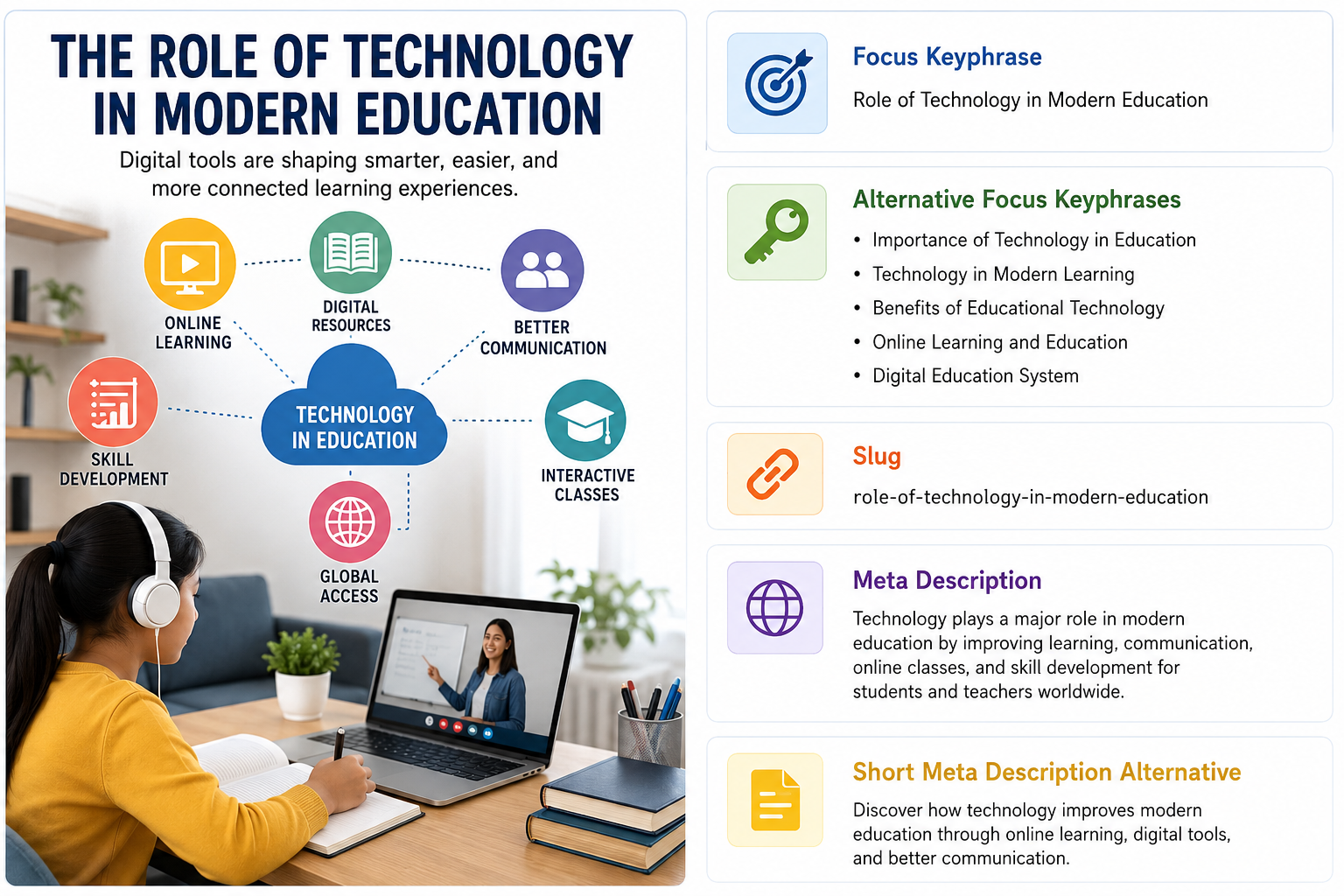
Technology has become one of the most important parts of modern education. In today’s digital world, students and teachers use technology every day to improve learning and communication. From online classes to educational apps, technology has completely changed the way education works. Schools, colleges, and universities around the world are using digital tools to make learning easier, faster, and more interesting. The use of technology in education helps students gain knowledge, develop skills, and prepare for future careers.
In the past, education mostly depended on books, blackboards, and traditional teaching methods. Students had limited access to information, and learning was often restricted to classrooms. However, with the development of computers, the internet, smartphones, and other digital devices, education has become more accessible and interactive. Students can now learn from anywhere in the world through online platforms and virtual classrooms. Technology has opened new opportunities for both teachers and learners.
Importance of Technology in Education
Technology plays a very important role in improving the quality of education. It helps students understand difficult topics more easily through videos, animations, presentations, and interactive activities. Visual learning methods make lessons more interesting and memorable. Teachers can explain concepts clearly, and students can learn at their own pace.
One of the biggest advantages of technology is easy access to information. Students no longer need to spend hours searching for information in libraries. With the internet, they can quickly find articles, videos, research papers, and educational websites. This access to information helps students increase their knowledge and improve their learning experience.
Technology also encourages independent learning. Students can use online courses, educational apps, and digital resources to study by themselves. This develops self-confidence and responsibility. Learners can practice lessons, solve quizzes, and improve their skills without depending completely on teachers.
Online Learning and Virtual Classrooms
Online learning has become extremely popular in recent years. Many schools and universities now offer online classes and digital learning programs. During the COVID-19 pandemic, online education became essential because students could not attend physical classrooms. Platforms like Zoom, Google Meet, and Microsoft Teams allowed teachers and students to continue education from home.
Virtual classrooms provide flexibility and convenience. Students can attend classes from any location with an internet connection. This is especially helpful for people living in remote areas where educational facilities may be limited. Online learning also saves time and transportation costs.
Another advantage of virtual learning is recorded lectures. Students can watch lessons again whenever they need revision. This improves understanding and helps students learn more effectively. Online education has also created opportunities for international learning, allowing students to study courses from universities around the world.
Technology Improves Communication
Communication between teachers, students, and parents has improved greatly because of technology. Teachers can share assignments, notices, and study materials through emails, educational apps, and online portals. Students can ask questions and communicate with teachers easily outside the classroom.
Parents can also monitor their children’s progress through school management systems and online reports. This improves cooperation between schools and families. Effective communication helps solve problems quickly and supports better academic performance.
Social media and messaging platforms also help students collaborate on projects and share ideas. Group discussions and online forums encourage teamwork and communication skills. Technology has made learning more connected and interactive.
Educational Apps and Digital Tools
Educational apps and software are helping students learn in creative and engaging ways. Apps like Duolingo help people learn languages, while platforms like Khan Academy provide free lessons on many subjects. Students can use calculators, dictionaries, grammar checkers, and note-taking apps to improve their studies.
Digital tools such as smart boards, projectors, and tablets make classrooms more modern and interactive. Teachers can use videos, graphics, and animations to explain lessons clearly. Interactive learning increases student participation and interest.
Gamification is another important aspect of technology in education. Educational games make learning enjoyable and motivate students to practice regularly. Children especially learn faster when education is combined with fun activities.
Benefits for Teachers
Technology is not only helpful for students but also for teachers. Teachers can prepare lessons more efficiently using digital resources and online materials. They can create presentations, online quizzes, and multimedia lessons to improve teaching quality.
Technology also saves time in administrative tasks. Teachers can check assignments, record attendance, and calculate grades using digital systems. This allows them to focus more on teaching and student development.
Online training programs also help teachers improve their professional skills. They can attend webinars, online workshops, and educational courses to learn modern teaching methods. Continuous learning helps teachers stay updated with new educational trends.
Technology and Skill Development
Modern education is not only about memorizing information. Students also need practical skills for future careers. Technology helps students develop important skills such as communication, problem-solving, creativity, and critical thinking.
Computer skills have become necessary in almost every profession. Students who learn technology at an early age are better prepared for the job market. Knowledge of software, programming, digital communication, and online research is highly valuable in today’s world.
Technology also supports creativity. Students can create presentations, videos, blogs, and digital projects. These activities encourage innovation and self-expression. Creative learning makes education more meaningful and enjoyable.
Challenges of Technology in Education
Although technology has many benefits, it also has some challenges. One major problem is the lack of internet access and digital devices in some areas. Not all students can afford computers or smartphones, which creates inequality in education.
Another challenge is distraction. Students sometimes spend too much time on social media, games, or entertainment instead of studying. Excessive screen time can also affect physical and mental health.
Cybersecurity and online safety are also important concerns. Students may face risks such as cyberbullying, online scams, or exposure to inappropriate content. Schools and parents must teach students how to use technology safely and responsibly.
Teachers may also face difficulties adapting to new technologies. Some educators need proper training to use digital tools effectively. Without training, technology may not be used successfully in classrooms.
The Future of Technology in Education
The future of education will become even more technology-based. Artificial intelligence, virtual reality, and augmented reality are already changing learning experiences. AI-powered systems can provide personalized learning according to each student’s needs and abilities.
Virtual reality can create realistic learning environments where students can explore historical places, scientific experiments, and virtual laboratories. This makes learning more practical and exciting.
Robotics and coding education are also becoming popular in schools. Students are learning how to create programs and solve technical problems from an early age. These skills will become increasingly important in future careers.
Technology will continue to connect learners globally. Students from different countries can collaborate, share ideas, and learn from each other. Global education promotes cultural understanding and international communication.
Role of Parents and Teachers
Parents and teachers play a major role in guiding students toward the positive use of technology. They should encourage educational activities and monitor screen time. Technology should be used as a learning tool, not just for entertainment.
Teachers should balance traditional teaching methods with digital learning. Face-to-face interaction remains important for emotional and social development. Technology should support education, not completely replace human connection.
Parents can support learning by providing educational resources, creating study schedules, and encouraging responsible internet use. Cooperation between teachers and parents helps students use technology effectively and safely.
Conclusion
Technology has transformed modern education in many positive ways. It has improved access to information, communication, teaching methods, and skill development. Online learning, educational apps, and digital tools have made education more flexible, interactive, and accessible. Students can now learn beyond classroom walls and gain knowledge from around the world.
Despite some challenges such as distractions and unequal access, the benefits of technology in education are much greater. With proper guidance and responsible use, technology can help students achieve academic success and prepare for future careers. The future of education will continue to depend on technology, making learning smarter, faster, and more effective.